
Why government buyers keep returning to solar lighting for public spaces
A government solar street light supplier is rarely chosen on price alone. Municipal buyers, park managers, and public works teams are usually trying to solve a harder problem: how to light pathways, courtyards, perimeter routes, and low-traffic public areas without adding trenching work, ongoing utility cost, or long installation delays. That is where solar lighting starts to make sense, especially for projects where access to grid power is inconvenient, expensive, or simply not worth the disruption.
For the reader, the real decision is not whether solar lighting is “green” in a broad sense. It is whether the fixture will perform reliably in the specific place it is installed. A solar street light manufacturer may offer a wide catalog, but public-sector buyers still need to separate marketing language from the practical questions that matter: Will the system provide usable light where people walk? Will maintenance be manageable for a city crew? Can the product hold up outdoors for more than a season or two? Those are the questions that decide whether a project succeeds.
What government projects usually need from a solar lighting supplier
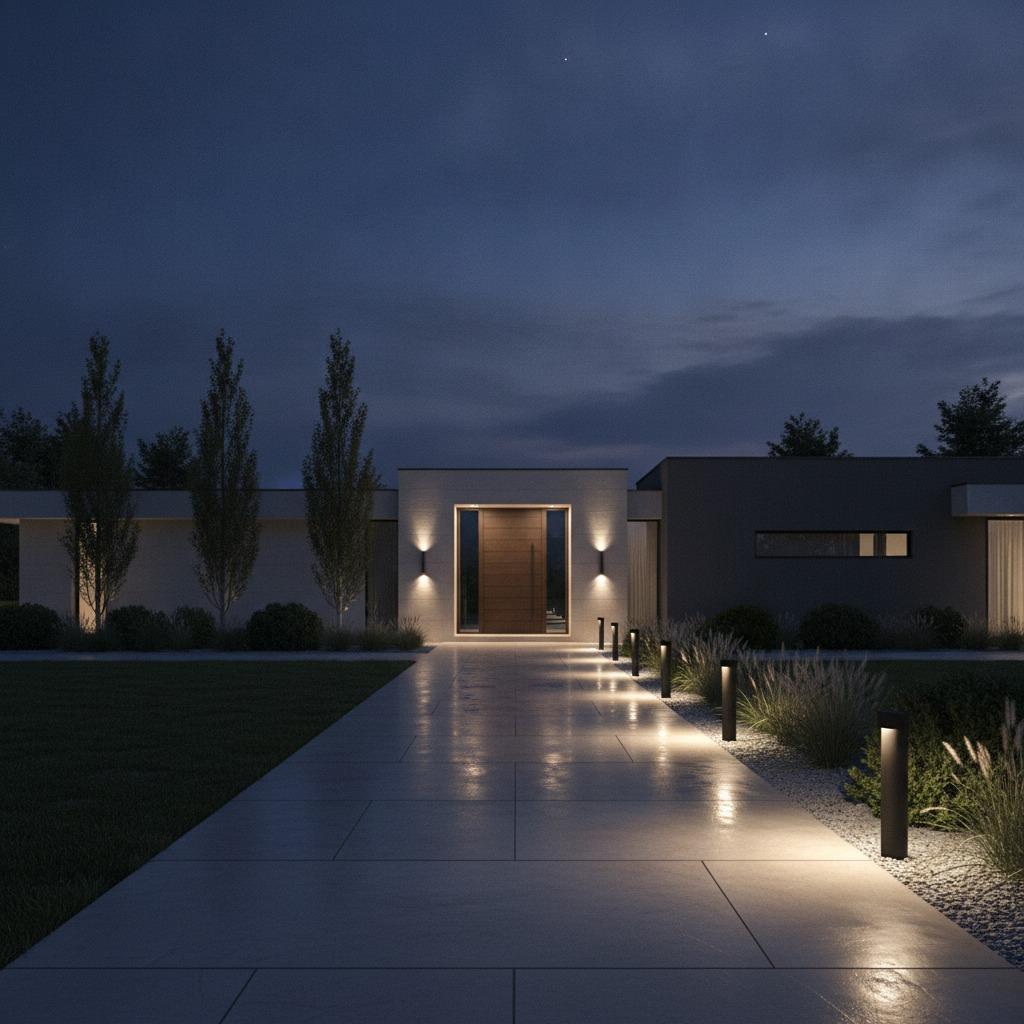
Public lighting projects tend to be more conservative than private ones, and for good reason. The stakes are higher. A path light in a park or campus setting does not need to flood an area like a highway luminaire, but it does need to provide consistent guidance and a sense of safety. In many cases, the fixture style is closer to a bollard than a traditional streetlight, especially for walkways, gardens, driveways, and courtyard circulation paths.
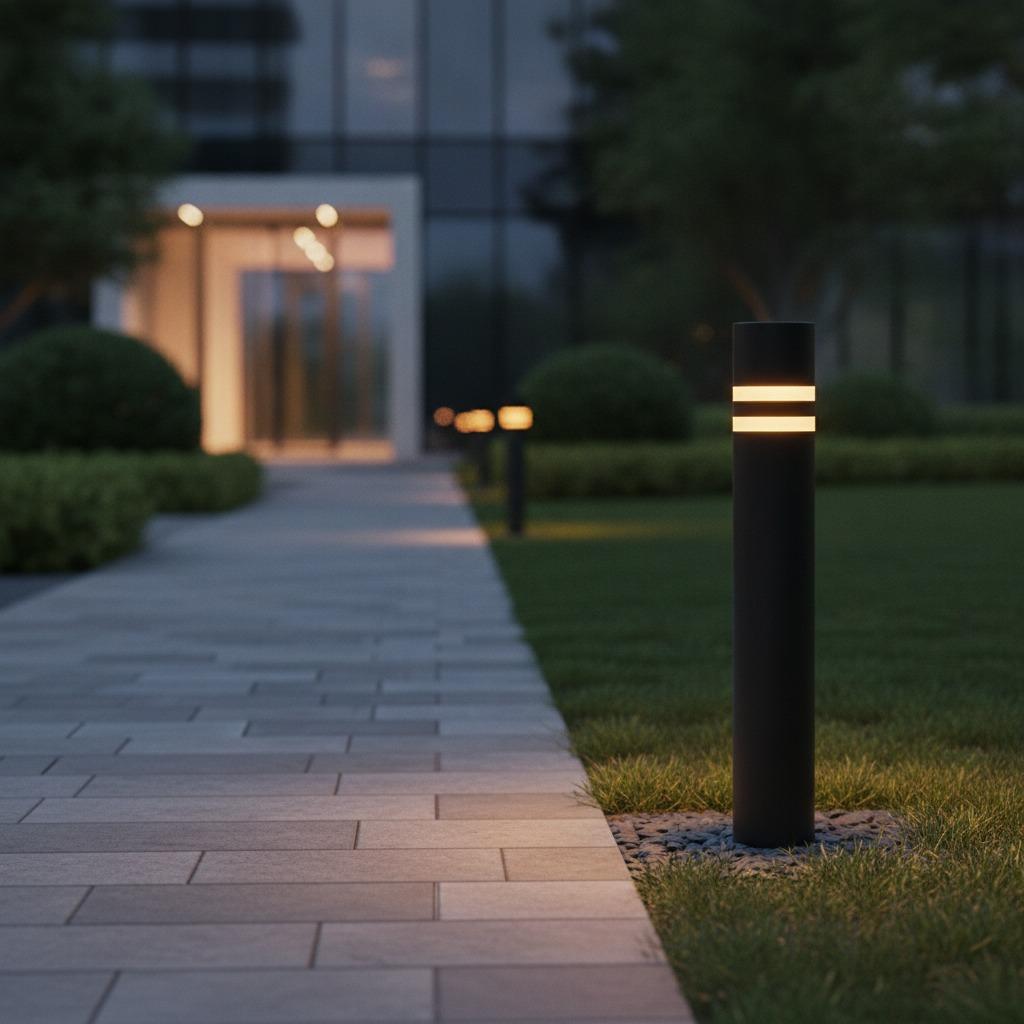
The product information here points to that kind of application. The visible design is a tall cylindrical outdoor bollard light with a matte black or dark gray finish, a flat round cap, and two illuminated bands near the upper section. That layout suggests low-level area lighting rather than high-mast illumination. For a municipality, hotel zone, campus, or public garden, that can be the right tool when the goal is to guide movement and reduce glare rather than blanket an entire site with bright overhead light.
Quick reference: where this type of fixture fits best
Use this kind of bollard-style lighting for walkways, landscape edges, courtyard paths, and low-traffic public zones. It is less suitable where long throw distance, road-grade lighting levels, or strict roadway compliance are required. That distinction sounds obvious, but it is a common source of mismatch in government procurement.
How to evaluate a supplier before you issue a purchase order
When comparing vendors, government teams should look beyond the brochure image. Start with the structure. A surface-mounted base with visible fastener points, as seen in this product category, is useful because it makes installation straightforward and replacement easier. The housing should also be suitable for outdoor exposure, which usually means a coated metal or aluminum-style body, though exact material claims should be checked against the data sheet rather than assumed from appearance.
Next, ask how the lighting module is built. For a solar fixture, the lamp head, battery system, controller, and panel arrangement all affect field reliability. The supplier should be able to explain how the unit handles charging, night operation, and weather exposure in language your maintenance team can verify. If those details are vague, that is a warning sign. A polished render is not the same thing as a durable product.
Another practical point: public buyers should confirm what is serviceable. Can the fixture be opened without special tools? Is the light source replaceable, or is the whole head treated as a sealed assembly? Even when a supplier does not publish every internal detail, they should be able to describe the maintenance path clearly. That matters more than a long list of vague “smart” features.
Common mistakes in municipal solar lighting projects
One of the most common mistakes is overspecifying brightness and underspecifying use case. A walkway bollard is not intended to replace road lighting, and forcing it into that role creates complaints later. Another mistake is buying based on appearance alone. The matte black cylindrical body may look clean and modern, but the real question is whether the light distribution suits the site.
Buyers also sometimes overlook installation conditions. Surface-mounted fixtures are convenient, but the mounting surface must be prepared properly. Drainage, anchor quality, and spacing all affect performance. In public settings, a neat-looking fixture installed on a weak base becomes a maintenance issue quickly.
What a government solar street light supplier should help you clarify
A good supplier should help you compare fixture types, explain the likely application limits, and provide enough product information for a responsible procurement decision. That includes the general construction approach, intended outdoor use, and any control or service features that are relevant to your project. If the lighting is for a park, hotel pathway, office campus, or public garden, the supplier should be able to discuss low-glare performance and visual comfort, not just wattage-style talking points.
For sourcing managers, this is the point where you separate a product vendor from a project partner. The best solar street light supplier for government work is the one that understands that municipal buyers need fewer promises and more clarity.
Buyer-facing questions worth asking early
Before you move to quotation or sample review, ask how the fixture is mounted, what environments it is intended for, and what parts are expected to be serviced over time. If the product is being considered for a public walkway or courtyard, ask how the illumination bands are meant to help with visibility at night. If it is for a landscaped civic area, ask how glare is controlled and how the finish is expected to weather outdoors.
Next step for procurement teams
If you are shortlisting a government solar street light supplier, request a product sheet, installation method, and clear application guidance for your site type. Then compare the fixture against the actual job: walkway, perimeter, garden path, campus route, or courtyard. A product that is honest about its role will save more time than one that tries to be everything at once.