
When a streetscape needs more than a pole and a lamp
Municipal buyers and landscape developers usually start with illumination levels, but a decorative street light manufacturer is often chosen for a different reason: the light has to shape the public space, not just brighten it. That distinction matters on boulevards, promenades, resort roads, and commercial districts where the pole line is visible from a distance and becomes part of the site identity.
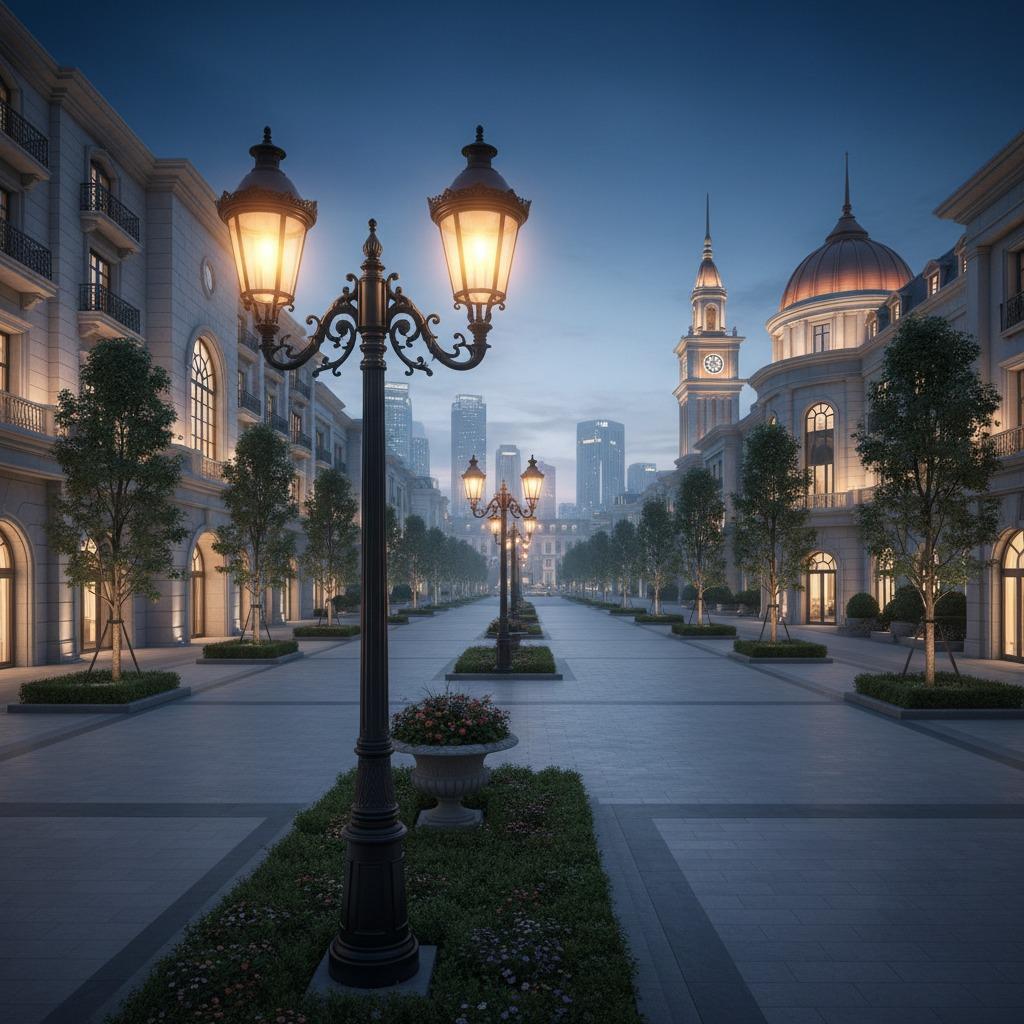
In the project style reflected here, the lighting is doing two jobs at once. The double-arm layout stretches light coverage across a broad paved corridor, while the lantern-style heads and scrollwork give the installation a more formal, heritage-influenced profile. For some sites, that visual cue is exactly the point. For others, it is the difference between a generic utility corridor and a place people remember.
What this type of decorative street light is meant to solve
A decorative outdoor street light is not selected only because it looks good in a brochure. Buyers usually face a practical problem: a public space needs safe nighttime visibility, but the design team also wants the lighting to support architecture, landscaping, and brand image. That is why a street light decorative manufacturer is often involved early, before civil work is complete and before the final paving layout is frozen.
On a long boulevard, repeated ornamental poles can create rhythm and order. On a hotel approach road or a planned community avenue, they can signal arrival and elevate the site without resorting to oversized monuments or cluttered signage. The downside is obvious enough: once a decorative system is installed, it is harder to replace or simplify later, so the buyer should be sure the style still makes sense five years down the line.
Case-study reading: what stands out in this installation style
The visible poles use a tall vertical profile with a wider base and an ornamental upper section. Each post carries a double-arm arrangement with two lantern-style heads, which is a sensible choice where wider coverage is needed along a roadway or pedestrian edge. The repeat pattern across the boulevard suggests a coordinated streetscape package rather than isolated feature lighting.
The finish appears dark bronze or black, which is common in municipal and landscape applications because it tends to sit quietly against paving, planting, and building facades. The lantern housings look like they use translucent or frosted panels, giving a softer warm-white effect. I would treat that as a visual observation, not a specification. The actual lamp source, output, and electrical details would need to be confirmed from the supplier.
Materials and manufacturing: what buyers should ask about
From the image alone, the poles appear to be metal, likely cast iron, steel, or aluminum. Any of those can work, but they behave differently in fabrication and maintenance. Cast components can deliver the ornamental detail buyers expect, while fabricated steel may offer structural flexibility. Aluminum can be easier to handle and may suit corrosion-sensitive environments, though the final choice depends on the design and the site conditions.
For procurement teams, the more important question is not “what does it look like?” but “how is it made and protected?” Decorative street lights usually involve some combination of metal fabrication or casting, welding, machining, surface coating, and electrical assembly. If the supplier cannot clearly explain the coating system, access method, or replacement part strategy, that is a warning sign. Fancy shape is not the same thing as durable field performance.
Selection criteria that actually matter
When comparing decorative street lights manufacturer options, buyers generally need to balance four things: visual language, coverage, maintainability, and site durability. A pole that suits a historic district may feel too ornate for a modern business park. A fixture that looks refined in daylight may cast the wrong pattern after dark. And a design that is easy to specify on paper may become inconvenient once crews need to service drivers or replace a lantern head.
The practical questions are straightforward. Is the pole height coordinated with road width and planting? Does the arm span match the lighting plan? Is there enough access for maintenance without disturbing paving or landscaping? Can the finish handle weather, pollution, and routine cleaning? These are the questions that separate a design win from a future complaint.
Common mistakes buyers make
One common mistake is choosing ornament first and performance second. Another is underestimating how much visual weight a decorative pole line adds to a streetscape. A third is assuming all lantern-style systems are interchangeable. They are not. Small changes in arm spacing, head geometry, and finish tone can alter the entire appearance of a roadway.
It is also easy to overlook consistency. In a project like this, a few mismatched poles can make the whole boulevard look pieced together. That is why buyers working with a decorative street lights manufacturer should ask for a complete family of components, not just a single attractive pole photo.
Practical buyer advice before you issue an RFQ
Start with the site role. Is the lighting for a civic boulevard, a resort promenade, a residential avenue, or a landscaped commercial approach? Then define the visual style you want to preserve. After that, ask the supplier to clarify material options, coating approach, maintenance access, and the compatibility of the lantern head with the electrical package you intend to use.
If the project has multiple stakeholders, it helps to review a sample elevation or a streetscape mockup early. Decorative lighting often triggers opinions from planners, architects, and operators at the same time, and it is cheaper to resolve those disagreements on paper than after the first foundation is poured.
What this kind of product is best suited for
These ornamental street lights fit city streets, residential master-planned communities, business districts, parks, campuses, hotel roads, and commercial promenades. They are especially useful where nighttime visibility and architectural character need to work together. If the site is purely industrial, a simpler luminaire is usually more honest. If the site is public-facing, though, the decorative approach can carry real value.
For teams evaluating a decorative outdoor street light program, the next step is to compare a full pole-and-head package, not just a photo. Ask for construction details, finish options, service access information, and a layout recommendation based on your road width and spacing targets. That is usually where the useful conversation begins.