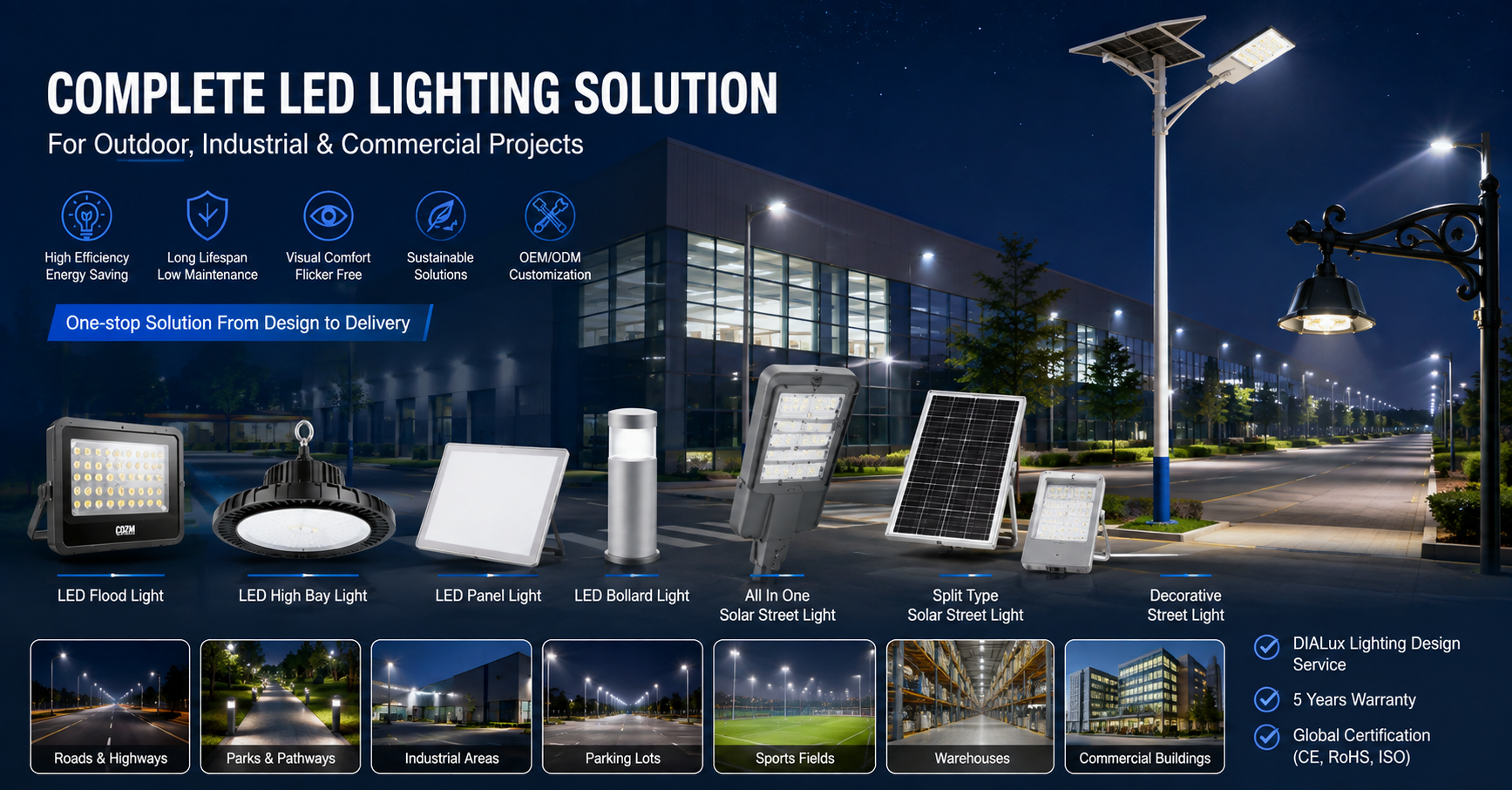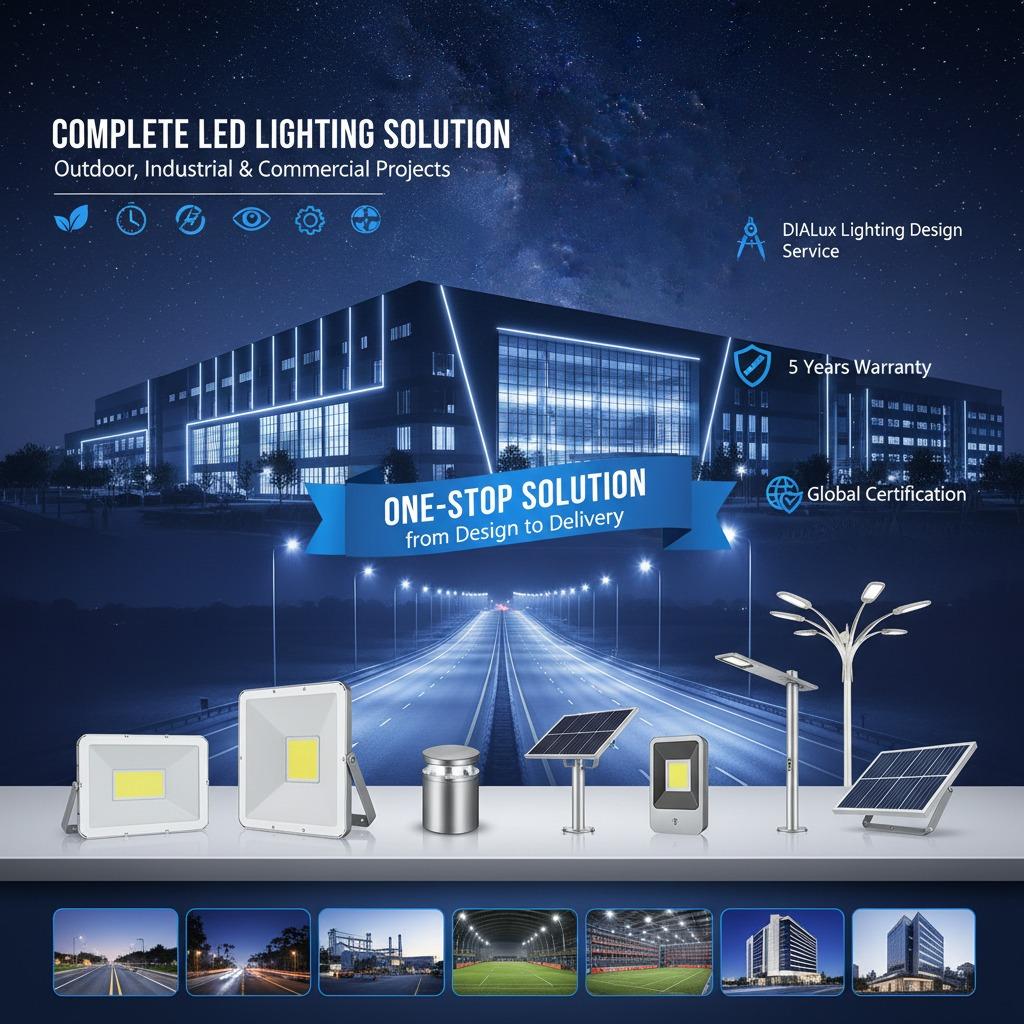

A real buyer problem: lighting a large site without overbuilding the whole system
When procurement teams start comparing a high mast LED flood light supplier, the question is rarely just “who has the brightest fixture?” The harder decision is how to light a very large outdoor area without creating dark patches, glare complaints, or a maintenance burden that grows every year. Container yards, ports, logistics parks, airports, and industrial aprons all have the same basic problem: the light has to travel far, stay uniform, and survive an environment that is not gentle on equipment.
That is why this product category is usually sold as a system, not as a standalone lamp. A high mast LED floodlight manufacturer may provide the fixtures, the mast structure, mounting arrangement, and sometimes project support for layout planning. For buyers, the real issue is choosing a supplier who understands the site, not just the hardware.
What high mast lighting actually solves
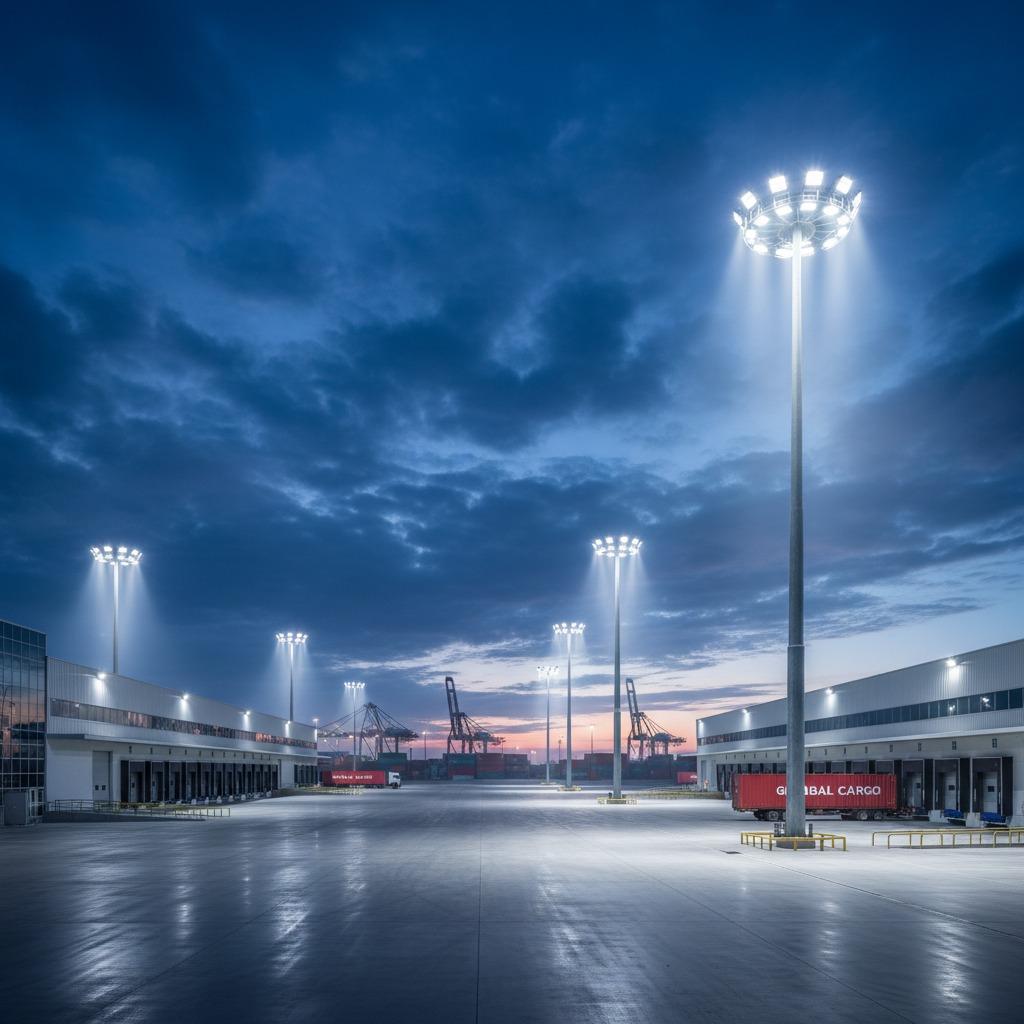
High mast area lighting is built for broad coverage from a tall pole with multiple LED floodlight heads mounted near the top. The visible arrangement in this case is typical: several luminaires clustered in a circular formation, aimed to throw wide beams across a large open space. You see this kind of setup in freight depots, terminal yards, warehouse exteriors, stadium perimeters, and large parking or apron areas.
The value is simple. Instead of installing many lower poles and filling the site with overlapping fixtures, a high mast system concentrates light from elevated points. That can reduce obstruction in vehicle lanes and leave more usable ground space. It can also make maintenance more manageable, provided the mast design allows safe servicing.
What a buyer should check before shortlisting a supplier
A good high mast lighting supplier should be able to talk about more than output claims. Engineers and sourcing managers usually need answers to practical questions: how the beam distribution is arranged, whether the fixtures are intended for general flood coverage or more targeted directional lighting, how the mast and brackets are finished for outdoor use, and whether the supplier is offering fixtures alone or a full engineered package.
There is a caveat here. A catalog photo may show a strong-looking system, but that does not tell you much about optical performance, corrosion resistance, driver quality, or installation complexity. Those details matter more than the headline wattage on a brochure.
Quick comparison: supplier types
A standard luminaire vendor may sell the fixture but leave site design to the buyer’s consultant.
A high mast LED floodlight manufacturer may offer coordinated heads, brackets, and mounting details for tall poles.
A high mast LED flood light supplier with project experience may help with layout, aiming, and system selection for the site’s actual footprint.
That last category is often the most useful for large industrial sites, because the lighting decision is rarely isolated from operations. Truck routes, crane movement, security visibility, and night-shift work all influence how the system should be set up.
Case-study lens: why system design matters more than one product photo
Think of a container yard. The site is open, busy, and unforgiving. Vehicles move at night, shadows can hide obstacles, and the margin for poor visibility is small. In that setting, a cluster of LED floodlight heads on a high mast is attractive because it can throw light across a wide area from above vehicle height. But the layout has to be planned around actual working zones, not guessed from a general product image.
The same logic applies to airport aprons and port terminals. These are not decorative lighting jobs. They are operational environments where glare, dark corners, and uneven coverage can affect safety and efficiency. A supplier who understands that difference is usually worth more than one who only supplies hardware.
Common mistakes buyers make
One common mistake is over-focusing on fixture count. More heads do not automatically mean better coverage. If the aiming is poor or the mast height is wrong for the site, the result can be wasted light and uneven visibility.
Another issue is assuming that all high mast products are turnkey. Some suppliers provide only the light heads, while others can supply poles, mounting assemblies, and related support. That distinction affects cost, logistics, and installation planning.
A third mistake is neglecting maintenance access. High mast systems are elevated for a reason, but somebody still has to service them. If the design makes cleaning or replacement difficult, the buyer inherits the problem later.
Practical buying advice for sourcing teams
If you are evaluating a high mast LED flood light supplier, start with site conditions. Note the area size, pole locations, surrounding structures, and any safety or operational constraints. Then ask the supplier how their system would handle those conditions.
Useful questions include whether they offer a full high mast lighting system or just fixtures, whether the mounting cluster can be configured for different beam directions, and what documentation they can provide for project review. If the site is corrosive, windy, or exposed to harsh weather, make sure the supplier discusses those realities instead of giving a generic sales pitch.
FAQ: what buyers usually want to know
Is a high mast system always better than regular poles?
Not always. It depends on the site size, required uniformity, and maintenance strategy. For large open areas, high mast lighting is often more efficient.
Should I buy fixtures only or a full system?
If the project is straightforward, fixtures alone may be enough. For large industrial or transport sites, a coordinated system is usually easier to design and manage.
What makes one supplier better than another?
Look for practical design support, clarity on what is included, and a realistic understanding of the site’s operating conditions.
Next step for buyers
Before sending out a formal RFQ, define the site clearly: dimensions, usage patterns, mounting constraints, and whether you need fixtures, poles, or a complete engineered package. Then compare suppliers on the quality of their layout support and the fit of their system to your application, not just on the brightness claim in the brochure.
That is usually where the better decision becomes obvious.