
When an LED Lighting Manufacturer Becomes Part of the Project, Not Just the Supplier List
Choosing an LED lighting manufacturer is rarely about buying a lamp and moving on. For engineers, sourcing managers, and project teams, the real decision is whether the supplier can support the lighting concept from the first sketch through installation and after-sales service. That matters even more when the job spans roads, warehouses, commercial façades, parks, and parking areas, where a bad lighting choice shows up quickly in energy bills, maintenance calls, and complaints about glare or uneven coverage.
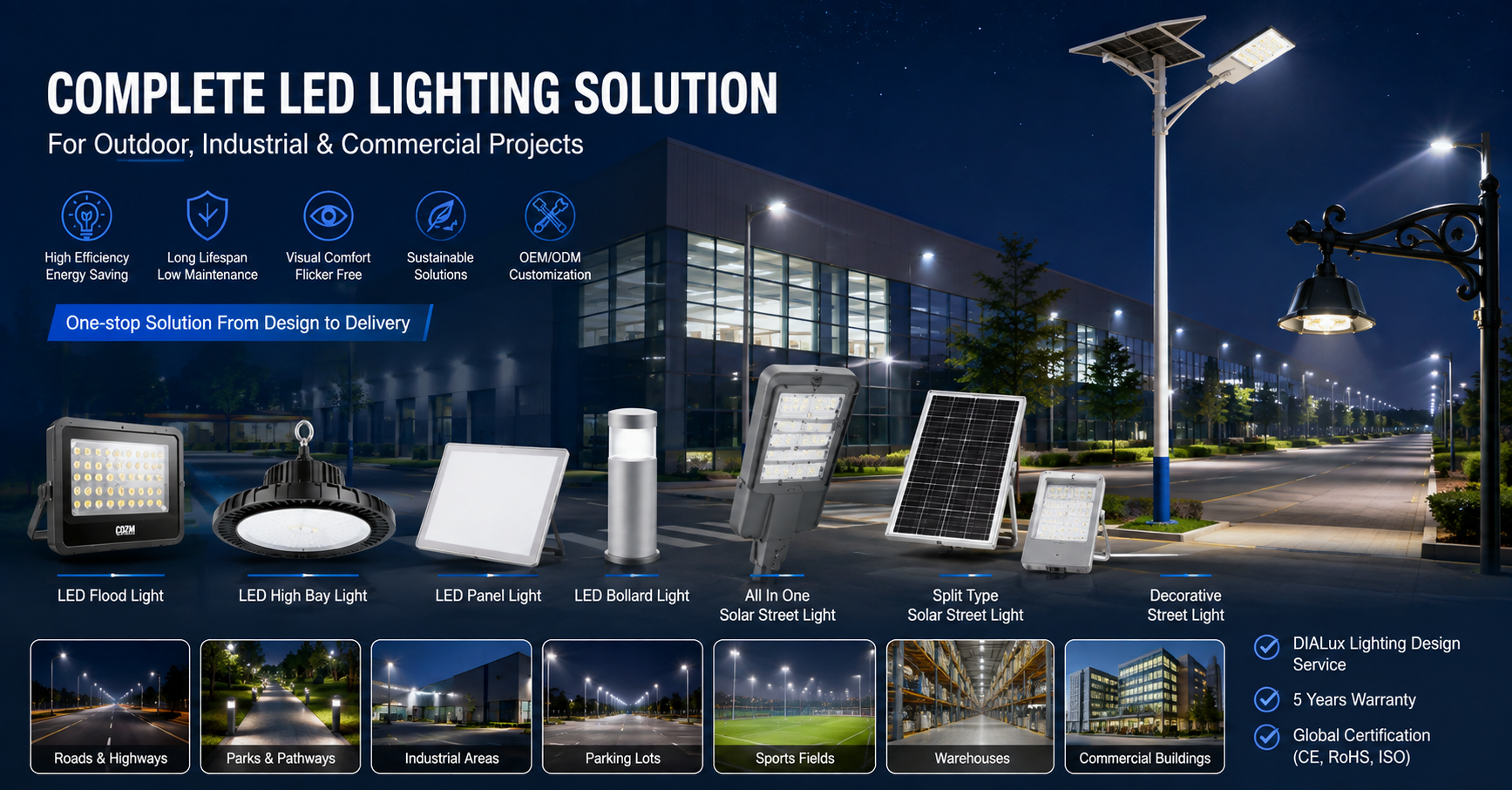
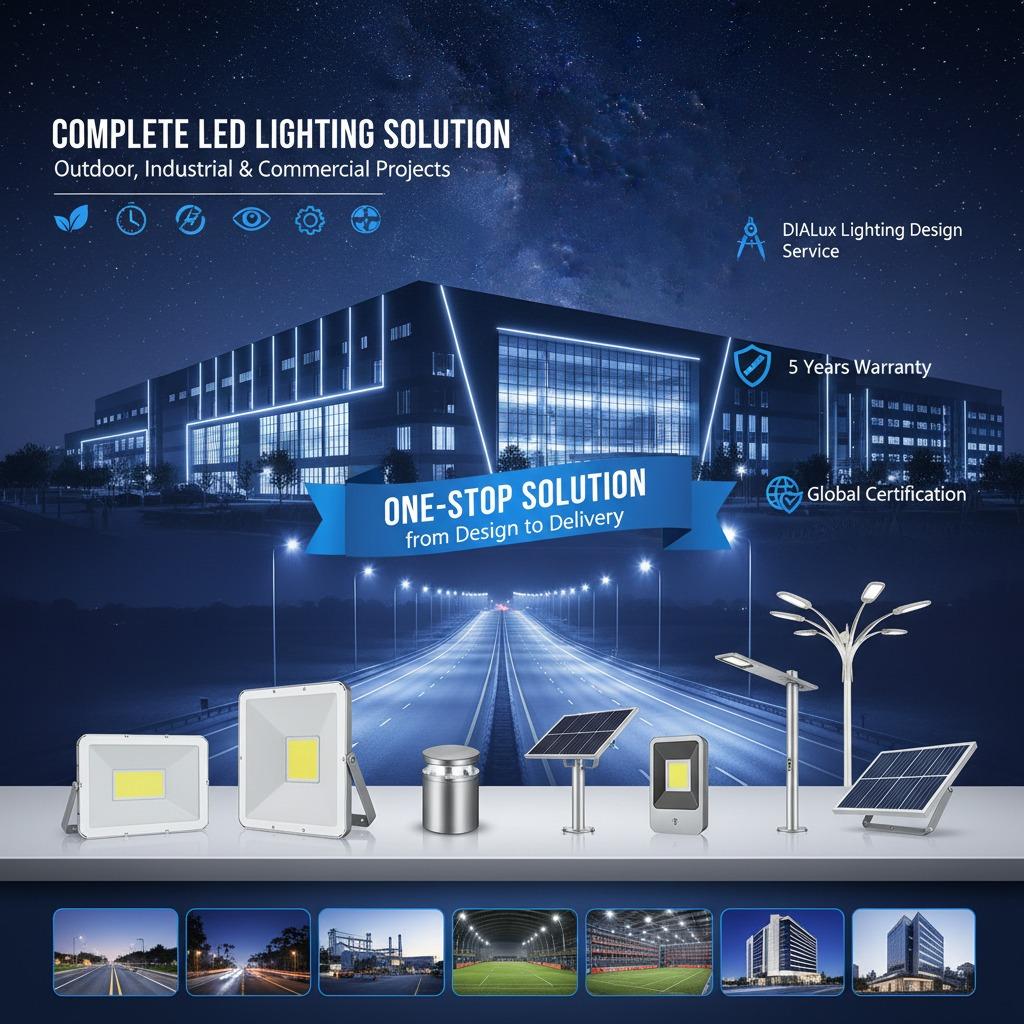
The product portfolio in this case looks less like a single item catalog and more like a manufacturing and integration service for outdoor, industrial, and commercial lighting. It includes LED flood lights, high bay lights, panel lights, bollard lights, all-in-one solar street lights, split-type solar street lights, and decorative street lights. In other words, the buyer is not just comparing fixtures. They are comparing how a lighting partner thinks.
What the portfolio suggests about the manufacturer’s role
A good LED lights manufacturer usually does more than assemble housings and drivers. In project work, the supplier may help choose fixture types, coordinate mounting styles, and support layout planning. Here, the visible service notes point to OEM/ODM customization and DIALux lighting design service, which is important if the project has a strict illumination target or a difficult site plan.
That kind of support is especially useful in mixed-use environments. A warehouse bay needs different optics and mounting logic than a pathway or a roadside installation. A commercial LED lighting manufacturer that covers both industrial and outdoor applications can reduce the number of vendors a buyer has to manage. The trade-off, of course, is that you still need to confirm whether the supplier is truly strong in every category or simply broad on paper.
Case study lens: matching fixture type to the job
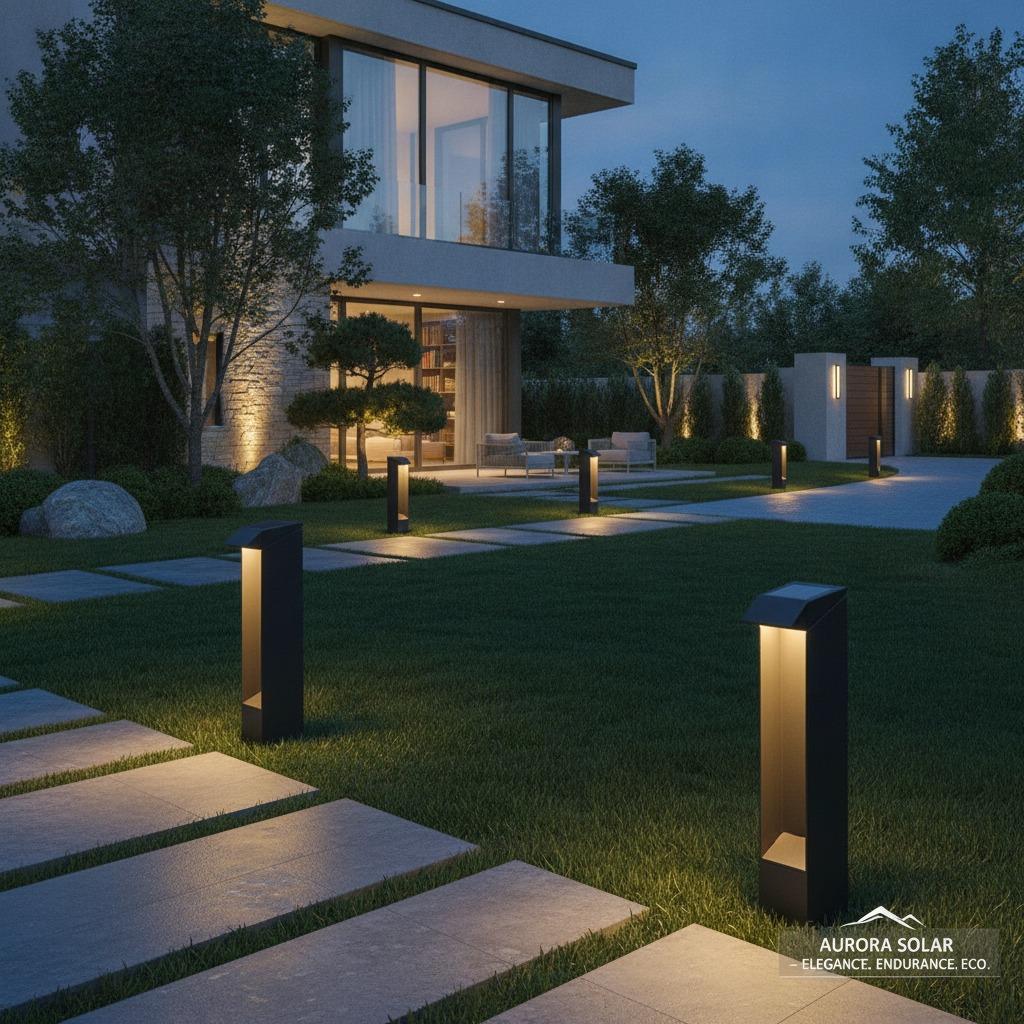
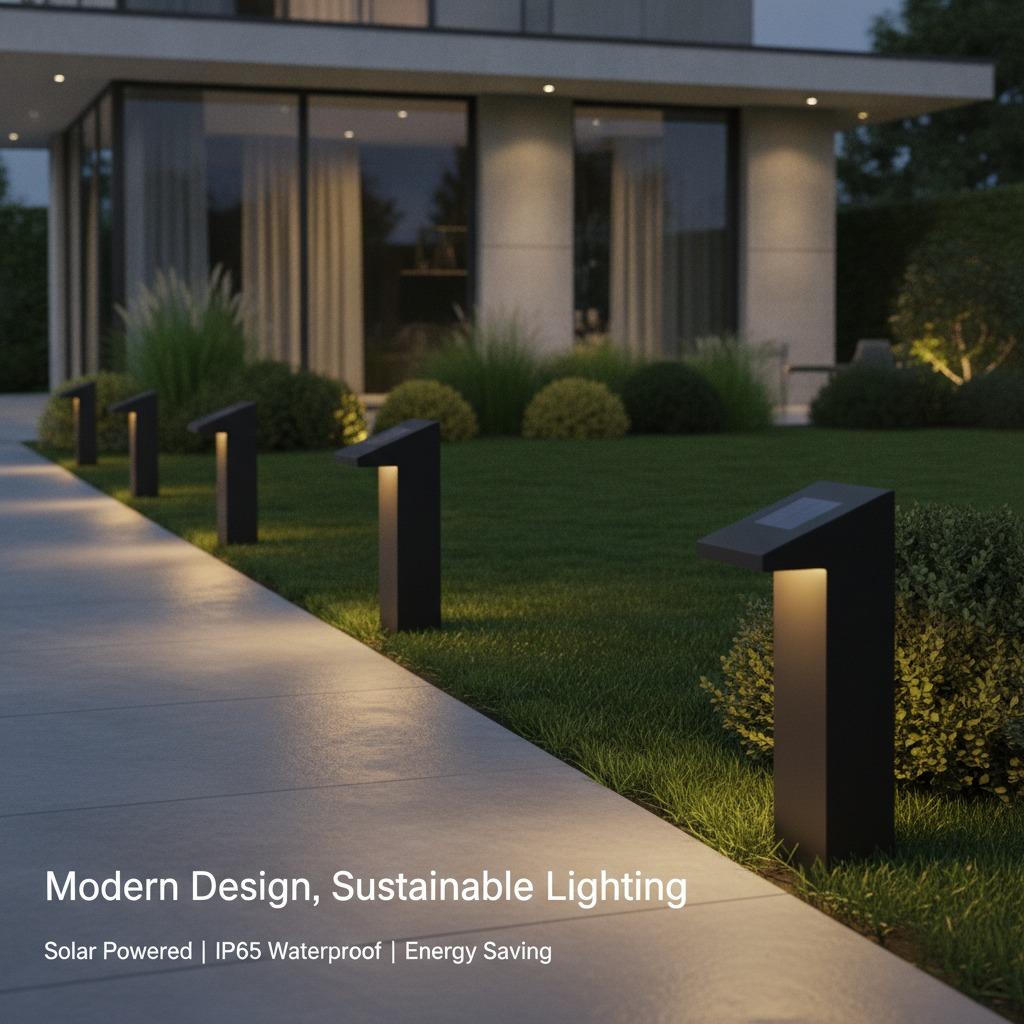
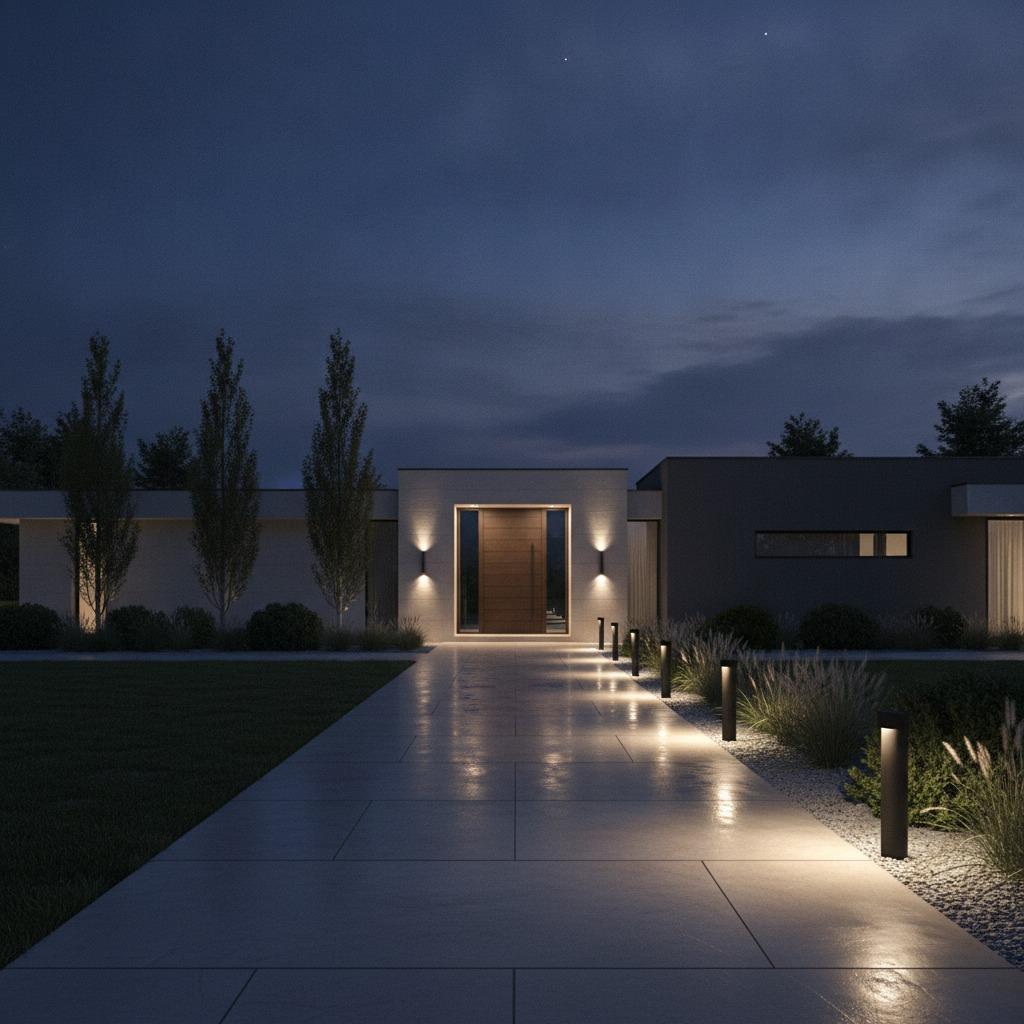
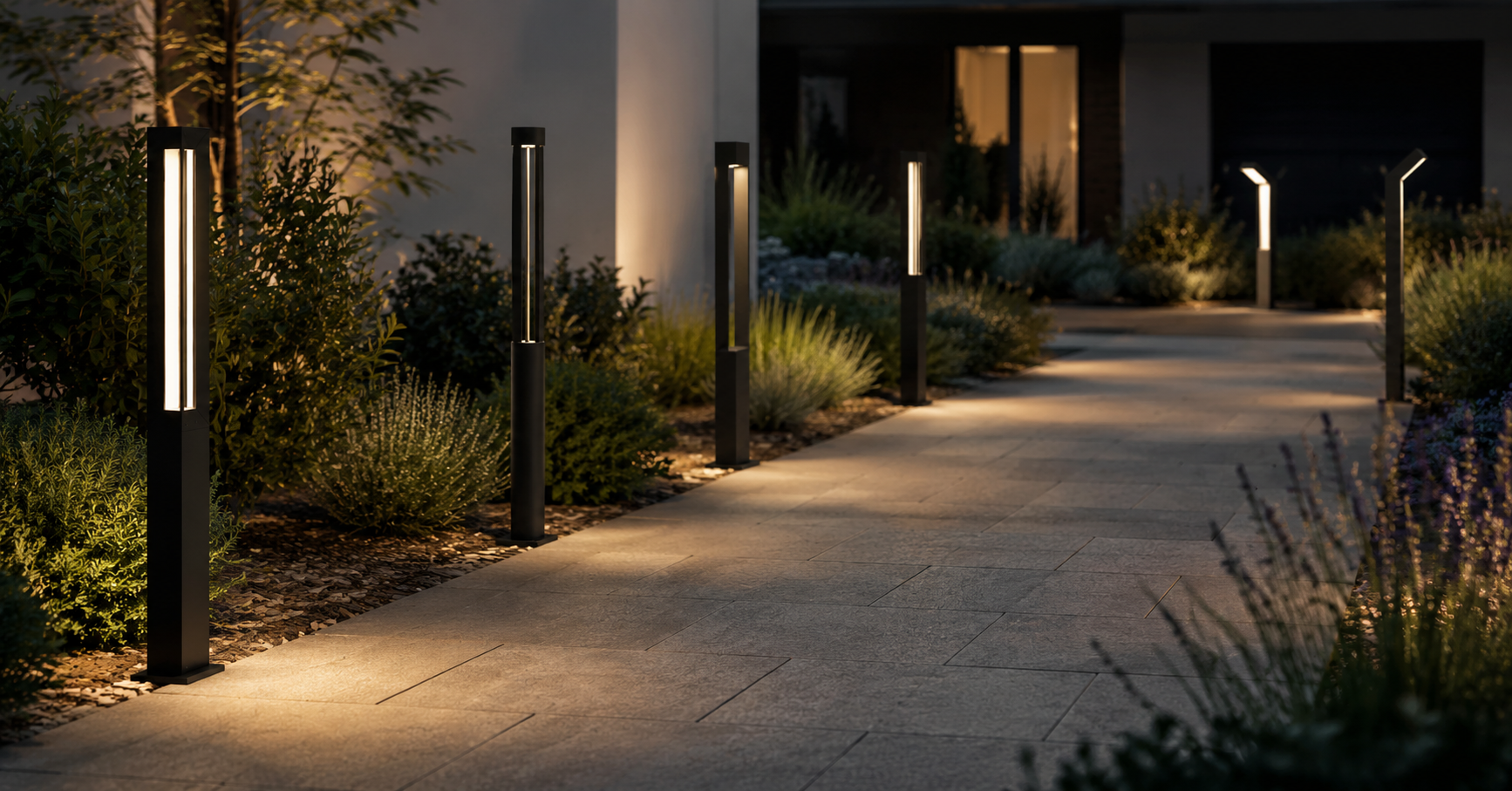
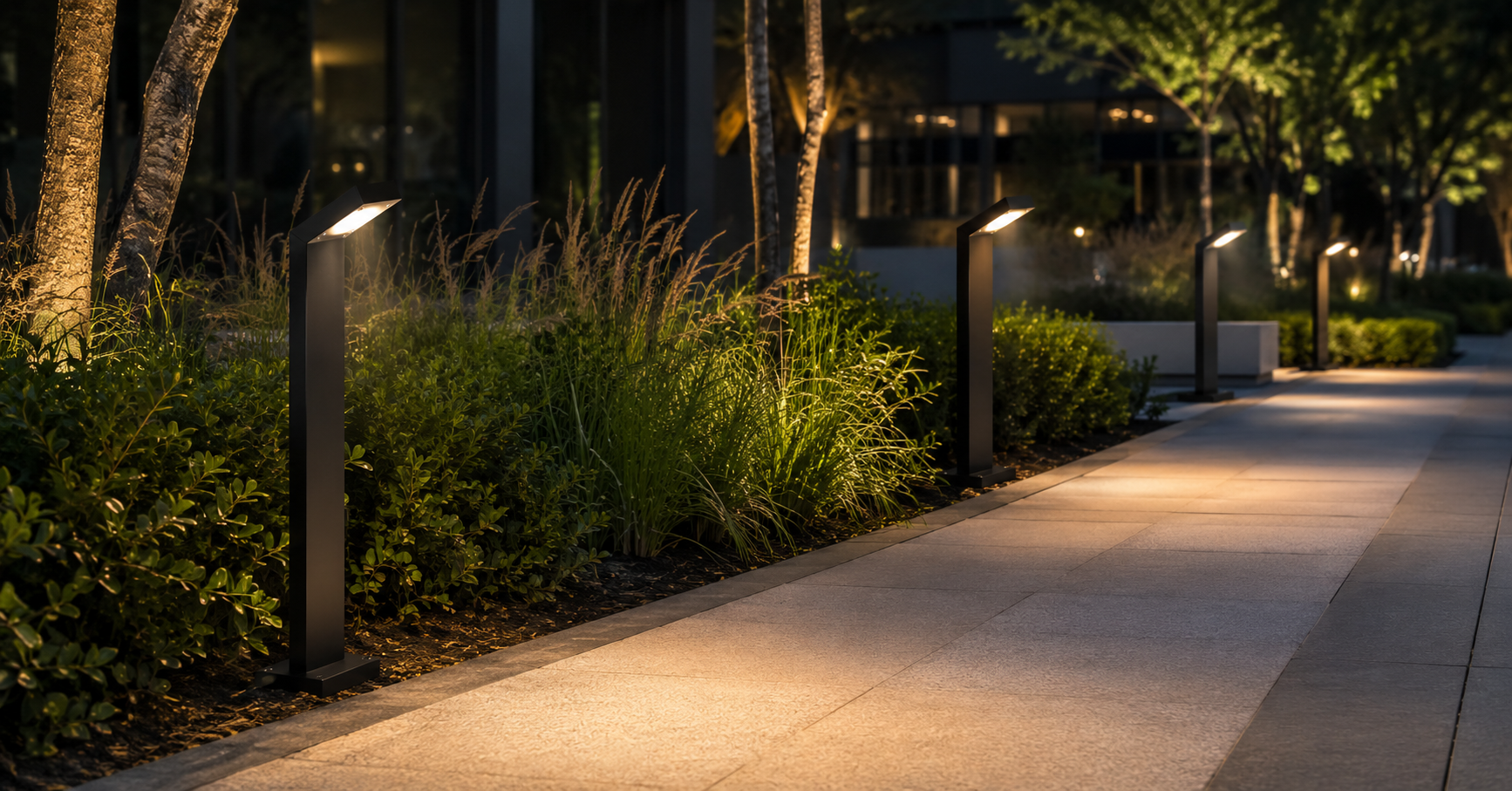
Think of this portfolio as a practical response to common site problems. Flood lights are the obvious choice for wide-area illumination, sports fields, façades, and yards. High bay lights belong in warehouses and workshops where ceiling height and uniformity matter. Panel lights fit indoor commercial interiors where visual comfort and clean ceiling lines are priorities. Bollard lights cover pathways and landscape edges without overwhelming the space.
The solar street light offerings deserve separate attention. All-in-one and split-type systems are attractive for projects where trenching or grid connection is difficult, expensive, or delayed. That said, solar products should be reviewed carefully against the actual site conditions. Shading, local weather, and maintenance access can change the economics fast. “Solar” is not a shortcut; it is a design choice.
Quick buyer takeaways before you request a quote
Several visible selling points stand out: high efficiency energy saving, long lifespan low maintenance, visual comfort flicker free, sustainable solutions, OEM/ODM customization, DIALux lighting design service, 5 years warranty, and global certification claims such as CE, RoHS, and ISO. Those are useful signals, but they are not a substitute for project documentation.
For a sourcing team, the important question is not whether these statements sound strong. It is whether the manufacturer can back them with the correct documents for your market and application. For example, “global certification” should be checked against the exact fixture family, not assumed across the whole portfolio.
How to evaluate an industrial LED lighting manufacturer without getting lost in brochures
1. Ask for application-specific evidence
Request drawings, photometric data, and layout support for the exact site type. A high bay fixture may look similar across suppliers, but performance in a warehouse depends on distribution, mounting height, and spacing. The same is true for roadway and parking-lot projects.
2. Separate fixture quality from system quality
Many lighting problems are not caused by the housing alone. Driver stability, thermal management, and installation practice matter just as much. A commercial LED lighting manufacturer that understands this will talk about systems, not only parts.
3. Verify service scope
OEM/ODM is valuable if you need branding, modified structures, or a project-specific finish. DIALux support is even more useful when the buyer must show illumination compliance or justify the design internally. But if the supplier cannot explain who owns the design revisions, project delays can follow. That tends to happen more often than people admit.
Common mistakes buyers make on projects like this
The first mistake is treating every LED light manufacturer as interchangeable. A decorative street light and a warehouse high bay may share “LED” in the description, but they solve very different problems. The second mistake is overvaluing price and undervaluing maintenance. A fixture that is cheap to buy but costly to service is rarely a win on a multi-year site.
The third mistake is ignoring visual comfort. The portfolio’s flicker-free claim is worth attention because flicker and glare can create complaints in offices, retail spaces, and public-facing areas. If the site includes pedestrians or long working shifts, that detail is not cosmetic.
What a practical next step looks like
If you are shortlisting an LED lighting supplier for a project, start with the application, not the product name. Define the site type, operating hours, maintenance constraints, and whether you need grid-connected, solar, or mixed solutions. Then ask the manufacturer to recommend fixture families, provide a lighting design, and explain the service scope in writing.
That approach helps you compare real capability instead of glossy claims. It also makes it easier to separate a true LED lighting manufacturer from a reseller with a broad catalog and thin technical backing.
FAQ
Is a broad portfolio a good sign?
Usually, yes, if the supplier can show technical depth in each category. Breadth alone is not enough.
Are solar street lights always the better option?
No. They can be excellent where grid access is difficult, but site conditions and maintenance planning still decide the outcome.
Why does DIALux support matter?
It helps teams validate lighting distribution before purchase, which can reduce redesign work and avoid underlit or overlit areas.
If you are evaluating a project now, the best move is to request a fixture shortlist, a site-specific lighting plan, and the exact supporting documents before moving to sample approval.