
When a lighting project stops being about bulbs and starts being about systems
In a real project, choosing an LED lighting manufacturer is rarely just a catalog exercise. The buyer is usually dealing with a mix of constraints: energy targets, maintenance access, fixture mounting, visual comfort, and the awkward fact that outdoor and industrial sites do not forgive guesswork. A parking lot can look fine on paper and still feel dim at night. A warehouse bay can meet the spreadsheet and still produce glare over the picking aisle. That is where the manufacturer matters as much as the fixture.
This case-study style overview looks at the kind of product range and service model many engineers and sourcing teams want from an LED lights manufacturer: one supplier that can support flood lights, high bay lights, panel lights, bollard lights, solar street lights, and decorative street light applications without turning each order into a separate sourcing headache. The practical question is not “who has the most products,” but “who can help the project work the first time?”
A broad portfolio can solve more problems than a single-spec product
One reason buyers keep looking for a capable LED lighting supplier is that modern projects are rarely uniform. A municipality may need roadway luminaires in one zone, pathway lighting in another, and decorative street fixtures near a civic entrance. An industrial park may need high bay lights inside the building and flood lights at the perimeter. A commercial campus may combine panel lights indoors with bollard lights and exterior wall-mounted lighting outside.
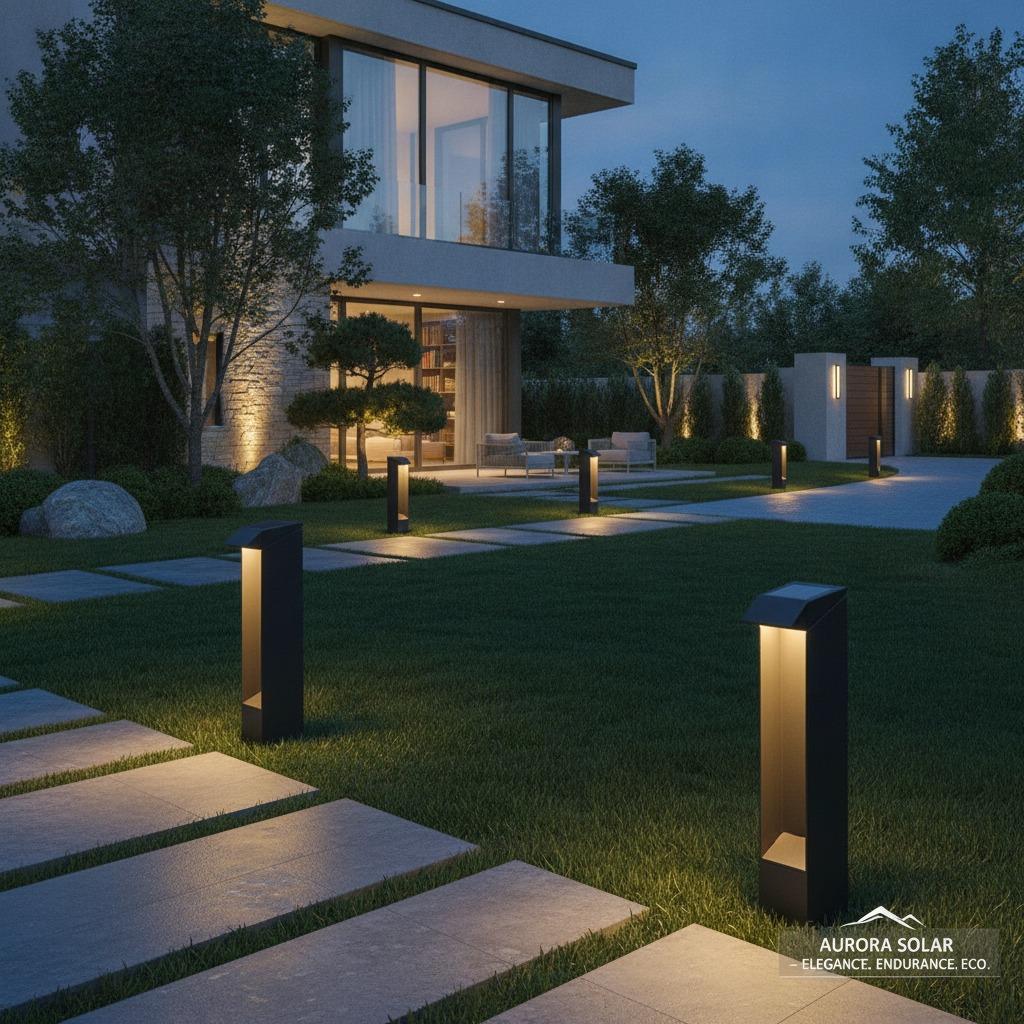
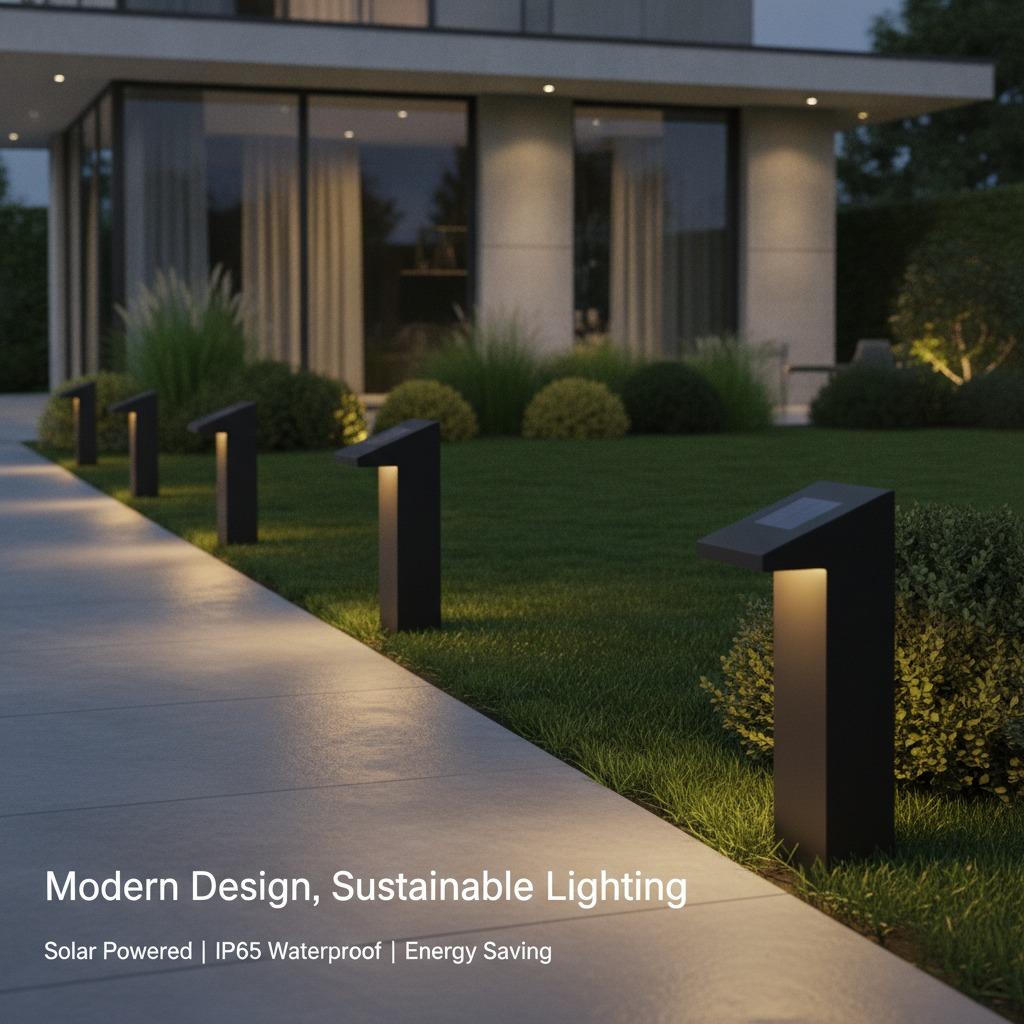
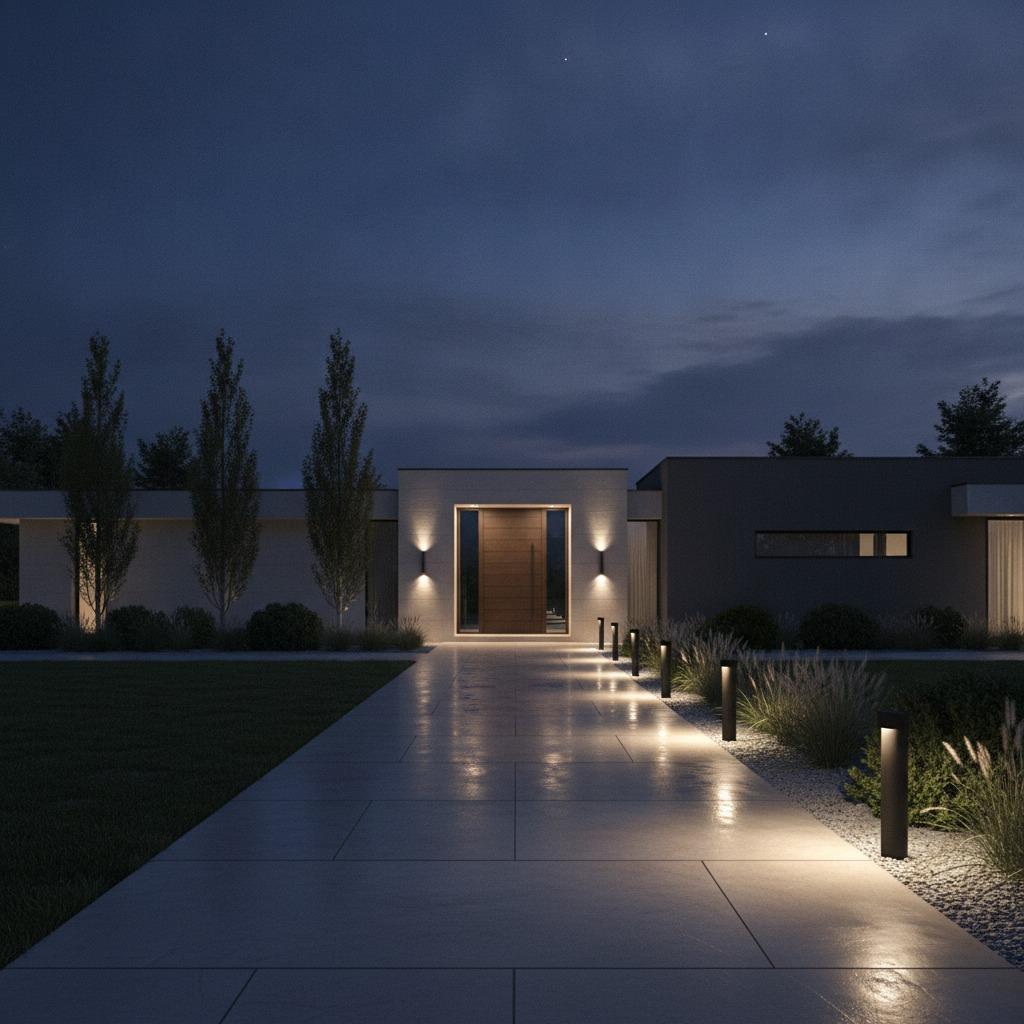
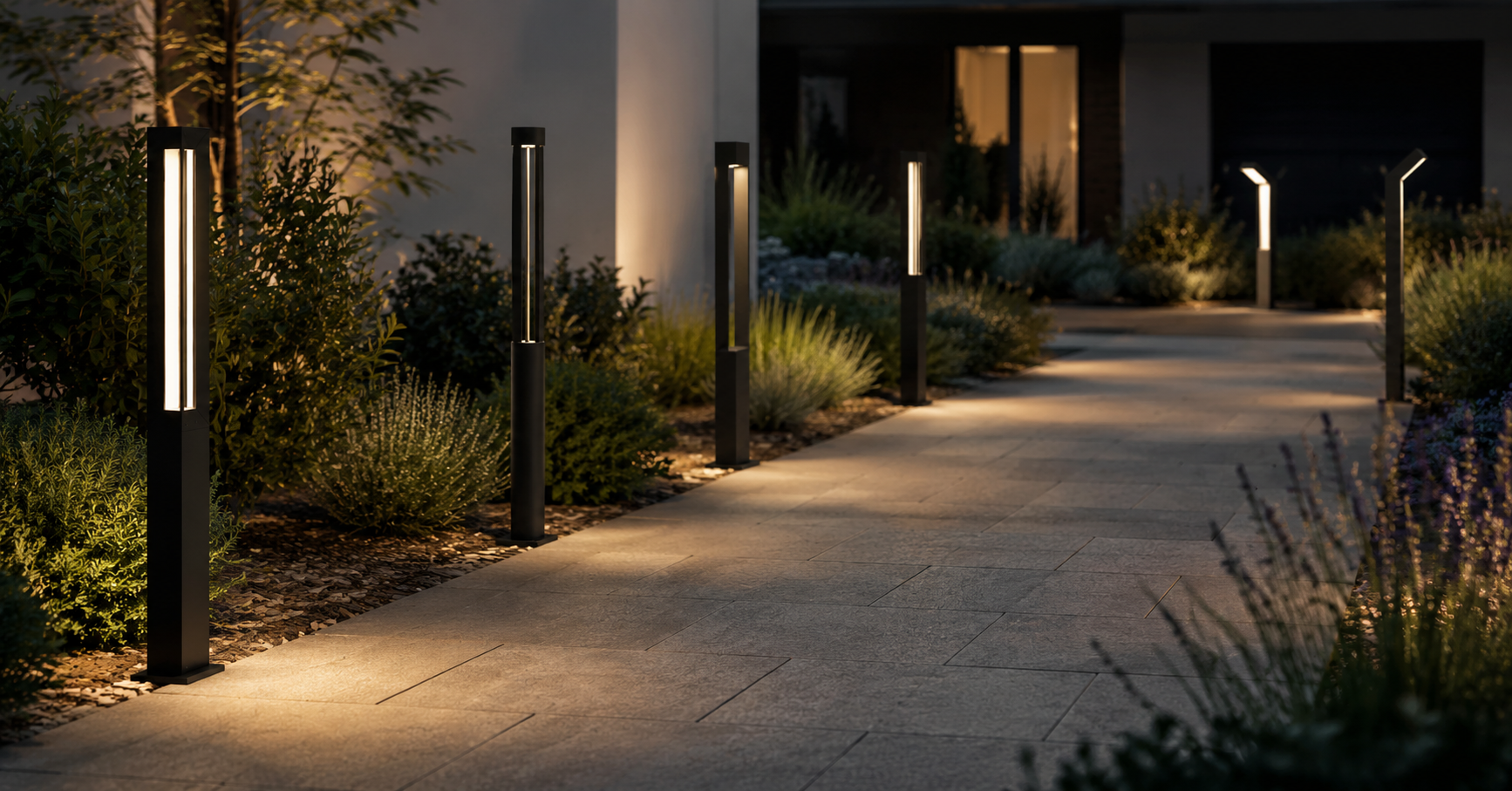
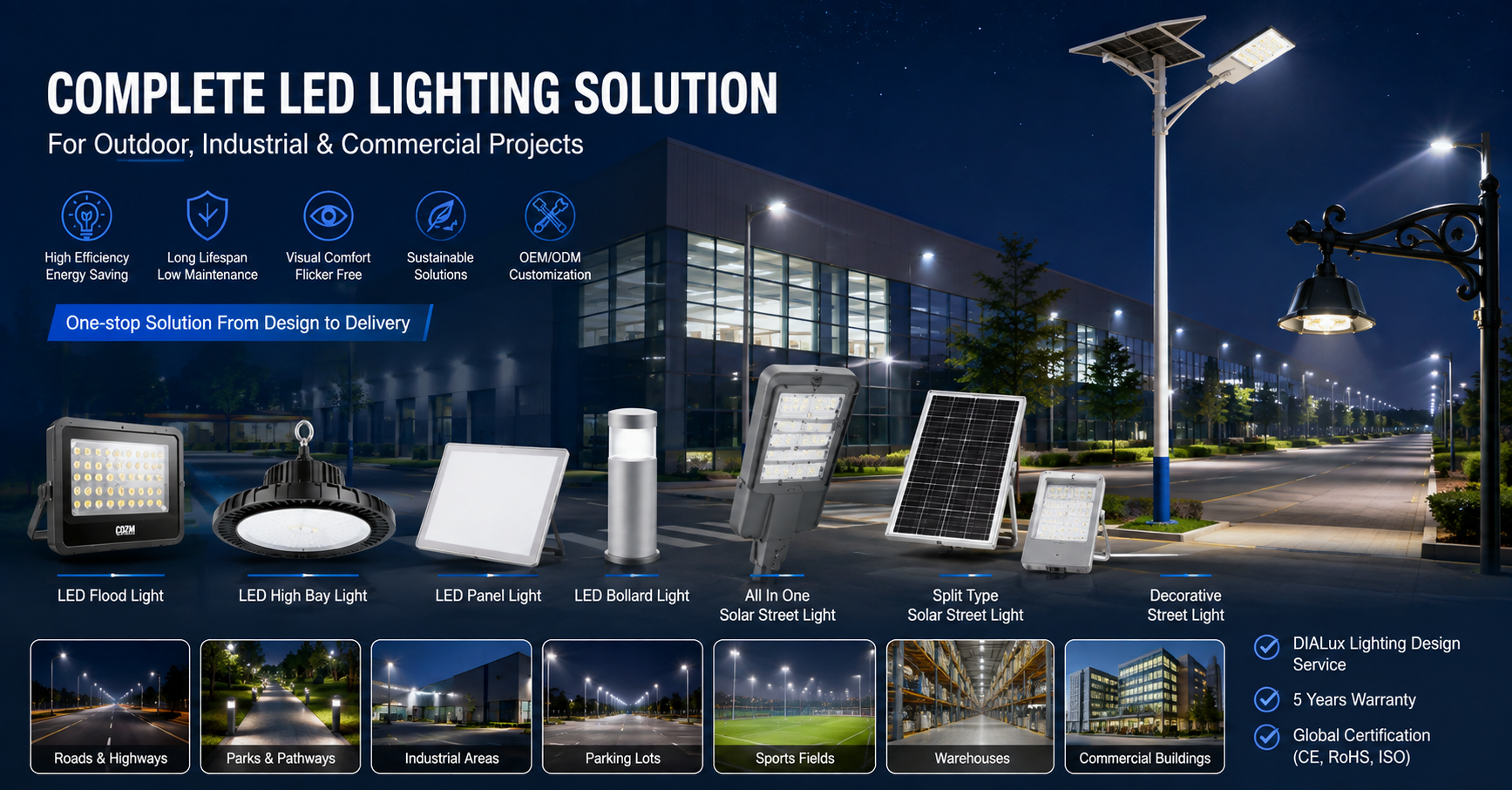
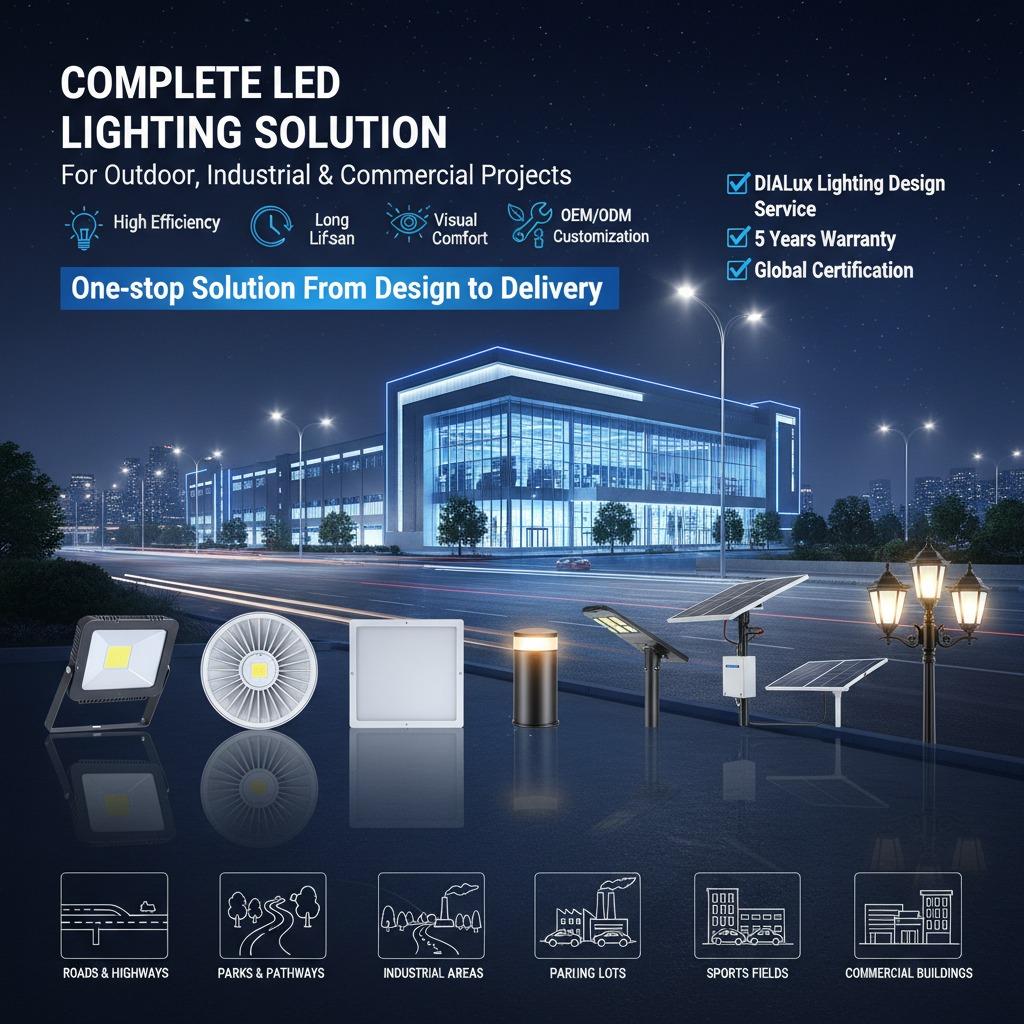
The product set shown here fits that reality. The visible range includes rectangular LED flood lights with adjustable brackets, UFO-style high bay lights for suspended installation, slim panel lights for indoor ceiling use, cylindrical bollard lights for paths, and both all-in-one and split-type solar street lights for sites where grid power is limited or expansion is difficult. That kind of mix is useful because it lets a sourcing manager compare options within one vendor relationship instead of rebuilding the approval chain for each fixture family.
What project teams usually care about first
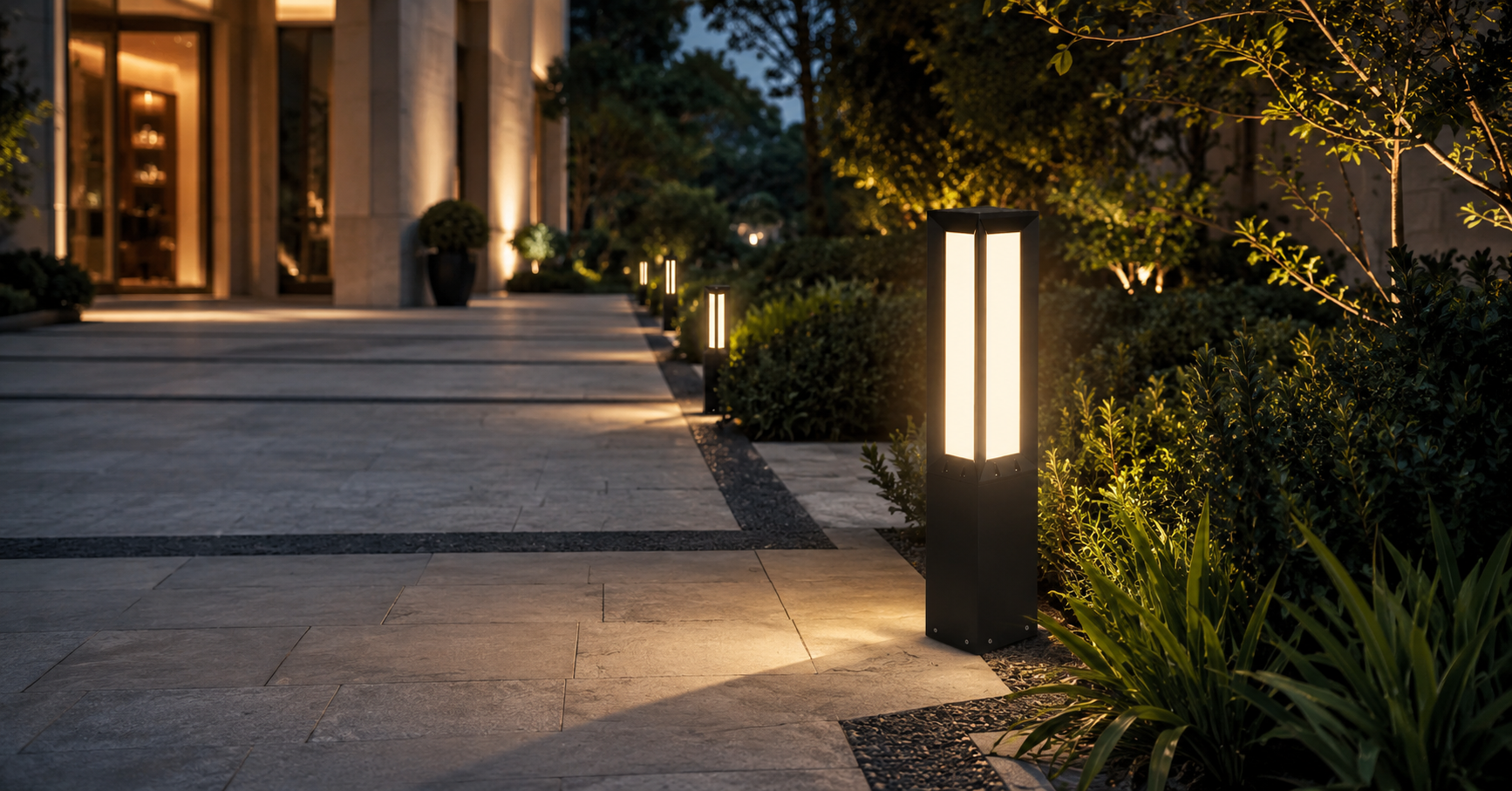
In practice, the first filter is not branding. It is fit for application. A commercial LED lighting manufacturer should be able to support different use cases with fixtures that make sense mechanically and visually, even before the photometrics are finalized. Flood lights are expected to handle open-area illumination for courts, facades, yards, and sports fields. High bay lights belong where mounting height is significant and access for maintenance is costly. Panel lights are about even indoor distribution and a clean ceiling profile. Bollard lights are there for guidance, safety, and a more human-scaled exterior.
Solar street lights deserve their own caution. They are attractive for remote roads, parks, and temporary or expanding sites, but the buyer should still ask how the lighting layout is planned, how the battery and solar component arrangement affects maintenance, and what assumptions were used in the design service. Solar systems are not just a luminaire decision; they are a site-energy decision.
How the service model affects sourcing risk
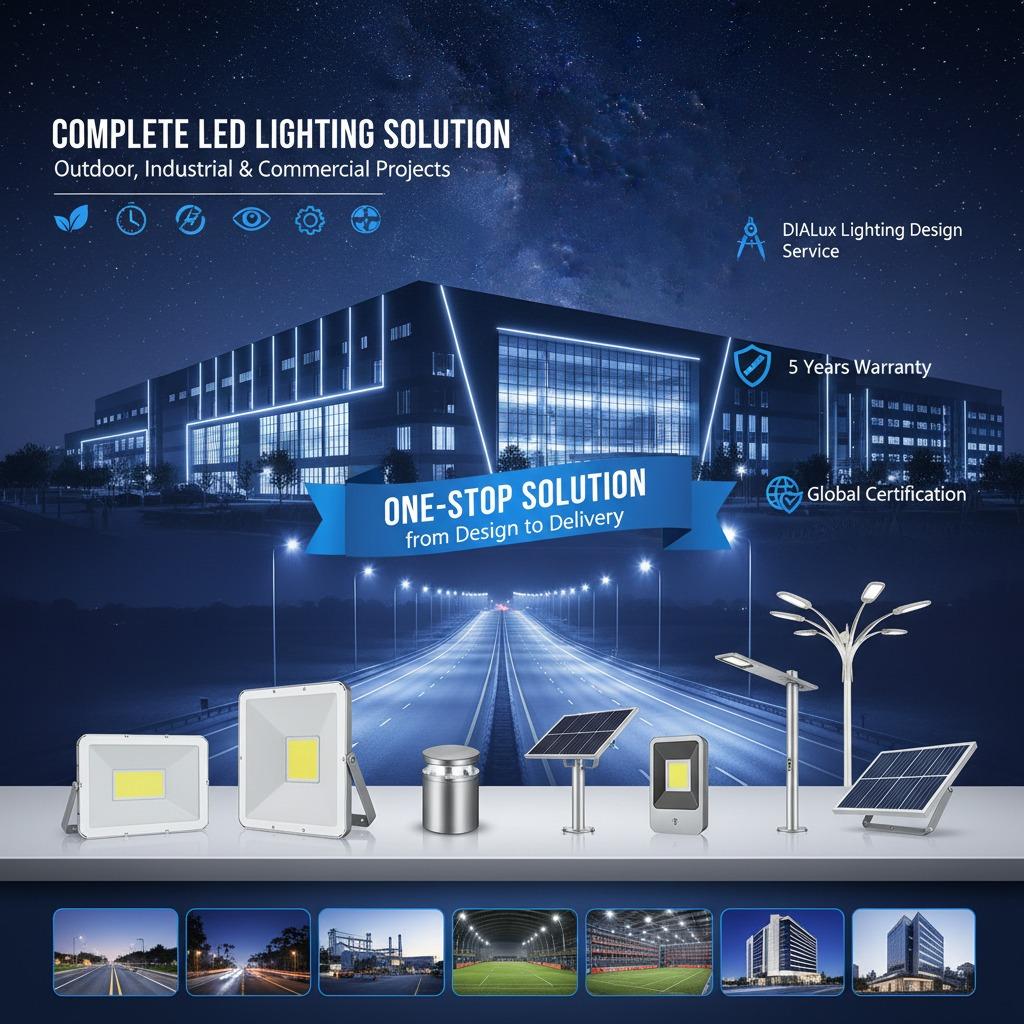
The marketing claims visible in the source material point to a fairly common but important service bundle: OEM/ODM support, one-stop delivery, DIALux lighting design service, and warranty positioning. Those are not decorative phrases. For a buyer, they suggest a manufacturer may be willing to help with fixture selection, project layout, and customization rather than pushing standard stock only.
That matters because many lighting failures happen at the handoff between sales and application. A fixture can be technically acceptable and still poorly matched to pole spacing, ceiling height, or visual task. A decent industrial LED lighting manufacturer should be able to discuss the project in practical terms: where the light will be mounted, who will maintain it, how the optics affect adjacent areas, and whether a more efficient fixture family can reduce the total count. If the vendor cannot talk through those basics, the buyer usually ends up paying for it later in rework.
Selection criteria that deserve more attention than they usually get
Buyers often start with wattage and stop there. That is a mistake. Even when the technical values are not published in detail, the conversation should cover application fit, housing durability, glare control, ease of installation, and the manufacturer’s ability to support repeat orders. For projects spanning roads, warehouses, and commercial exteriors, consistency across fixture families can simplify maintenance and spare parts planning.
It is also worth separating claims from evidence. The source material mentions energy saving, long life, low maintenance, flicker-free visual comfort, and sustainability. Those are reasonable goals, but a professional buyer should still ask for the specific project documents that matter: layout drawings, product datasheets, mounting details, and the exact scope of any compliance claims. Phrases such as CE, RoHS, and ISO appear in the source, but the buyer should confirm which products are covered and whether the paperwork matches the intended market.
A practical buyer checklist before issuing a PO
Before placing an order with a LED light manufacturer, most engineering teams will want to confirm a few fundamentals:
First, does the supplier offer the fixture family needed for the full site, not just one highlight product? Second, can they support a lighting design discussion rather than simply quoting catalog items? Third, are the housings, lens materials, and mounting styles appropriate for the environment? Fourth, is there a clear warranty position and a plan for replacement if a problem appears after installation?
And one small but important caution: when a supplier offers many product categories, it can be tempting to assume every model is equally mature. That is not always true. A broad catalog is useful, but the buyer should still verify the exact model selected for the project, especially for solar and outdoor applications where site conditions vary more than brochures suggest.
What this kind of supplier is best suited for
A manufacturer with this kind of portfolio is typically a good fit for municipal lighting upgrades, campus pathways, industrial bays, parking lots, sports areas, and mixed-use commercial sites. The combination of product range and project support is especially useful when a customer wants a single sourcing point for multiple fixture types. That can reduce coordination overhead and make the installation plan cleaner.
For teams comparing vendors, the real decision is whether the supplier can behave like a project partner, not just a shipping point. If the answer is yes, the sourcing process gets simpler, the design conversation gets sharper, and the site is more likely to work the way the engineer intended.
Next step
If you are evaluating an LED lighting manufacturer for a mixed outdoor or industrial project, start by requesting product datasheets, a layout proposal, and clarification on which fixture families are available for your exact application. A short technical review now is far cheaper than a field correction after installation.