
When a Streetscape Needs More Than a Pole and a Lamp
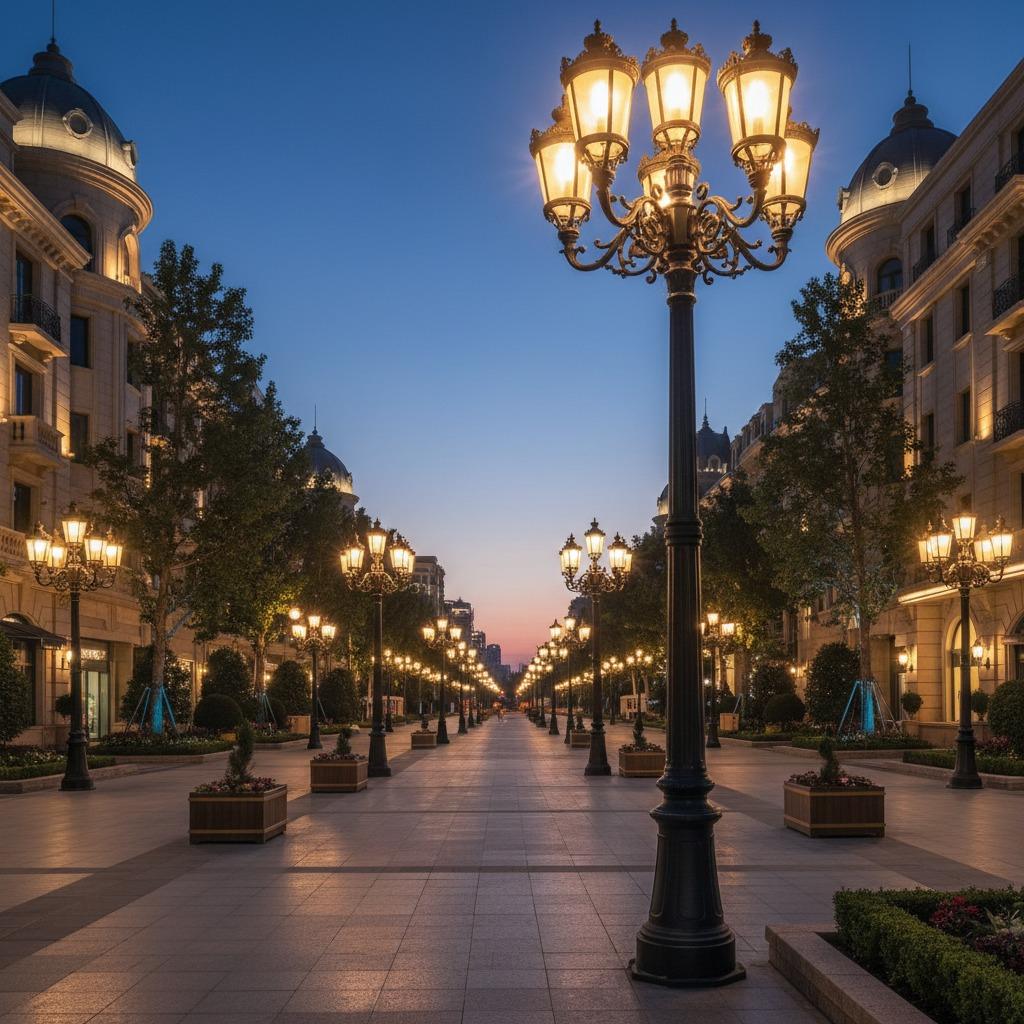
In a dense pedestrian district, a decorative street light manufacturer is rarely being asked for “just lighting.” The real brief is usually broader: make the street feel safer after dusk, keep the architecture coherent, and avoid the flat, utility-only look that can make a boulevard feel unfinished. That is exactly the decision point many municipal buyers, developers, and landscape teams face when they compare ornamental fixtures with standard roadway poles.
The case here is straightforward on the surface and a little more nuanced underneath. The installed fixtures show a tall vertical pole with a flared base, decorative bracket arms, and twin lantern heads. The lanterns have a faceted, tapered profile and emit a warm white glow. Visually, the result is calm and disciplined: repeated units set in a line, providing both ambient and task lighting along what appears to be a pedestrian-friendly streetscape. It is the kind of layout that works well in boulevards, campus roads, hospitality districts, and planned communities where lighting has to support the architecture instead of fighting it.
What the Fixture Design Is Trying to Solve
Ornamental outdoor lighting sits at the intersection of function and identity. A normal roadway light can illuminate pavement just fine, but it may not help with wayfinding, district branding, or the softer visual expectations of a public realm designed for walking. A decorative street light manufacturer is solving for those missing layers.
In this case, the twin-lantern arrangement does two useful things. First, it spreads light across a wider visual field, which can help a linear path feel more evenly lit. Second, it creates a repeating architectural rhythm. That matters more than many buyers admit at the specification stage. Once poles go in, they dominate the sightline. If the fixture proportions are wrong, the whole streetscape can feel busy or dated. If the design is coherent, people often stop noticing the hardware and simply experience the place as more polished.
What a Buyer Can Read From the Visible Construction
The poles and lantern frames appear to be metal construction, likely cast or fabricated steel or aluminum, with a dark bronze or black finish. That is a common choice for ornamental installations because it visually anchors the fixture and makes the form read clearly at night. The diffusers look like glass or a clear/translucent panel, though that cannot be verified from appearance alone.
For buyers, the practical takeaway is this: the visible materials suggest a product family intended for outdoor architectural use, not a lightweight temporary installation. But the important performance questions remain hidden and should be checked before purchase. Material grade, corrosion resistance, electrical details, mounting method, and maintenance access all need to be confirmed with the supplier. Decorative fixtures can look very similar on a rendering or in a photo while differing a great deal in service life.
Where This Type of Lighting Fits Best
Not every project needs ornamental lighting. A logistics yard, for example, wants efficiency first. A heritage district or a residential promenade is a different story. That is where a street light decorative manufacturer becomes relevant, because the fixture is being used as part of the place-making strategy.
Typical fit scenarios include:
- municipal streets that border parks or civic buildings
- residential and commercial boulevards with coordinated streetscape elements
- university and campus roads where branding matters
- hospitality districts that want a warmer nighttime atmosphere
- planned communities looking for a consistent classical or European-style look
The common thread is visual alignment. Buyers are usually trying to match the lighting to adjacent paving, railings, façades, or landscape features. If the street furniture feels disconnected, the whole project loses some of its credibility.
Selection Criteria That Matter in the Real World
When teams evaluate decorative street lights manufacturer options, the discussion often starts with appearance and ends with maintenance. That is sensible, but it should not stop there.
1. Proportion and scale
The flared base, pole height, arm reach, and lantern size need to feel balanced against the width of the street and the height of nearby buildings. Oversized ornament can read as theme-park styling. Undersized ornament disappears.
2. Finish durability
Dark bronze and black finishes are popular because they hide visual clutter and age reasonably well, but outdoor performance depends on coating quality and exposure conditions. Coastal air, de-icing salts, and heavy pollution all change the equation.
3. Light quality
The warm white output seen here helps the installation feel inviting. Still, warm color alone does not guarantee good pedestrian lighting. Uniformity, glare control, and maintenance access matter just as much.
4. Supply consistency
For a row of repeated poles, variation is the enemy. Buyers should ask how the manufacturer controls repeatability across lantern assemblies, brackets, and finish batches. Small differences become obvious once the lights are installed in a line.
Common Buyer Mistakes
The most common mistake is treating decorative poles like simple furniture. They are not. They sit at the intersection of structural, electrical, and architectural requirements. Another frequent misstep is approving the fixture on appearance alone and leaving the technical package for later. That is how projects end up with mismatched mounting details or maintenance headaches after handover.
There is also a subtler risk: choosing a decorative design that looks elegant in daylight but performs awkwardly at night. The whole point of these fixtures is that they must work in two different visual modes. A good supplier understands that tension and designs for both.
Questions to Put to the Supplier Before You Commit
Ask what parts of the fixture are standard and what can be customized. Ask how the pole and lantern are fabricated, not just how they look. Ask what service access is provided for maintenance. And if the project has a heritage or district-design requirement, confirm whether the supplier can keep the decorative language consistent across multiple fixture types.
It is also worth requesting photos of completed installations in settings similar to yours. Not showroom images—real projects. A manufacturer’s ability to build one attractive unit is not the same as its ability to supply a coherent streetscape program.
What This Case Suggests for Future Projects
This style of decorative outdoor street light is best understood as infrastructure with a public-facing role. It has to illuminate, of course, but it also has to support the district’s character. That is why the choice of a decorative street light manufacturer affects more than purchasing. It affects how a neighborhood is read after dark.
If your project calls for coordinated urban landscape lighting, the next step is to define the visual language first, then test the technical package against it. For teams sourcing similar fixtures, that order usually leads to fewer surprises and a better-looking street.
FAQ
Is this type of fixture mainly for aesthetics?
No. The aesthetic value is important, but the fixture still needs to support pedestrian safety and streetscape visibility.
Can these lights be used outside heritage districts?
Yes. They are often used in boulevards, campuses, parks, and residential districts where a coordinated architectural look is wanted.
What should buyers verify before ordering?
Confirm the technical specifications, materials, finish system, mounting details, and maintenance requirements directly with the supplier.
For sourcing teams comparing decorative street lights manufacturer options, the best move is to treat the fixture as part lighting product, part urban design element. That shift in thinking usually leads to a better buying decision.