
2026 Commercial LED Lighting Trends: What B2B Buyers Need to Know
Commercial lighting is entering a new stage in 2026. For many years, businesses upgraded from traditional lighting systems to LED mainly because of energy savings and longer lifespan. However, modern projects now require much more than basic illumination.
Today, architects, contractors, developers, distributors, and facility managers are looking for lighting solutions that provide:
- Higher energy efficiency
- Better visual comfort
- Intelligent control capability
- Flexible customization
- Lower lifecycle costs
- Reliable long-term performance
As a result, selecting the right commercial LED lighting manufacturer has become a strategic decision rather than simply a product purchase.
A professional lighting manufacturer should support customers throughout the entire project process, including product selection, lighting design, customization, testing, production, and after-sales service.
For commercial lighting projects, CDZM provides solutions for offices, retail spaces, industrial environments, and outdoor applications, supported by engineering services and customized lighting capabilities.
CDZM Commercial Lighting Solutions
Why Choosing the Right Commercial LED Lighting Manufacturer Matters in 2026
The commercial lighting market has become increasingly competitive. Many suppliers can provide LED fixtures, but not every supplier can support complex project requirements.
For B2B buyers, the difference between a trading company and a professional manufacturer often appears in:
Product Development Capability
A reliable manufacturer should be able to adjust:
- Wattage
- Lumen output
- CCT
- CRI
- Beam angle
- Housing structure
- Driver configuration
- Control compatibility
Engineering Support
Commercial projects often require more than a product catalog.
Professional support may include:
- Lighting calculations
- DIALux simulation
- Product recommendations
- Installation guidance
- Energy-saving analysis
Quality Management
Large projects require consistent performance across hundreds or thousands of fixtures.
Important factors include:
- Incoming material inspection
- Production monitoring
- Electrical testing
- Aging testing
- Waterproof testing
- Final inspection
According to CDZM's company information, the company focuses on LED lighting manufacturing with engineering support, testing capabilities, and customized solutions for different applications.
CDZM About Us
Trend 1: Smart Commercial Lighting Systems Become a Standard Requirement
One of the biggest changes in commercial LED lighting in 2026 is the rapid adoption of smart lighting systems.
Traditional lighting systems mainly provide:
ON / OFF control
Modern commercial lighting systems provide:
Automated + Connected + Energy Optimized control
Common smart lighting technologies include:
- DALI control systems
- 0-10V dimming
- Occupancy sensors
- Daylight harvesting
- Wireless control systems
- Building management integration
These technologies help businesses achieve:
- Reduced energy consumption
- Better space management
- Flexible lighting scenes
- Improved user experience
For example:
An office building may reduce unnecessary lighting through occupancy sensors.
A retail store may adjust lighting scenes based on business hours.
A commercial facility may integrate lighting control with building automation systems.
When selecting a commercial LED lighting manufacturer, buyers should confirm whether the supplier supports required control protocols and provides compatible drivers.
CDZM commercial lighting solutions include options such as DALI and 0-10V dimming control for professional applications.
CDZM Commercial Lighting Solutions
Trend 2: Human-Centric Lighting Becomes More Important
Commercial lighting is increasingly focused on people rather than only brightness.
In 2026, businesses are paying more attention to how lighting affects:
- Employee comfort
- Productivity
- Visual health
- Customer experience
- Indoor atmosphere
Human-centered lighting focuses on several technical factors.
Glare Control
Excessive glare can affect comfort, especially in offices where employees use computer screens for long periods.
Important considerations include:
- UGR value
- Optical design
- Diffuser quality
- Light distribution
Color Quality
Color performance is especially important for:
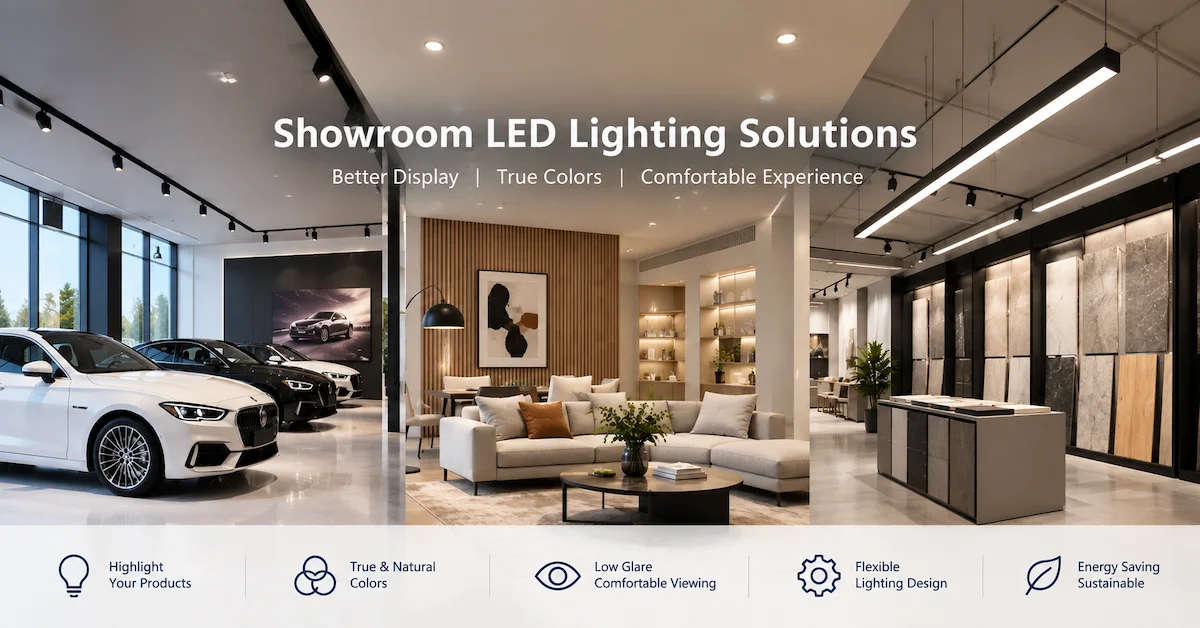
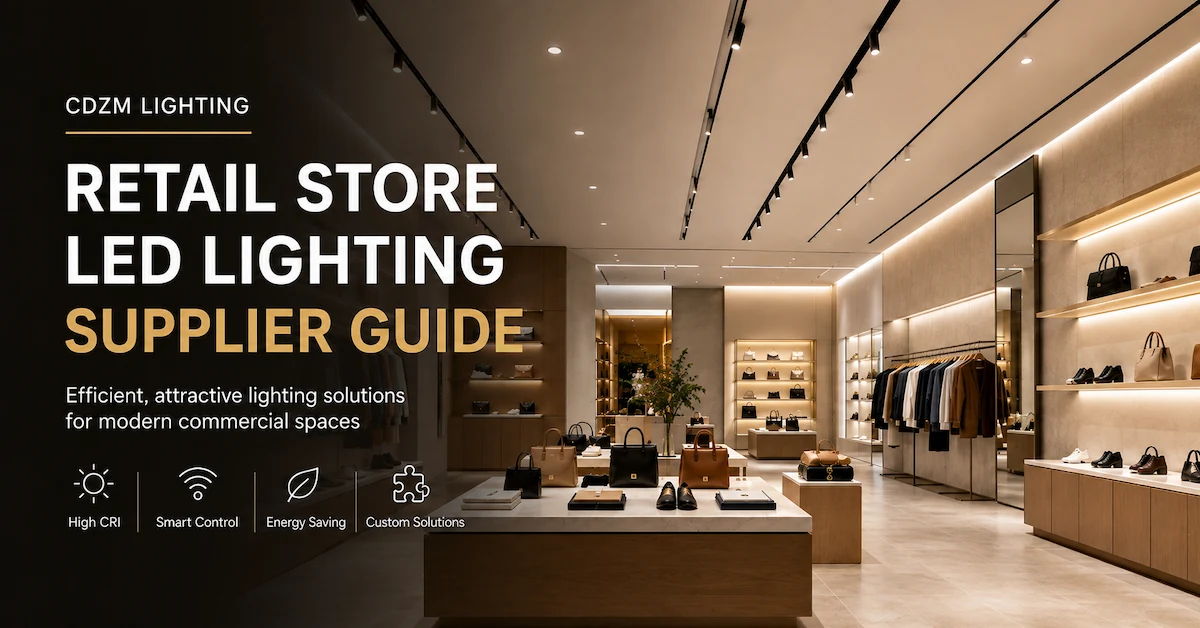
- Retail stores
- Showrooms
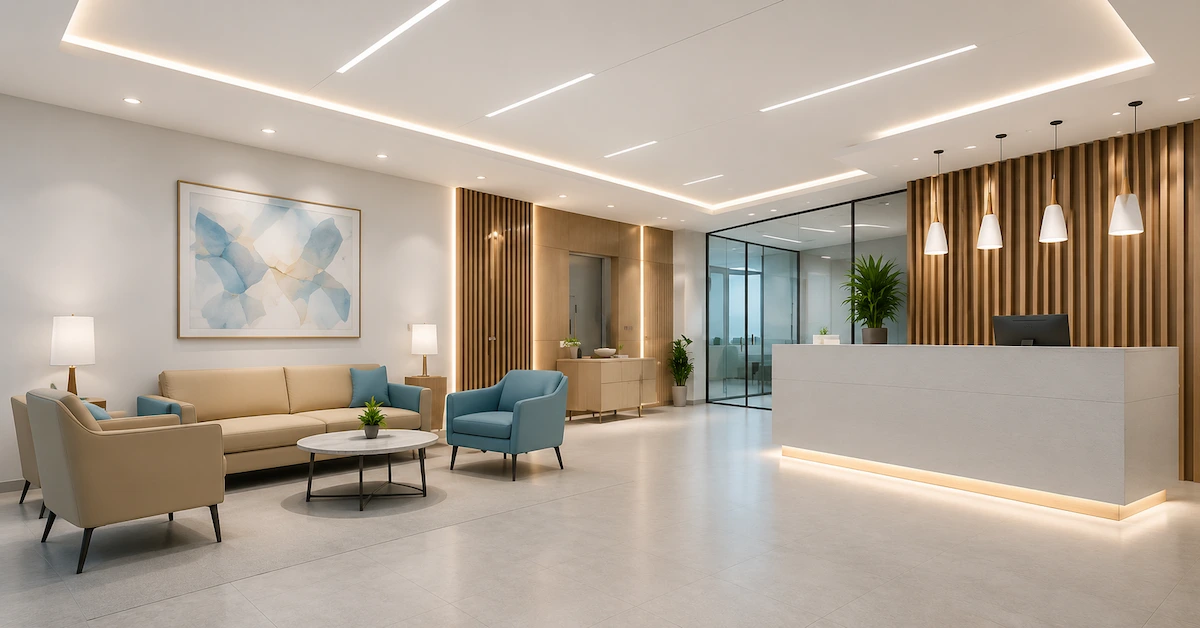
- Hotels
- Design studios
- Healthcare environments
Key parameters include:
- CRI
- CCT
- Color consistency
Balanced Illumination
A good commercial lighting system should provide:
- Uniform brightness
- Appropriate contrast
- Comfortable visual conditions
The goal is not simply making a space brighter but creating an environment suitable for specific activities.
Trend 3: Energy Efficiency Is Moving Toward Lifecycle Value
Energy saving remains a major reason for LED adoption, but buyers in 2026 are increasingly evaluating total ownership cost.
The lowest purchase price does not always mean the lowest project cost.
A professional evaluation should include:
| Factor | Why It Matters |
|---|---|
| Initial cost | Budget control |
| Energy consumption | Long-term operating cost |
| Product lifespan | Replacement frequency |
| Maintenance requirements | Labor and service cost |
| Driver reliability | System stability |
| Light quality | User experience |
A high-quality commercial LED lighting manufacturer should provide technical data instead of only pricing.
Important specifications include:
- Lumen output
- lm/W efficiency
- Driver information
- Thermal design
- Testing reports
- Warranty terms
For large commercial projects, lifecycle performance often creates more value than a lower initial quotation.
Trend 4: Customized LED Lighting Solutions Are Growing
Commercial projects are becoming more specialized.
Standard products may not always meet every project's requirements.
In 2026, customization capability is becoming an important factor when choosing a lighting supplier.
Common customization requirements include:
Product Customization
- Different wattage options
- Customized lumen packages
- Special dimensions
- Different color temperatures
- Specific beam angles
Branding Customization
- Private label
- Customized packaging
- Product labeling
- Documentation support
Project Customization
- Special installation methods
- Control integration
- Regional electrical requirements
- Application-specific designs
This is especially valuable for:
- Lighting distributors
- Engineering contractors
- Commercial developers
- Lighting brands
CDZM supports OEM and ODM cooperation, helping customers develop lighting solutions based on project requirements and market needs.
CDZM Lighting Manufacturer
Trend 5: Sustainable Commercial Lighting Becomes a Project Requirement
Sustainability is becoming a key consideration in commercial construction and renovation projects.
Modern buyers are evaluating:
- Energy consumption
- Product lifetime
- Material efficiency
- Maintenance requirements
- Upgrade flexibility
A sustainable LED lighting solution requires more than efficient LED chips.
It also depends on:
- Reliable drivers
- Effective heat dissipation
- Optimized optical design
- Stable electrical performance
For commercial buildings, efficient lighting systems can support:
- Lower operational costs
- Reduced maintenance
- Improved building performance
Trend 6: Lighting Design Support Becomes a Manufacturer Advantage
In the past, many buyers selected lighting products mainly from catalogs.
However, large projects require engineering-based decisions.
A professional commercial LED lighting manufacturer should understand:
- Space dimensions
- Ceiling height
- Installation conditions
- Required illuminance
- Light distribution
- Energy targets
Technical support may include:
DIALux Simulation
Helps customers evaluate:
- Fixture quantity
- Lighting uniformity
- Light distribution
- Expected illumination
Project Consultation
Helps determine:
- Suitable product models
- Installation methods
- Control solutions
- Energy-saving strategies
CDZM provides lighting engineering support including DIALux simulation, lux calculation, structural design, and project optimization.
CDZM Lighting
Commercial LED Lighting Applications in 2026
Different commercial environments require different lighting strategies.
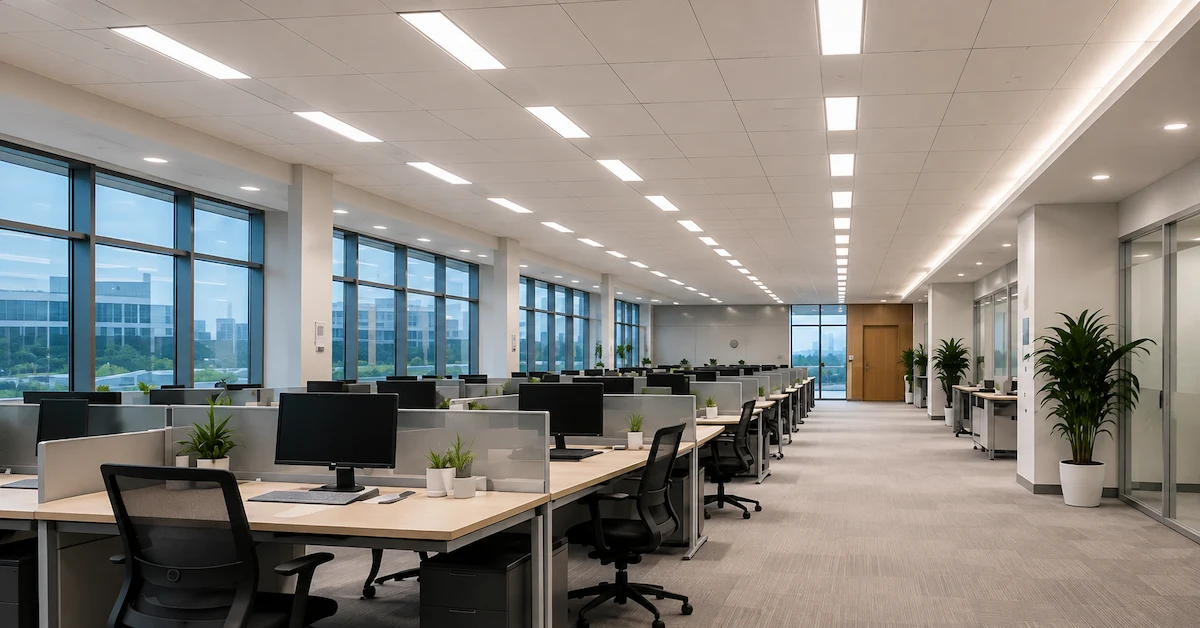
Office Buildings
Main requirements:
- Low glare
- Comfortable working environment
- Smart controls
- Energy efficiency
Typical products:
- LED panel lights
- LED troffer lights
- Linear lighting systems
Retail Stores
Main requirements:
- High color accuracy
- Product visibility
- Flexible lighting adjustment
Typical products:
- Track lighting
- Downlights
- Accent lighting
Hotels and Hospitality Spaces
Main requirements:
- Atmosphere creation
- Guest comfort
- Architectural appearance
Industrial Facilities
Main requirements:
- High efficiency
- Long operating hours
- Durable construction
Typical products:
- High bay lights
- Industrial LED fixtures
Public and Infrastructure Projects
Main requirements:
- Reliability
- Weather resistance
- Long service life
Typical products:
- Flood lights
- Street lights
- Outdoor lighting systems
How to Select a Reliable Commercial LED Lighting Manufacturer
Before choosing a supplier, B2B buyers should evaluate several areas.
| Evaluation Area | Questions |
|---|---|
| Manufacturing | Does the supplier own production capability? |
| Engineering | Can they provide lighting design support? |
| Customization | Can they modify products? |
| Quality | Are testing procedures available? |
| Experience | Do they have similar project experience? |
| Delivery | Can they support project schedules? |
| Service | Is technical support available? |
A reliable manufacturer should act as a project partner instead of only a product supplier.
Common Mistakes When Purchasing Commercial LED Lighting
Choosing Only Based on Price
Low-cost products may create:
- Higher maintenance expenses
- Shorter lifespan
- Poor lighting performance
Ignoring Lighting Design
The wrong fixture selection can lead to:
- Uneven lighting
- Excessive glare
- Energy waste
Not Checking Customization Capability
Projects may require special specifications that standard products cannot provide.
Selecting Suppliers Without Technical Support
Commercial projects often need assistance during design, installation, and commissioning.
FAQ About Commercial LED Lighting Manufacturer
1. What should I look for in a commercial LED lighting manufacturer?
Look for manufacturing capability, engineering support, quality control, customization options, and experience with similar projects.
2. Why should businesses choose a manufacturer instead of a trading company?
Manufacturers usually provide better control over production, customization, quality management, and technical support.
3. What products are commonly used in commercial lighting projects?
Common products include LED panel lights, troffer lights, linear lights, high bay lights, flood lights, and outdoor lighting fixtures.
4. Can commercial LED lighting manufacturers provide OEM services?
Yes. OEM services may include customized products, branding, packaging, and project-specific specifications.
5. What smart controls are used in commercial LED lighting?
Common options include DALI, 0-10V dimming, sensors, daylight harvesting, and building management integration.
6. How can I evaluate LED lighting quality?
Review:
- Light efficiency
- Driver quality
- Testing reports
- Material selection
- Warranty
- Certification requirements
7. What information should I provide when requesting a quotation?
Provide:
- Project type
- Location
- Quantity
- Installation conditions
- Required specifications
- Control requirements
8. Can CDZM customize commercial LED lighting products?
Yes. CDZM supports customized lighting solutions and OEM/ODM cooperation according to project requirements.
9. Do commercial lighting manufacturers provide lighting calculations?
Professional manufacturers may provide lighting simulation, lux calculations, and product recommendations for project applications.
10. How long does commercial LED lighting production take?
Production time depends on product type, customization requirements, quantity, and manufacturing schedule.
Conclusion
In 2026, commercial LED lighting is becoming smarter, more customized, and more focused on long-term value.
For businesses selecting a commercial LED lighting manufacturer, the right supplier should provide more than lighting products. They should offer:
- Manufacturing capability
- Technical expertise
- Quality assurance
- Customization support
- Project solutions
CDZM provides commercial LED lighting solutions for offices, retail spaces, industrial applications, and project developments with engineering support and customized manufacturing capabilities.
For commercial lighting requirements, explore CDZM's products page, review project cases, or contact the team through the contact page to discuss your project needs.