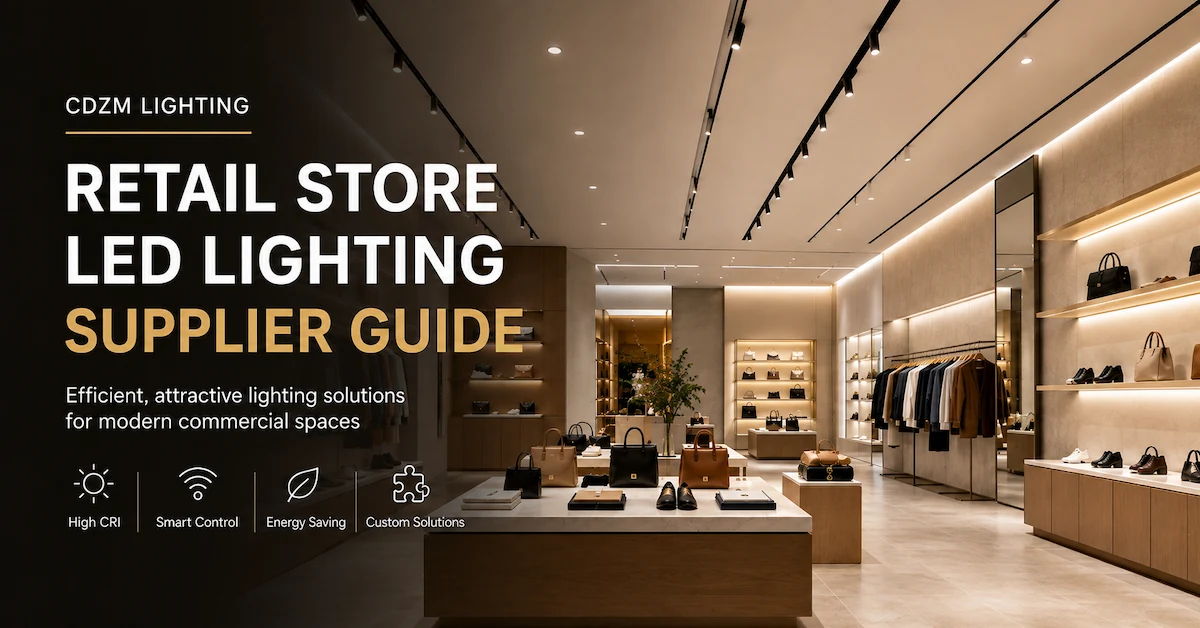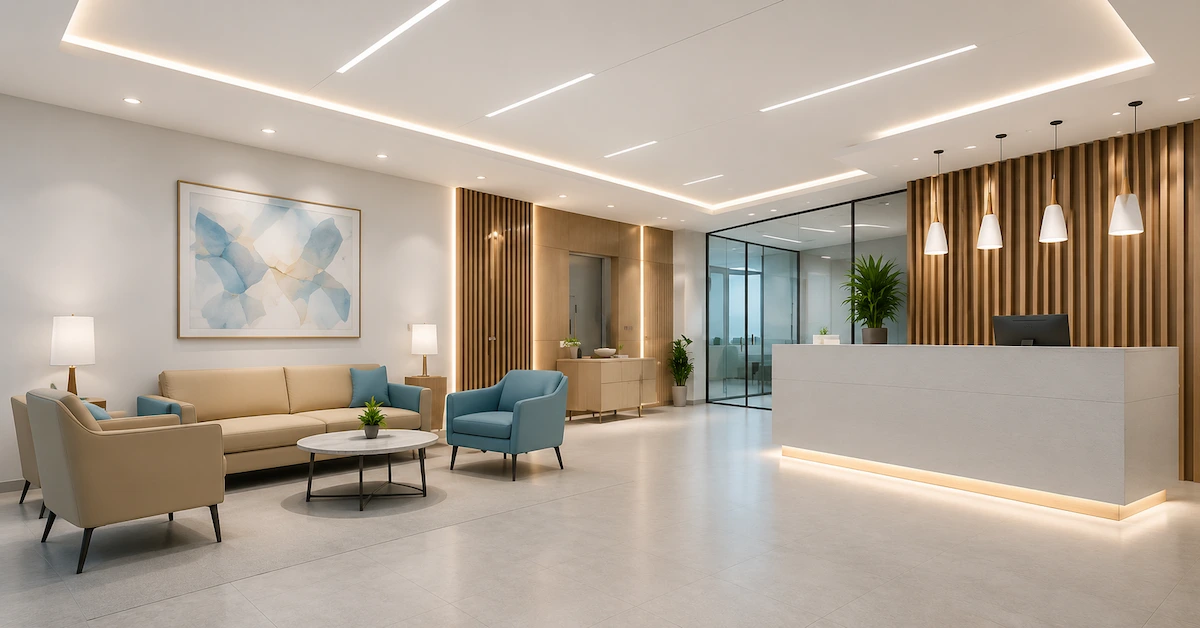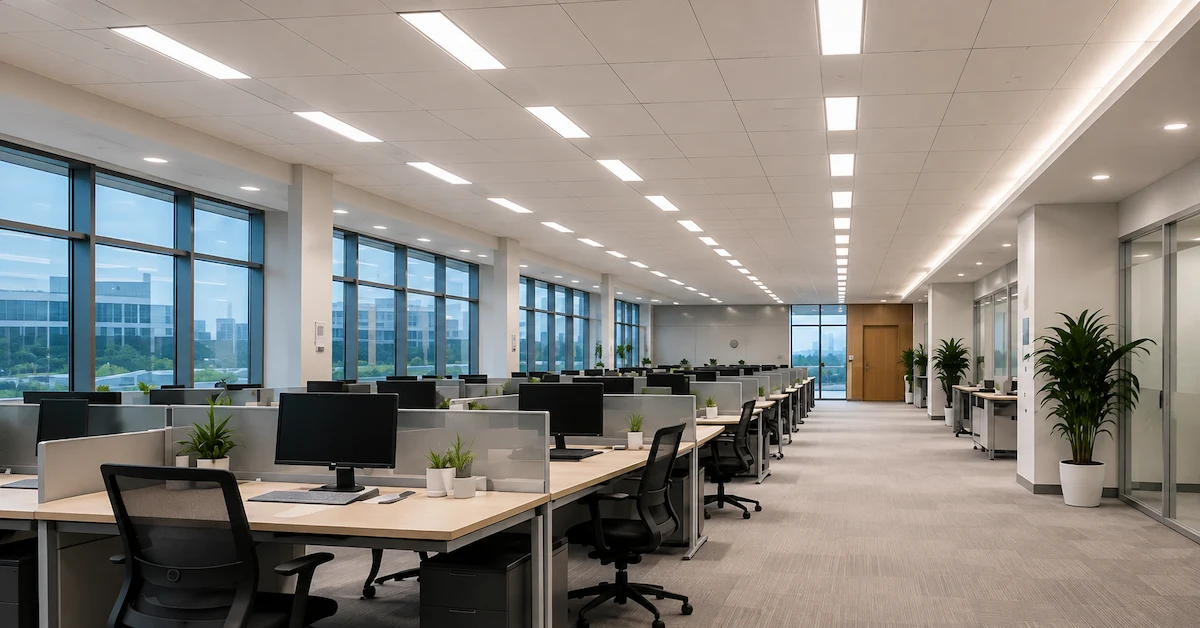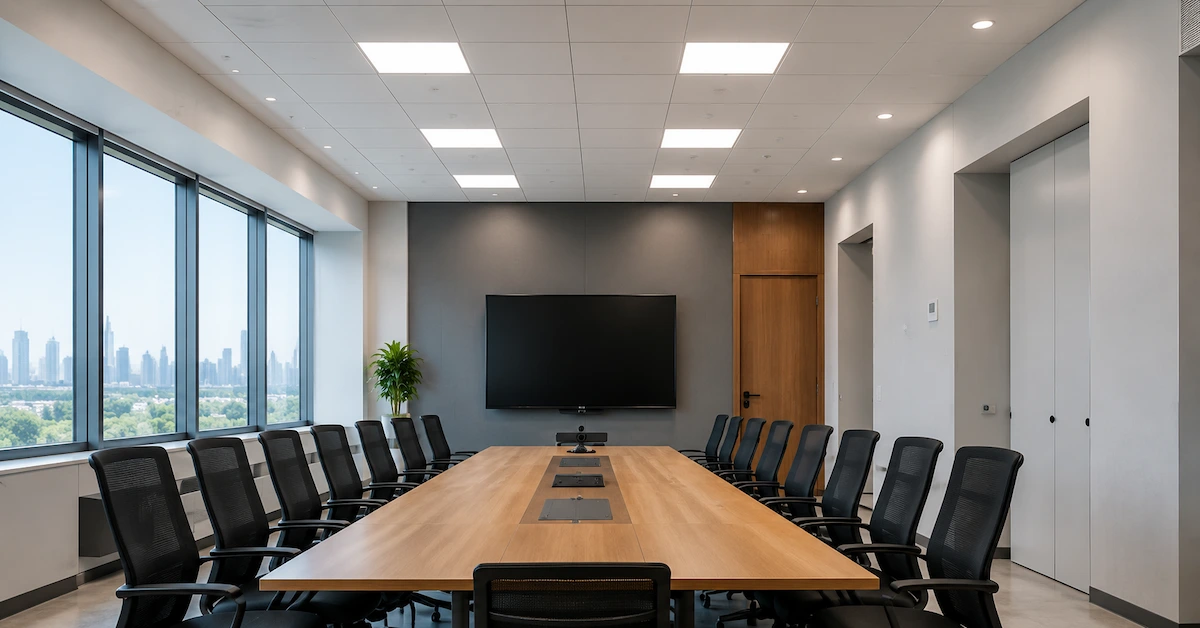

What Should a Showroom LED Lighting Supplier Deliver?
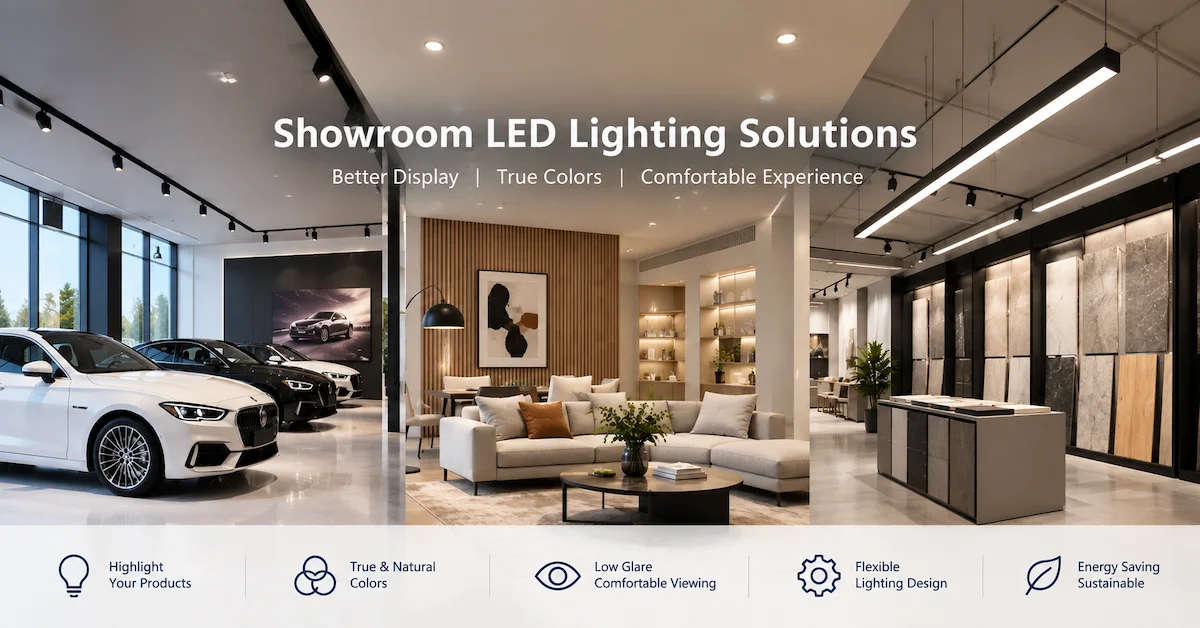
A showroom LED lighting supplier should help you specify how products will be seen, how the lighting will be installed and how the finished system will be maintained. Start with the merchandise, viewing positions and ceiling conditions, then compare fixtures, controls, samples and delivery commitments. For showroom owners, fit-out contractors and distributors, the useful purchasing question is not “Which light has the highest wattage?” but “Which documented configuration produces the display effect we can approve and repeat?” Make the lighting layout, model-specific specification and approved sample the basis of the order.
Define the Showroom and the Buyer’s Priorities
An owner should define the desired presentation and operating budget; the designer should identify viewing positions and lighting tasks; the contractor should confirm installation constraints; and the distributor should establish repeat-order requirements. Resolve these priorities before requesting product recommendations. Treat a standard showroom brief as insufficient for laboratory color matching, specialist conservation or broadcast production: those uses need separate performance criteria and specialist review. For commercial merchandising, prepare photographs of the actual goods, a floor plan, ceiling details and a description of how displays change.
Furniture, Fabric and Home-Interior Showrooms
Build the evaluation around the materials customers compare: upholstery, timber, leather and finishes. Ask for lighting proposals that address room settings, product details and consultation tables separately. Include a seated viewing position when reviewing a sofa display, and test fabric swatches beside the finished furniture. For frequently rearranged collections, make repositioning and re-aiming part of the specification rather than an assumption.
Tile, Kitchen and Bathroom Showrooms
Include vertical sample boards, cabinet fronts, countertops, mirrors and polished fittings in the brief. During sample approval, check the display from several customer positions and record where light-source reflections obscure the finish. Require the proposal to explain how each surface will be illuminated; a drawing showing only evenly spaced ceiling fixtures does not answer that question.
Vehicle, Equipment and Brand Experience Showrooms
Request a trial arrangement around a representative product, including its side surfaces, branding and customer information screens. Identify areas used for close inspection, sales conversations and photography. Where daylight enters through a large façade, review the proposed lighting under both daytime and evening conditions. These are evaluation scenarios, not claims that one fixture configuration suits every showroom.
Turn the Brief into a Lighting Specification
Give every shortlisted showroom LED lighting supplier the same specification schedule. This separates genuine product differences from quotations that omit important components or use different assumptions. The following table is a purchasing framework, not a list of guaranteed CDZM product specifications.
| Specification Item | What the Quotation Should Identify | Acceptance Question |
|---|---|---|
| Model and version | Exact luminaire, optic and driver references | Does the supplied configuration match the approved sample? |
| Electrical supply | Input voltage, frequency and rated input power | Does it match the project’s electrical design? |
| Light output | Whole-luminaire lumens and measured efficacy | Is the quoted output for the complete fixture? |
| Light distribution | Photometric file and proposed mounting arrangement | Does the calculation address the actual display surfaces? |
| Color quality | Correlated color temperature, color rendering index and color consistency tolerance | Has the merchandise been reviewed under the proposed light? |
| Glare | Optical data and relevant calculation conditions | Has the customer’s viewing direction been considered? |
| Controls | Driver model, protocol and dimming range | Has the complete driver–controller combination been tested? |
| Installation | Dimensions, cutouts, clearances and accessories | Can it be installed and serviced in the actual ceiling? |
| Materials | Housing, optical materials and finish | Do the sample and production specification agree? |
| Documentation | Applicable reports, installation information and warranty terms | Do the documents cover the quoted model and version? |
| Supply | Sample timing, production schedule, quantities and spare parts | Are responsibilities and delivery milestones written down? |
Compare Fixture Types Before Selecting Models
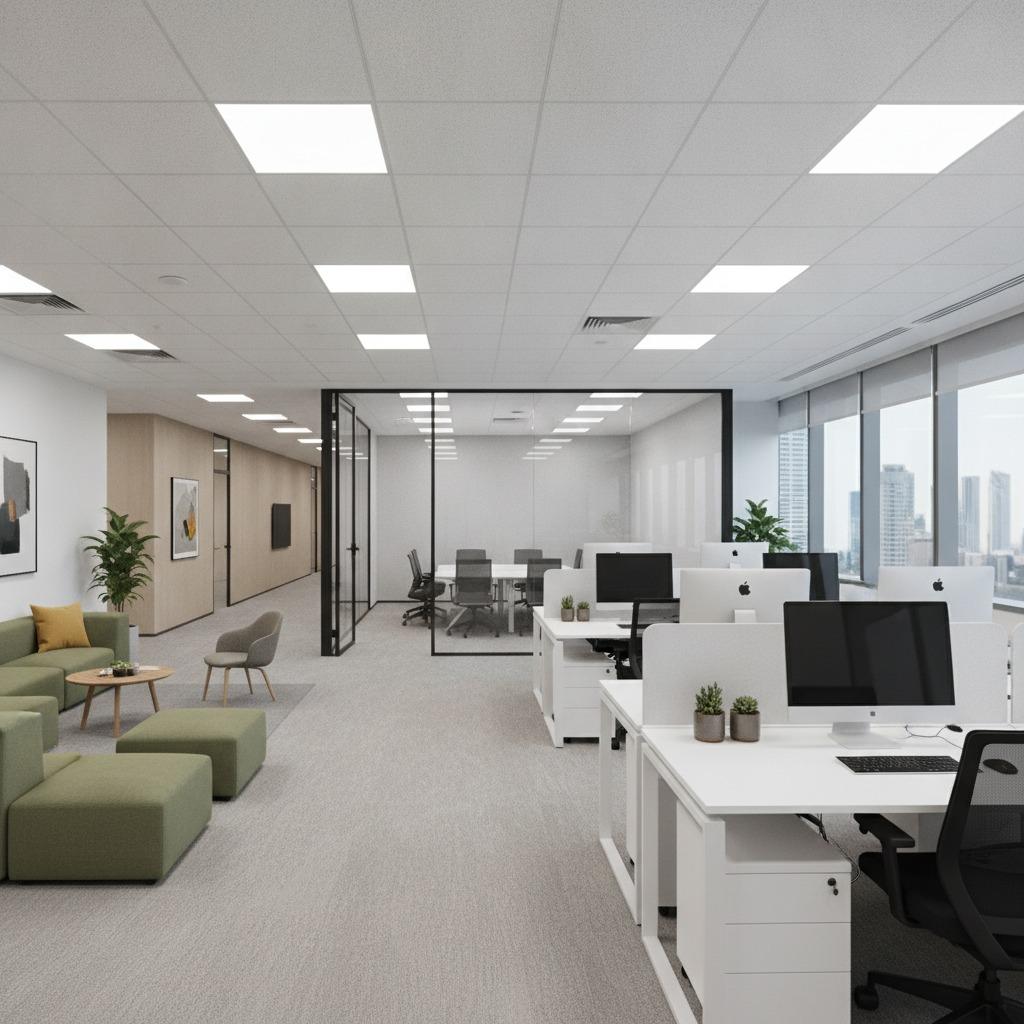
A showroom LED lighting supplier may recommend several fixture types for different tasks. Use the comparison below to shortlist them before requesting a model-by-model quotation; it is not a confirmed CDZM model list. CDZM’s commercial lighting solutions explicitly include panel and troffer lighting for showrooms, with listed formats of 600 × 600 mm and 300 × 1200 mm. Confirm the available model, actual dimensions, mounting arrangement and control version before ordering.
| Fixture Type | Role to Evaluate | Potential Selection Value | What to Confirm Before Approval |
|---|---|---|---|
| LED panels and troffers | General illumination and consultation areas | Broad illumination and coordinated ceiling integration | Ceiling fit, optical performance and whether separate display lighting is needed |
| Adjustable accent or track fixtures | Individual products and changing displays | Directional adjustment and display flexibility | Availability, aiming range, mounting compatibility and a trial lighting arrangement |
| Recessed downlights | Entrances, selected displays and fixed zones | A discreet ceiling appearance | Cutout, ceiling depth, driver access and beam placement |
| Linear or shelf-integrated lighting | Shelves, cabinets and architectural details | Lighting located closer to the display | Dimensions, shielding, heat management and maintenance access |
Approve Product Color and Glare With Real Merchandise
Check Color Quality Beyond the Label
Ask your showroom LED lighting supplier for the proposed color specification, then review it with the actual merchandise. Correlated color temperature, or CCT, describes the appearance of the white light; color rendering index, or CRI, concerns color rendering. Neither should replace a sample review of the finishes being sold. Compare shortlisted samples under controlled, recorded conditions rather than selecting whichever demonstration happens to be brighter. For technically demanding material comparisons, request additional color-rendering information and have the project designer define acceptance criteria. CDZM’s retail lighting guide provides related background on color, optics and product presentation.
Review Glare From the Customer’s Position
A UGR<19 listing is not a promise that every installation will be glare-free. Unified Glare Rating depends on installation conditions, including viewing direction and room geometry. Review direct views of the fixtures and reflected images on merchandise separately, using the customer positions identified in the brief. A comfortable view from the entrance does not settle the assessment at a consultation table or beside a mirrored display. The low-glare lighting guide explains why fixture data should be evaluated within the actual layout.
Use a Representative Display Mock-Up
Before approving a bulk order, build one representative display bay with the proposed mounting height, finishes and merchandise. Record the fixture reference, optic, driver, control settings and viewing positions. Measure light on the relevant product surfaces as well as the circulation area, and ask the owner and designer to approve the result together. Keep the approved configuration with the sample record. This creates an acceptance reference instead of relying on a photograph with unknown exposure settings.
Choose Controls Around Daily Showroom Operation
Define the operating scenes first: normal browsing, featured displays, cleaning and after-hours presentation. DALI can support addressable groups and scenes when the system is appropriately configured, while 0–10V may suit simpler dimming arrangements. Neither protocol name alone confirms compatibility or the required dimming behavior. Ask for a demonstration using the proposed luminaires, drivers and controllers, including low-level operation and recovery after power is restored. Allocate responsibility for programming, commissioning and staff handover. CDZM’s DALI lighting guide and 0–10V dimming guide explain the configuration questions to resolve before ordering.
Inspect Components and Manufacturing Consistency
A showroom LED lighting supplier should identify the LED module, driver, optical assembly, housing and mounting hardware behind the finished sample. Request an agreed component schedule and a written rule for substitutions. Inspect diffuser appearance, housing finish, alignment, connectors and access for maintenance; for adjustable fixtures, include the aiming mechanism in the review. CDZM’s manufacturing overview presents processes including PCB soldering, wire assembly, housing assembly and LED module mounting. For a specific order, ask how the selected construction and finish will be checked against the approved sample, including on later replenishment orders.
Request Testing and Documentation for the Quoted Configuration
CDZM’s company information presents integrating-sphere testing, electrical safety testing and high-temperature aging among its testing activities. Treat that information as the starting point for an order-specific evidence request: ask which reports apply to the proposed luminaire, which checks are performed during production and what records can accompany shipment. Check the model references, electrical ratings and component configuration across the quotation and documents. Have the project’s responsible technical reviewer confirm which market and installation requirements apply. A company-level credential or an unrelated product report should not be accepted as evidence for a different showroom fixture.
Confirm Capacity, Lead Time and Repeat Supply
Ask the showroom LED lighting supplier to schedule backward from the required on-site delivery date, not simply quote a number of production days. Separate technical review, sample preparation, approval, component procurement, manufacturing, inspection and transport. Identify which stage begins after drawings are approved and which depends on payment or material availability. For phased openings, request a release schedule by showroom or installation zone. For repeat orders, agree how discontinued components, finish changes and substitute models will be handled. Do not transfer a lead-time statement from an unrelated product category to the showroom project.
Compare Installed Cost Instead of Unit Price
Compare proposals from each showroom LED lighting supplier using the same scope: fixtures, drivers, controllers, mounting accessories, installation, commissioning, energy and agreed maintenance provisions. As an illustrative calculation, assume two proposals each use 100 fixtures, deliver an equivalent approved lighting result and operate for 12 hours per day over 300 days annually. A reduction from 40 W to 30 W per fixture would reduce annual electricity use by 3,600 kWh, calculated as 100 × 10 W ÷ 1,000 × 12 × 300. This is a calculation example, not a CDZM performance claim. It is only a meaningful comparison after display quality, coverage and operating conditions have been matched.
Define OEM/ODM Scope Before Approving Samples
CDZM describes OEM/ODM support, structural design and rapid prototyping within its lighting engineering services. For a showroom project, separate cosmetic requests from changes affecting the lighting or installation. A custom finish, dimension, optic or driver should be listed as a distinct requirement, with feasibility, cost, sample work and any additional verification agreed before production. Brand customers should also settle packaging artwork, product labeling, design ownership and repeat-order specifications. Customization should produce a documented configuration that can be reordered, not merely a sample that looks correct once.
Prepare a Project Brief for CDZM
Send the country, showroom type, floor plan, ceiling heights, display photographs, operating hours, quantities and target delivery date. Add lighting targets already set by the designer, preferred controls, mounting restrictions and documentation requirements. CDZM lists DIALux simulation and lighting-calculation support; ask which design deliverables are included for your project. The website’s commercial offering provides a starting point for panel and troffer enquiries, while accent, track and integrated-display requirements should be confirmed individually. Use the project enquiry page to request a quotation organized by display zone and exact configuration, rather than an undifferentiated product price list.
FAQ About Choosing a Showroom LED Lighting Supplier
1. What should I evaluate first when comparing suppliers?
Start with whether the proposal addresses your merchandise, viewing positions and installation conditions. Then compare model-specific data, samples, documentation, delivery milestones and maintenance arrangements. A broad catalog alone does not settle those questions.
2. Can LED panels provide all the lighting a showroom needs?
Evaluate their role as general illumination separately from product-display tasks. Require the layout and mock-up to show whether they meet both needs, or whether dedicated accent or display lighting should be added.
3. Which color temperature should I specify?
Approve the choice using the actual products and intended surroundings. Record the selected CCT, its tolerance and whether the fixture is fixed, selectable or tunable. These are different configurations and should not be substituted without agreement.
4. Is a high CRI value enough for accurate product presentation?
Use CRI as part of the color specification, not as the sole acceptance test. Review the relevant fabrics, coatings and finishes under the proposed fixture, with additional color data where the project requires it.
5. Does UGR<19 eliminate reflections on polished products?
No. Review discomfort glare from the lighting installation and reflections on merchandise as separate concerns. Test the proposed positions and optics using the actual reflective surfaces and likely customer viewing directions.
6. Should I choose DALI or 0–10V?
Write down the required scenes, grouping, dimming behavior and control responsibilities first. Then request a compatible system proposal. Compare commissioning and maintenance needs alongside the driver and controller prices.
7. Can new lights use the existing showroom ceiling?
Confirm measured dimensions, available depth, supports, electrical connections and maintenance access before selecting a replacement. A nominal fixture format does not remove the need to check the existing installation.
8. What should the sample approval record include?
Include the model, optic, driver, finish, mounting arrangement, control settings and photographs of the approved display. Record the agreed visual and measured criteria, along with any outstanding changes.
9. What are the MOQ and lead time for a showroom order?
Request the minimum order quantity and lead time for the exact configuration, quantity and customization scope. Separate sample timing from production and shipping. Do not assume that terms quoted for another CDZM product apply automatically.
10. What should I ask about warranty and spare parts?
Ask which components are covered, the duration and exclusions, the evidence needed for a claim and who pays related costs. Confirm replacement drivers, matching fixtures and the procedure for proposed substitutions.
Conclusion
The right showroom LED lighting supplier connects product presentation with a specification the project team can approve, install and maintain. Define the display tasks, compare equivalent configurations, test real merchandise and confirm delivery and support arrangements before committing to volume. CDZM’s commercial lighting information and engineering services provide a basis for discussing the project, but the purchase should be tied to confirmed models and written requirements. Share your layout, product displays and schedule through CDZM’s contact page to begin a project-specific lighting enquiry.