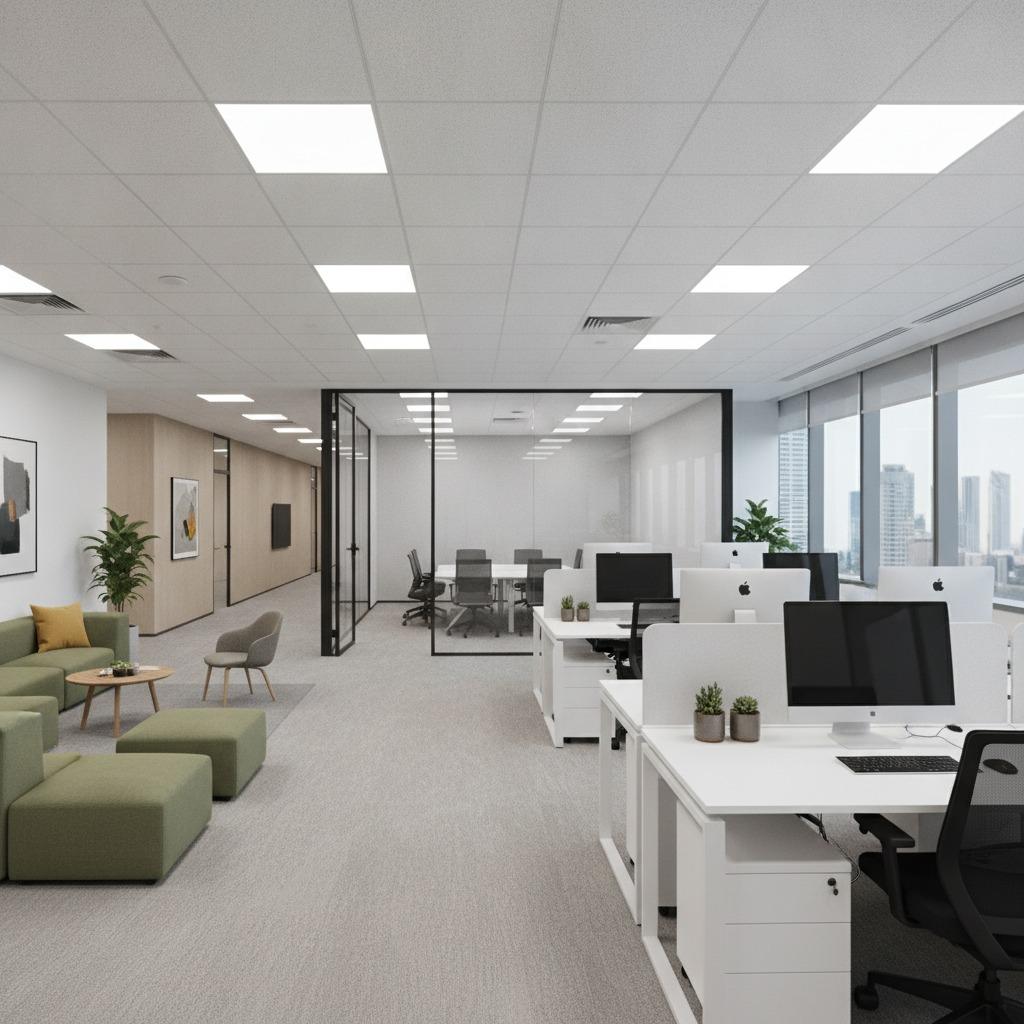

What Should Buyers Expect From a DALI Lighting Manufacturer?
DALI lighting is increasingly considered for commercial projects that require more than simple ON/OFF switching or basic dimming.
For offices, retail spaces, public buildings, hospitality projects, and other smart-building applications, buyers may need lighting systems that can support individual fixture control, grouped lighting, scenes, sensors, energy management, and integration with wider building systems.
The DALI Alliance describes DALI as a standardized digital lighting-control protocol under IEC 62386, with DALI-2 extending the ecosystem toward broader interoperability and control-device functionality.
For B2B buyers, choosing a DALI lighting manufacturer therefore involves more than finding a fixture with the word “DALI” on its datasheet.
A qualified supplier should be able to help with:
- DALI-compatible LED drivers
- Lighting fixture selection
- Control-system compatibility
- Dimming requirements
- Sensor integration
- Lighting design
- DIALux simulation
- Project customization
- Product testing
- OEM/ODM requirements
- Production and delivery
CDZM currently lists DALI and 0–10V dimming options within its commercial lighting solutions, alongside panel and troffer lighting for office and retail applications.
What Is DALI Lighting?
DALI stands for Digital Addressable Lighting Interface.
It is a digital lighting-control protocol designed specifically for communication between lighting-control devices and lighting equipment.
Unlike a simple switching system, DALI allows lighting devices to receive and respond to digital commands.
Depending on the system architecture and equipment, DALI can support functions such as:
- Individual light control
- Group control
- Dimming
- Scene setting
- Sensor-based control
- Status information
- Lighting-system management
The DALI Alliance identifies IEC 62386 as the international standard covering DALI technology. DALI-2 adds standardized control devices and focuses on improved multi-vendor interoperability through its certification program.
This makes DALI particularly relevant when a project needs a scalable and structured lighting-control system rather than independent dimming fixtures.
DALI vs Traditional Lighting Control
Before selecting a DALI lighting supplier, it is useful to understand how DALI differs from simpler control methods.
| Control Method | Typical Function | Control Flexibility | Suitable Applications |
|---|---|---|---|
| ON/OFF | Basic switching | Low | Simple commercial spaces |
| 0–10V | Analog dimming | Medium | Offices and commercial projects |
| DALI | Digital addressable control | High | Smart commercial buildings |
| DALI-2 | Standardized digital control ecosystem | High | Integrated smart-building projects |
The key difference is not simply whether a fixture can dim.
With DALI, the lighting system can be designed around addressable devices, groups, scenes, sensors, and controllers.
The DALI Alliance notes that a DALI-2 system can include control gear such as LED drivers, application controllers, input devices, and bus power supplies.
Why Are Commercial Projects Choosing DALI Lighting?
More Flexible Lighting Control
A conventional lighting circuit may control an entire group of fixtures together.
DALI allows a more granular approach.
For example, an office building may divide lighting into:
- Individual workstations
- Office zones
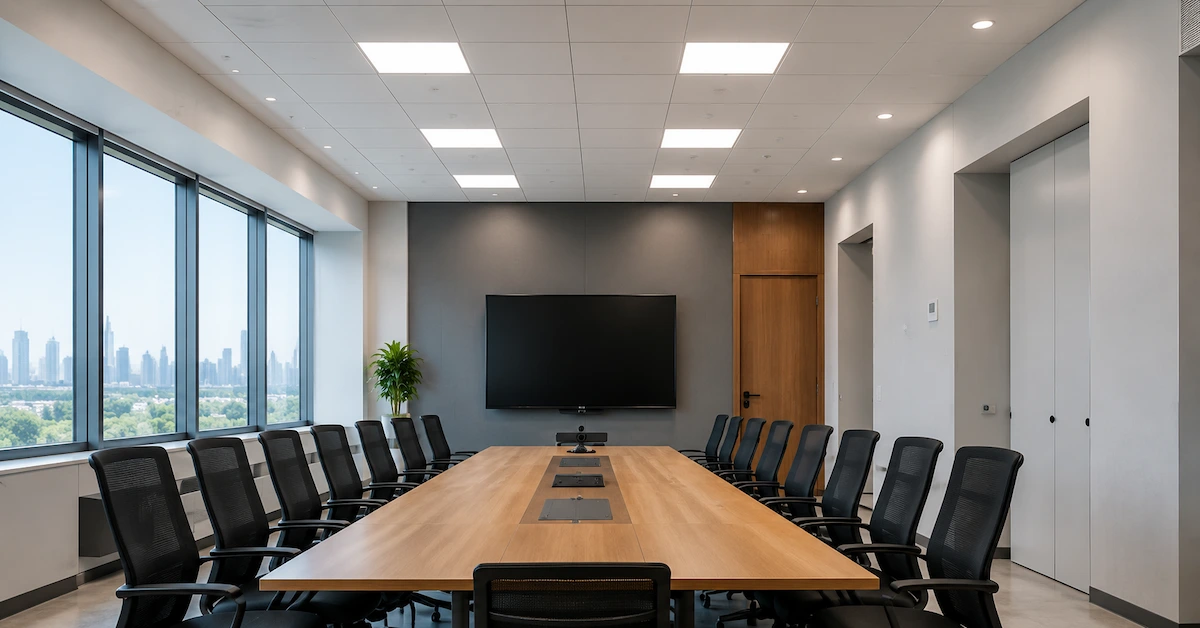
- Meeting rooms
- Corridors
- Reception areas
- Common areas
This flexibility can be useful when space usage changes over time.
Better Support for Smart Building Strategies
Modern commercial buildings increasingly integrate lighting with sensors and building-management strategies.
DALI systems can work with devices such as:
- Occupancy sensors
- Light sensors
- Push buttons
- Controllers
The DALI Alliance identifies occupancy and light sensors as examples of DALI input devices within the DALI-2 ecosystem.
More Precise Lighting Scenes
Commercial buildings may require different lighting conditions throughout the day.
For example:
Meeting room
- Presentation mode
- Discussion mode
- Video-conference mode
Retail store
- Opening mode
- Shopping mode
- Cleaning mode
Office
- Working mode
- Break mode
- After-hours mode
A properly designed DALI system can make these lighting scenes easier to manage.
What Components Are Required for a DALI Lighting System?
A common mistake in B2B procurement is treating DALI as a feature of the lamp alone.
A complete DALI system can involve several components.
DALI LED Driver
The driver is responsible for powering the LED light source and communicating with the control system.
For buyers, important questions include:
- Is the driver DALI compatible?
- Which DALI version is supported?
- What input voltage is required?
- What dimming range is available?
- Is the driver suitable for the selected LED module?
The DALI Alliance identifies control gear, including LED drivers, as a main component of a DALI-2 system.
Application Controller
The application controller can make decisions and send commands to control gear.
This can support more advanced lighting logic involving:
- Sensors
- Groups
- Scenes
- Schedules
- Building-system inputs
The DALI Alliance describes application controllers as the “brains” of the DALI system.
Input Devices
Input devices can provide information to the lighting system.
Examples include:
- Occupancy sensors
- Light sensors
- Push buttons
- Switches
These devices can support automatic lighting responses based on occupancy or daylight conditions.
Bus Power Supply
The DALI communication bus also requires appropriate power.
The DALI Alliance states that a DALI-2 system requires a bus power supply, which may be standalone or integrated into another DALI device.
What Should Buyers Check in a DALI LED Fixture?
When comparing DALI lighting products, do not evaluate only the fixture housing.
Review the complete technical configuration.
| Parameter | What to Check | Why It Matters |
|---|---|---|
| LED Source | LED type and quality | Influences light output and lifespan |
| Lumens | Delivered lumens | Determines usable light |
| Efficacy | lm/W | Helps evaluate energy performance |
| CRI | Color rendering | Important for visual quality |
| CCT | Fixed/selectable/tunable | Determines light appearance |
| Driver | DALI-compatible driver | Essential for control |
| Dimming | DALI range/function | Affects system flexibility |
| Glare | UGR/optical data | Important for offices |
| PF | Power factor | Relevant to electrical performance |
| THD | Harmonic performance | Relevant to commercial projects |
| Photometry | IES/LDT files | Supports lighting calculations |
| Dimensions | Fixture size | Determines installation compatibility |
| Mounting | Recessed/surface/suspended | Affects installation |
| Certification | Destination-market requirements | Supports compliance |
| Warranty | Coverage and conditions | Reduces procurement risk |
The DALI configuration should always be evaluated together with the luminaire, driver, controller, and intended control architecture.
How Does DALI-2 Differ From DALI?
This is an important question when evaluating suppliers.
DALI-2 is the latest generation of the DALI lighting-control protocol and introduces standardized control devices that were not part of the original DALI version-1 framework.
The DALI Alliance explains that DALI-2 focuses strongly on interoperability between products from different manufacturers and includes standardized input devices and application controllers.
For procurement, this means buyers should ask suppliers specifically:
- Is the product DALI or DALI-2?
- Is the driver certified?
- Which control functions are supported?
- Is the product compatible with the selected controller?
- Is DALI-2 certification required for the project?
Do not assume that the word “DALI” automatically means DALI-2 certified.
The DALI Alliance states that only products that successfully complete the DALI-2 certification process are eligible to use the DALI-2 logo.
DALI Lighting Applications for Commercial Projects
Office Buildings
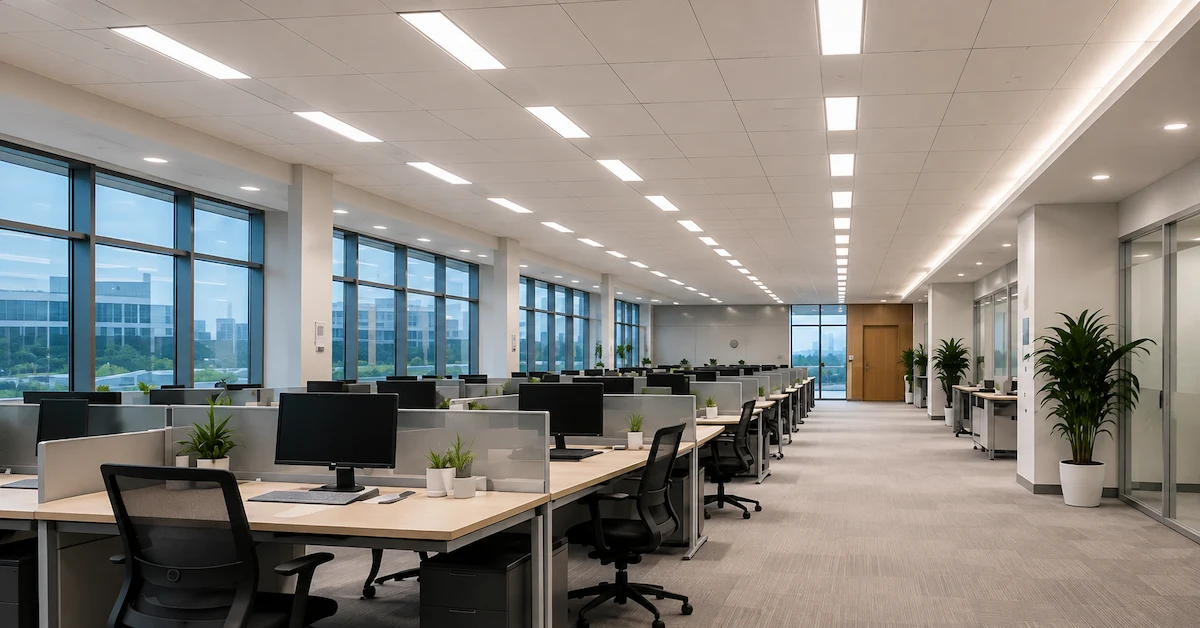
Office lighting is one of the strongest applications for DALI.
A modern office may require:
- Individual or group dimming
- Occupancy sensing
- Daylight response
- Meeting-room scenes
- Low-glare lighting
- Flexible zoning
CDZM's commercial lighting offering includes office applications and DALI/0–10V control options.
For office projects, DALI can be particularly useful where lighting needs to change according to occupancy, natural daylight, or room function.
Retail Stores
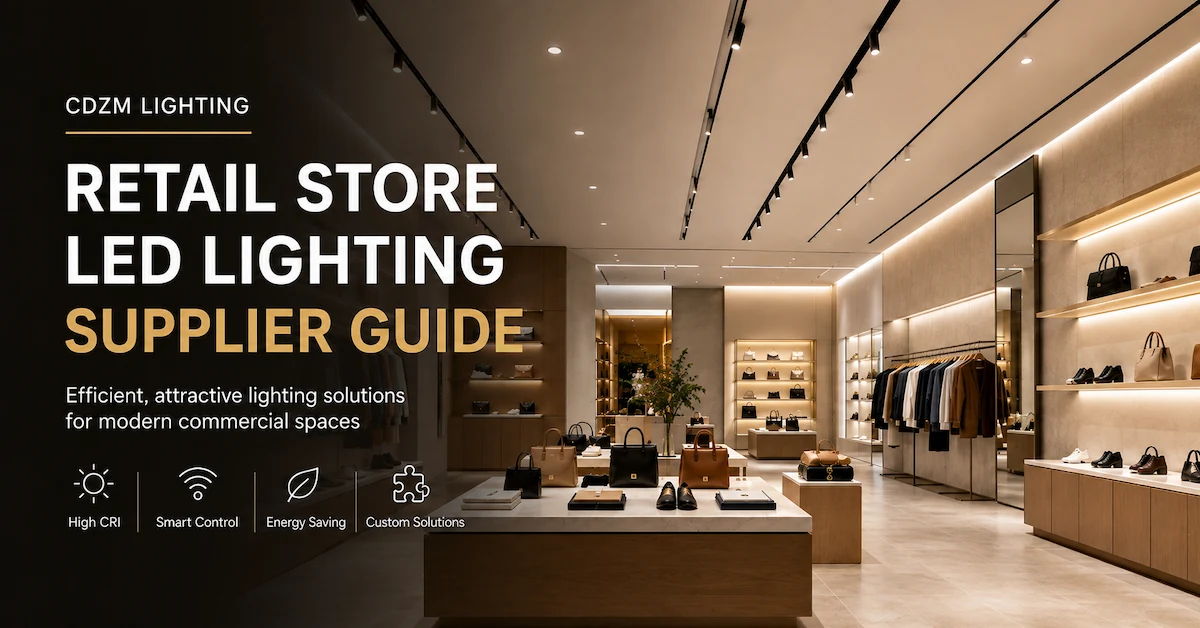
Retail spaces frequently require different lighting scenes throughout the operating day.
DALI can support lighting strategies such as:
- General illumination
- Product-display lighting
- Opening scenes
- Closing scenes
- Cleaning scenes
When combined with appropriate fixtures and controls, this provides retailers with more flexibility than fixed lighting circuits.
Schools and Universities
Educational facilities may contain:
- Classrooms
- Libraries
- Laboratories
- Offices
- Corridors
- Multipurpose rooms
DALI can help create different lighting zones and control strategies for these areas.
The lighting specification should still be based on the actual educational task and applicable local requirements.
Healthcare Facilities
Healthcare environments may require different lighting conditions across:
- Patient areas
- Corridors
- Waiting rooms
- Administrative offices
- Examination spaces
DALI can provide centralized or zoned control where appropriate.
However, healthcare projects typically require additional technical and regulatory review before product selection.
Hotels and Hospitality Projects
Hospitality spaces often prioritize both atmosphere and energy management.
DALI may be used to manage:
- Guest-area lighting
- Corridors
- Meeting rooms
- Restaurants
- Lobby areas
- Back-of-house spaces
Scene-based control can allow lighting to change according to the time of day or activity.
How to Choose a DALI Lighting Manufacturer
1. Verify DALI Capability
Ask the supplier to specify exactly what “DALI compatible” means.
Request:
- Driver model
- DALI version
- Certification information
- Supported functions
- Dimming range
- Controller compatibility
This prevents misunderstandings between a marketing claim and actual system capability.
2. Evaluate Lighting Engineering Capability
DALI is part of a complete lighting system.
The supplier should understand:
- Lighting layout
- Fixture spacing
- Lux requirements
- Glare
- Control zoning
- Sensor placement
CDZM states that its engineering team supports DIALux simulation, lux calculations, structural design, rapid prototyping, 3D rendering, energy-saving analysis, and project optimization.
3. Check Manufacturing and Quality Control
A DALI project can still fail if the underlying fixture is poorly manufactured.
Buyers should evaluate:
- LED component quality
- Driver consistency
- Assembly quality
- Thermal design
- Electrical testing
- Aging testing
- Final inspection
CDZM currently states that its manufacturing operation includes automated production lines and comprehensive testing such as aging, waterproof, and integrating-sphere testing.
4. Review OEM/ODM Capability
For distributors and lighting brands, standard products may not always be sufficient.
OEM/ODM requirements may include:
- Custom wattage
- Custom lumen output
- CCT
- CRI
- Driver selection
- DALI configuration
- Product dimensions
- Housing finish
- Branding
- Packaging
CDZM states that it provides OEM/ODM design services and customized lighting solutions for project and market requirements.
DALI Lighting Manufacturing and Project Workflow
A professional project workflow should connect product engineering with the customer's actual application.
Step 1: Project Requirement Review
The buyer provides:
- Project type
- Location
- Floor plan
- Ceiling height
- Quantity
- Lighting targets
- Control requirements
Step 2: Product Recommendation
The manufacturer evaluates:
- Fixture type
- Lumens
- Wattage
- CCT
- CRI
- Glare
- DALI driver
- Mounting method
Step 3: Lighting Simulation
For larger projects, the manufacturer can perform:
- DIALux simulation
- Lux calculation
- Fixture-spacing analysis
- Lighting uniformity evaluation
Step 4: Sample and Technical Confirmation
Before mass production, buyers should verify:
- Light output
- Color
- Glare
- Dimming behavior
- DALI communication
- Mechanical fit
Step 5: Production and Quality Control
After technical approval, production should follow the agreed specification.
Step 6: Final Inspection and Delivery
Before shipment, the supplier should confirm:
- Product quantity
- Electrical performance
- Appearance
- Packaging
- Documentation
- Required certification
This workflow reduces the risk of discovering control or installation problems after the products arrive at the project site.
DALI Lighting Cost: What Actually Affects the Price?
The cost of a DALI lighting system depends on more than the fixture itself.
Key cost factors include:
- LED fixture specification
- DALI driver
- Controllers
- Sensors
- Bus power supply
- Control architecture
- Installation
- Commissioning
- Engineering services
For a B2B buyer, the more useful question is not simply:
“What is the unit price of a DALI light?”
Instead, evaluate the total project cost.
| Cost Factor | Procurement Question |
|---|---|
| Fixture | What performance does the luminaire provide? |
| Driver | Is the DALI driver suitable and reliable? |
| Control | What controller architecture is required? |
| Sensors | How many devices are needed? |
| Installation | How complex is commissioning? |
| Engineering | Is lighting simulation included? |
| Maintenance | How easy is future troubleshooting? |
| Energy | What savings can controls deliver? |
| Expansion | Can the system support future changes? |
A slightly higher fixture price may be justified when the system reduces energy use, maintenance requirements, or future modification costs.
What Information Should You Include in a DALI Lighting RFQ?
For a more accurate quotation, provide as much project information as possible.
Basic Project Information
- Project type
- Country
- Building area
- Number of rooms
- Ceiling height
- Quantity
Lighting Requirements
- Target illuminance
- Lumens
- CCT
- CRI
- Glare requirement
- Fixture dimensions
- Installation method
Control Requirements
- DALI or DALI-2
- Dimming requirements
- Occupancy sensors
- Daylight sensors
- Scene control
- Building management integration
Commercial Requirements
- Sample quantity
- Expected annual volume
- MOQ
- Target delivery date
- Certification requirements
- OEM/ODM requirements
- Packaging requirements
For larger projects, include floor plans and ceiling layouts.
This allows the manufacturer to provide a more useful recommendation instead of sending a generic product list.
Common DALI Lighting Procurement Mistakes
Assuming Every DALI Product Is DALI-2 Certified
“DALI compatible” and “DALI-2 certified” should not be treated as identical claims.
Request documentation and verify the exact product.
Choosing the Driver After Selecting the Fixture
The driver is a critical part of the control system.
Confirm driver compatibility before finalizing the fixture specification.
Ignoring Controller Compatibility
A DALI fixture may not automatically meet every project's controller or commissioning requirements.
Discuss the complete control architecture with the supplier.
Focusing Only on Fixture Price
A low unit price may not represent the lowest project cost.
Consider:
- Engineering
- Installation
- Commissioning
- Energy
- Maintenance
- Future expansion
Ordering Without a Lighting Simulation
For large projects, fixture quantity should ideally be supported by lighting calculations.
CDZM describes DIALux simulation and lux-calculation support as part of its commercial lighting engineering capabilities.
Why Work With CDZM for DALI Commercial Lighting Projects?
CDZM positions itself as a professional LED lighting manufacturer serving commercial, outdoor, and smart lighting applications.
Its current website states that the company has more than 16 years of manufacturing experience, exports to more than 50 countries, provides OEM/ODM services, and operates more than 20 automated production lines.
For commercial lighting, CDZM currently presents:
- Panel lighting
- Troffer lighting
- Office lighting
- Retail lighting
- DALI control
- 0–10V control
- DIALux simulation
- Lux calculation
- Structural design
- Rapid prototyping
- OEM/ODM support
Buyers should still confirm the exact DALI/DALI-2 configuration, certification status, driver model, MOQ, lead time, and available product models for each project before ordering.
FAQ About DALI Lighting Manufacturer
1.What is a DALI lighting manufacturer?
A DALI lighting manufacturer produces or integrates LED luminaires and compatible control components designed to work with DALI lighting-control systems.
2. What is the difference between DALI and DALI-2?
DALI-2 is the latest development of the DALI protocol and adds standardized control devices while emphasizing improved multi-vendor interoperability.
3. Can DALI control individual LED lights?
Yes. DALI systems can support addressable control of individual control gear as well as groups and scenes, depending on the system configuration.
4. Can DALI lighting work with occupancy sensors?
Yes. DALI-2 includes standardized input devices such as occupancy sensors and light sensors.
5. Is DALI better than 0–10V?
Neither is universally better. DALI provides digital addressable control and a broader control architecture, while 0–10V can be a practical solution for simpler dimming requirements. The right choice depends on project size, control requirements, integration, and budget.
6.What should I ask a DALI lighting manufacturer?
Ask about:
- DALI version
- Driver model
- Certification
- Dimming functions
- Controller compatibility
- Photometric files
- Testing
- Warranty
- OEM/ODM
- Lead time
7. Can DALI lighting be customized?
Yes, depending on the manufacturer. Customization can include fixture specifications, LED performance, driver configuration, CCT, CRI, dimensions, housing, branding, and packaging.
8. Is DALI suitable for office lighting?
Yes. DALI can be useful for office projects requiring zoning, dimming, occupancy sensing, daylight response, and flexible lighting scenes.
9.Does CDZM support DALI lighting?
CDZM's current commercial lighting solutions list DALI and 0–10V dimming options for professional applications. Buyers should confirm the exact DALI/DALI-2 driver and certification configuration for the required model.
10. How can I request a DALI lighting quotation from CDZM?
Provide your project location, application, quantity, ceiling information, target illuminance, fixture dimensions, CCT, CRI, DALI requirements, certification needs, and delivery schedule.
For larger projects, provide the floor plan and lighting layout so the engineering team can evaluate the application.
You can send the project requirements through CDZM Contact Us.
Conclusion
For smart commercial projects, selecting a DALI lighting manufacturer should be based on the complete lighting system rather than a single product specification.
B2B buyers should evaluate:
- DALI/DALI-2 compatibility
- LED and driver quality
- Lighting performance
- Glare control
- Control architecture
- Sensor integration
- Engineering support
- Quality testing
- Certifications
- OEM/ODM capability
- Production capacity
- Lead time
- Long-term project support
DALI is particularly valuable when a commercial building requires flexible zoning, digital control, lighting scenes, sensor integration, and a scalable control strategy. The DALI Alliance identifies IEC 62386 as the international standard for DALI technology and DALI-2 as the current certification framework focused on interoperability and expanded control functionality.
CDZM currently lists DALI and 0–10V control options within its commercial lighting solutions and provides engineering capabilities including DIALux simulation and lux calculations.
If you are sourcing DALI LED lighting for an office, retail project, school, healthcare facility, hotel, or other commercial building, send CDZM your project drawings, quantity, lighting requirements, DALI control requirements, destination market, and delivery schedule for a more accurate product recommendation and quotation.