
Choosing a Commercial LED Lighting Supplier for Office Projects
A commercial LED lighting supplier does more than ship fixtures. For an office project, the right partner helps you shape how the space feels, how people work, and how much maintenance you will be dealing with a few years down the road. That matters especially in open-plan interiors, where recessed ceiling panels and slim linear fixtures have to do a lot of quiet work: keep desks bright, control glare, and still leave the ceiling looking clean.
Buyers often start with a catalog request and end up realizing they are also buying a lighting concept. That is true whether you are sourcing a basic retrofit package or a more considered commercial LED office lighting system with ambient panels and linear accents. The supplier’s role is to translate an office layout into practical light distribution, not just to quote a price per fixture.
What Buyers Usually Need from Office LED Lighting
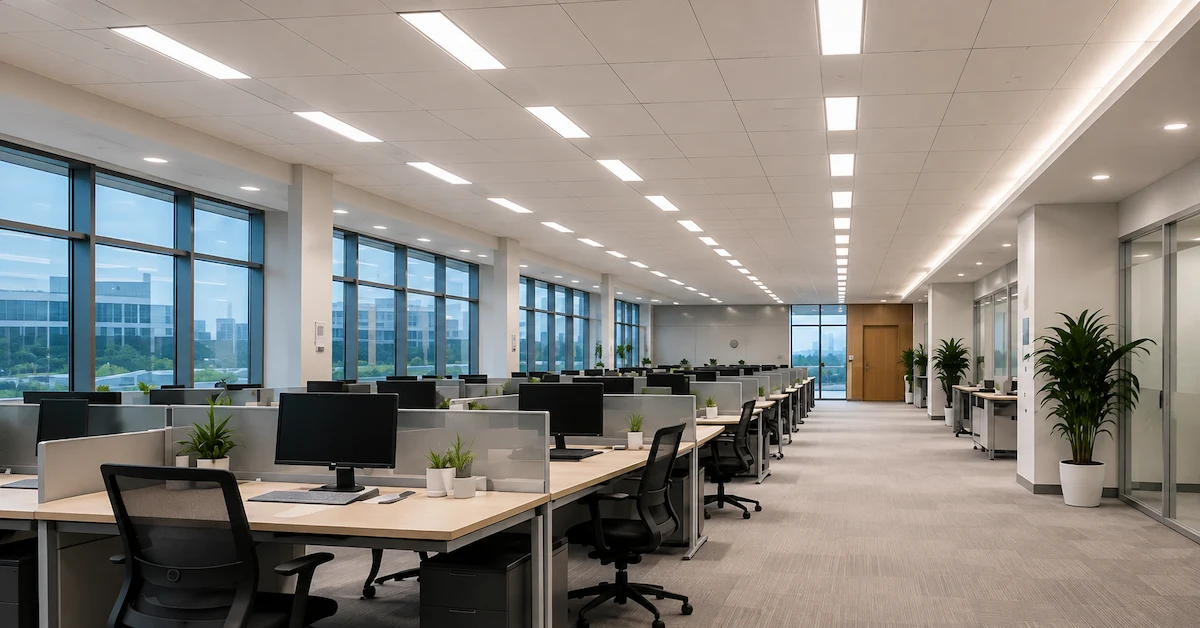
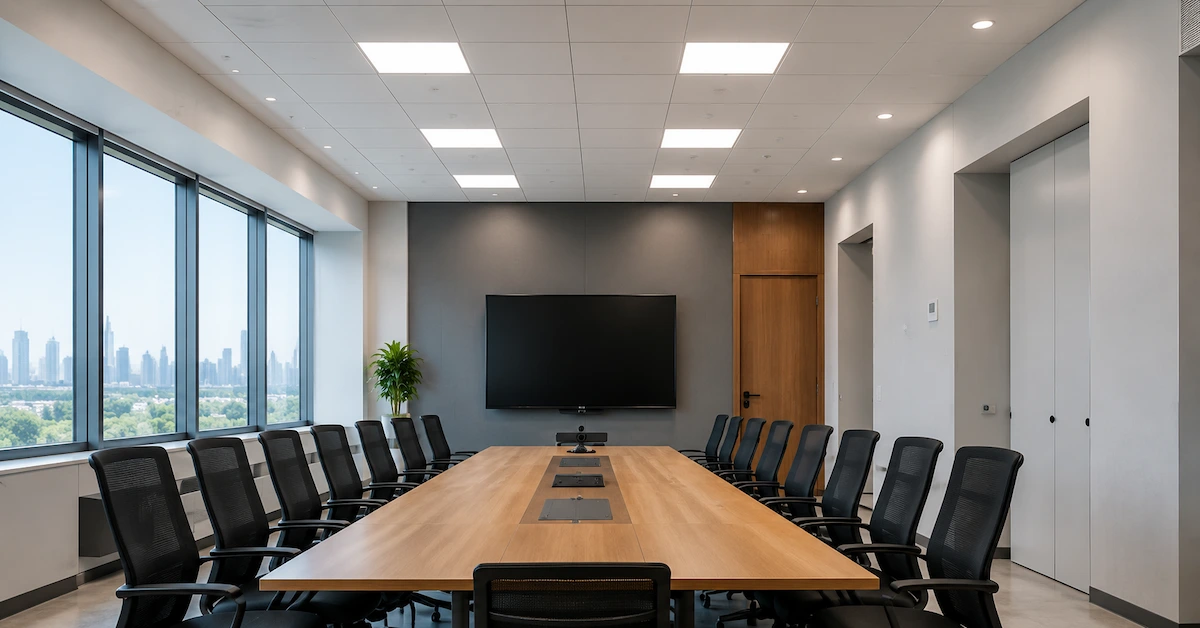
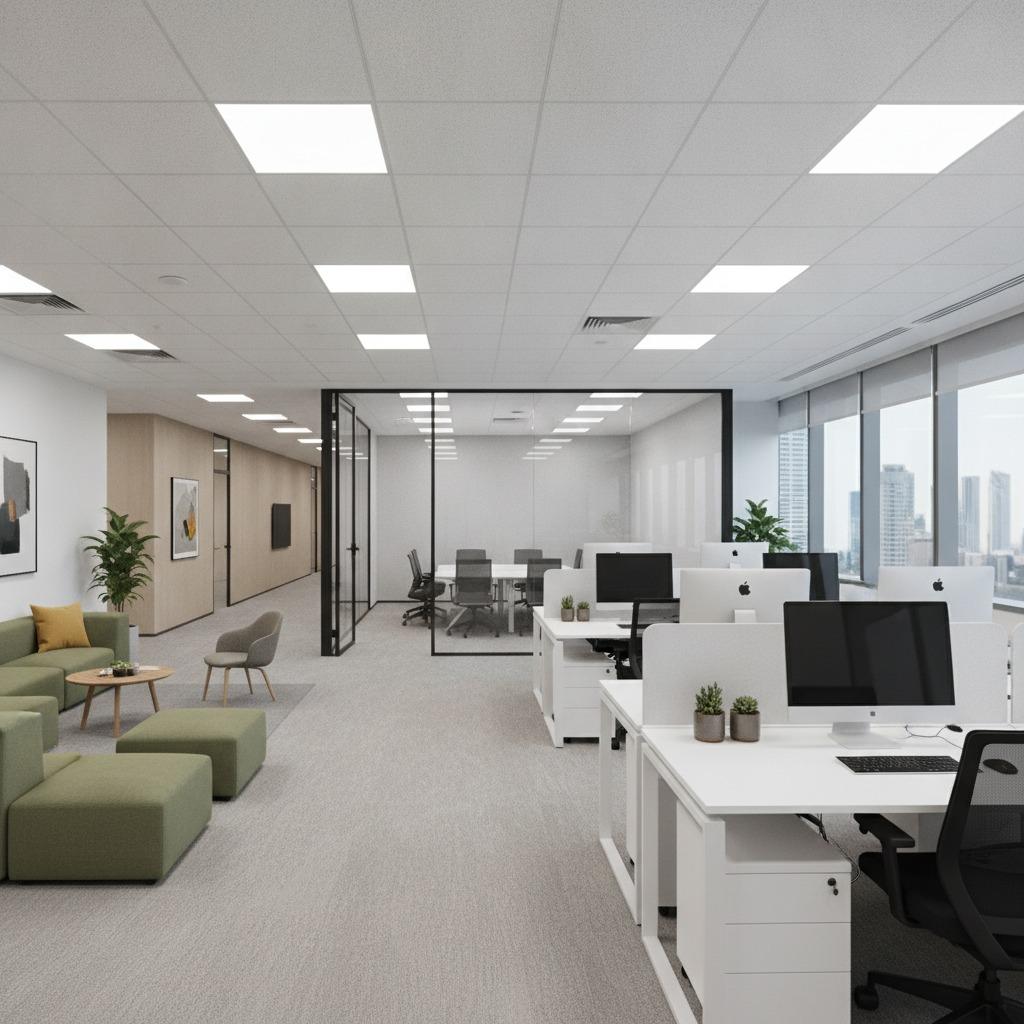
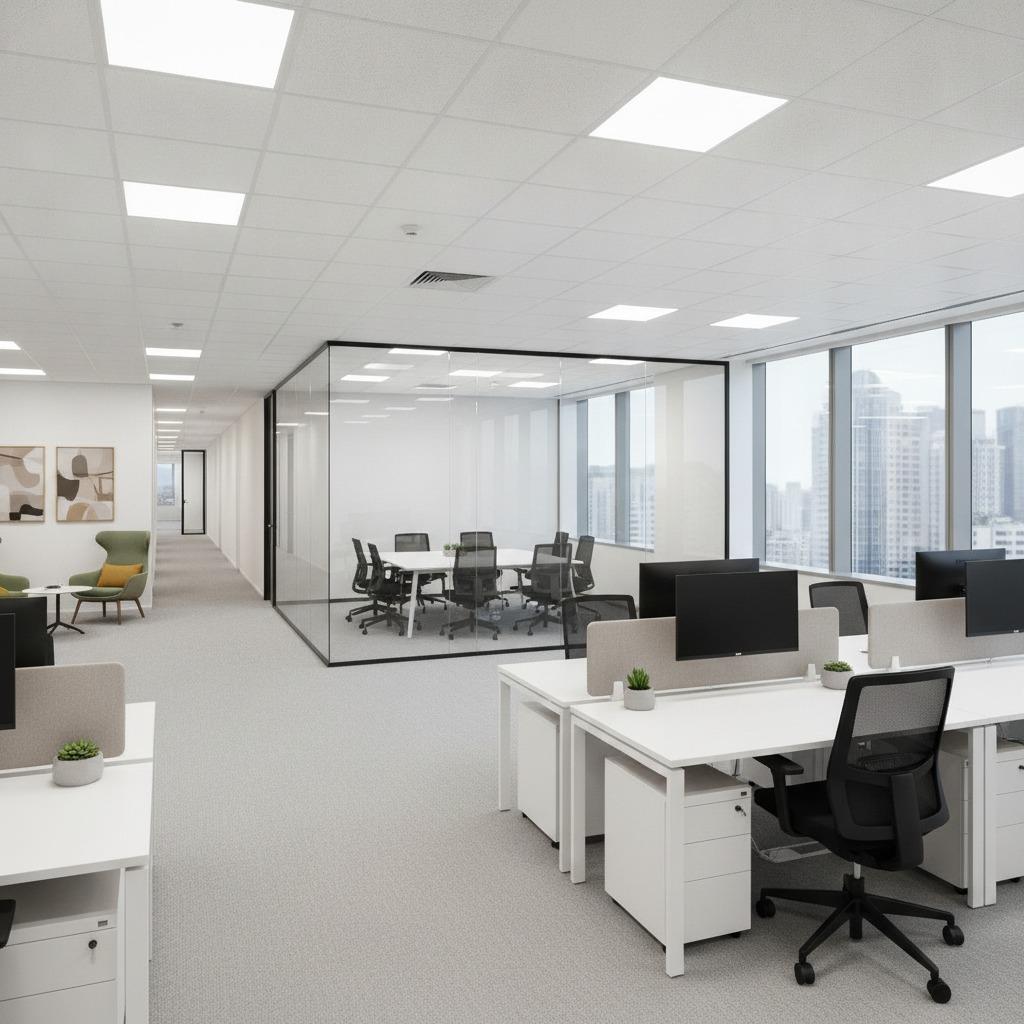
In a modern office, the lighting system usually has two jobs. First, it provides even general illumination across workstations and circulation paths. Second, it adds structure to the space so meeting areas, reception zones, and corridors do not feel flat or improvised. The product image behind this topic tells the story clearly: rectangular ceiling panels arranged in a grid for broad coverage, plus long black linear fixtures for a more deliberate layer of light.
That combination is common because it balances function and design. Recessed ceiling LED panel lights tend to suit large open areas where uniformity matters. Linear fixtures, by contrast, can define task zones or help break up a long ceiling plane. In a daylit office with large windows, this layered approach is often more useful than simply overlighting the whole room.
Supplier Types and Why the Distinction Matters
Not every vendor that sells commercial LED lights is the same kind of partner. A LED lighting wholesaler may give you broad product access and competitive pricing, which is useful for repeat procurement. An LED lighting distributor may be stronger on regional stock, logistics, and substitution when a project is moving quickly. An industrial LED lighting supplier may be better suited to harsher environments, though some companies also serve office interiors. And a commercial LED lights manufacturer can sometimes offer the most direct path if you need customization, private labeling, or tighter control over product configuration.
For office projects, the best fit is often a LED commercial lighting supplier that understands both product supply and application. That matters because office lighting looks simple until you have to coordinate ceiling grids, furniture layouts, glare control, and controls strategy. A fixture can be technically sound and still be a poor fit if it throws light in the wrong direction or clashes with the architecture.
Key Questions to Ask Before You Place an Order
1. How does the supplier handle application fit?
Ask whether they can recommend panel lights, linear fixtures, or a combination based on the room type. A decent answer should mention open work areas, corridors, reception spaces, and meeting rooms separately. If every space gets the same fixture recommendation, that is a warning sign.
2. What can they actually confirm?
Do not assume every brochure detail is locked in. Unless specifications are provided in writing, the supplier may not be able to confirm wattage, lumens, color temperature, CRI, dimming behavior, lifespan, or IP rating. That is normal, but it is also where projects get messy. A buyer should insist on written documentation for the exact model being proposed.
3. Can they support the ceiling layout?
In an office with a suspended ceiling, fixture geometry matters. Rectangular panel lights and slim linear units need to align cleanly with the grid, or the space starts to look patched together. A supplier that can think through spacing, ceiling modules, and visual rhythm is usually worth more than one that simply offers a lower unit cost.
Common Mistakes in Commercial Office Lighting Procurement
The first mistake is buying only on fixture appearance. Black linear housings and clean white diffusers may look modern, but appearance alone does not guarantee comfort. The second mistake is overlooking mixed use. Open offices, small meeting rooms, and reception desks rarely need identical lighting levels. The third mistake is assuming that the cheapest commercial LED lighting supplier will be the least expensive choice overall. If fixtures do not fit the space, the correction cost can be annoying and avoidable.
Another practical issue: buyers sometimes forget about daytime conditions. In a bright office with large windows, artificial lighting should supplement natural light rather than fight it. That is one reason low-glare commercial LED lights are so often preferred in offices; they feel calmer over a long workday. It is not glamorous advice, but employees notice it.
What a Good Supplier Should Be Able to Explain
A reliable partner should be able to talk through the difference between ambient and task lighting, explain why panel lights and linear fixtures are being combined, and flag where decorative preference is starting to outrun function. They should also be clear about whether they are acting as a manufacturer, trading company, or distributor, because that affects lead-time control and how much customization is realistic.
If you are comparing a LED lighting wholesaler against a commercial LED lights manufacturer, do not ask only about price. Ask who will own the specification, who will confirm compatibility, and who will answer when a ceiling grid changes during fit-out. That is where procurement becomes real.
Buyer Advice for a Cleaner Office Result
For open-plan workspaces, keep the visual language simple. Use recessed ceiling panels for the main field of light, then use linear fixtures to shape the room. Avoid overcomplicating the ceiling unless the design calls for it. Uniformity usually wins over novelty in office environments. If the supplier is also offering controls, make sure the proposal fits the way the office is used, not just how it looks on paper.
It is also sensible to request samples or a mockup when the project is important. Even one fixture test can reveal a lot about glare, finish quality, and how the light behaves on white desks or darker furnishings. Small checks now can prevent awkward surprises after installation.
FAQ: Office LED Lighting Sourcing
Is a manufacturer always better than a distributor?
Not always. A commercial LED lights manufacturer may offer more customization, but a strong LED lighting distributor can be better for stock availability and project speed. The better choice depends on schedule, volume, and how fixed your specification is.
Why do offices often use both panels and linear fixtures?
Because one type does not always solve every lighting need. Panel lights provide broad ambient coverage, while linear fixtures help define zones and support task areas.
What should I verify before ordering?
Confirm the exact product model, dimensions, finish, mounting method, and the specifications that matter to your project. If any of those are still uncertain, get them clarified in writing before release.
Next Step for Project Teams
If you are sourcing for an office fit-out, start with the layout, not the fixture list. Share ceiling plans, room use, and any design constraints with the commercial LED lighting supplier you are evaluating. A supplier who can respond intelligently to that information is more likely to deliver a lighting system that looks deliberate, performs consistently, and avoids the usual last-minute compromises.