
Why office lighting procurement is never just about lamps
A commercial LED lighting supplier can make or break a workplace fit-out in ways that only become obvious after the desks are in, the blinds are up, and someone complains about glare over the first video meeting. Office lighting is not a decorative afterthought. It affects visual comfort, the look of the ceiling, energy use, and how the space feels at 8:30 in the morning and again during a late finish. For sourcing managers and project teams, the real decision is not simply which fixture looks right. It is which supply partner can deliver a system that fits the building, the people using it, and the realities of installation.
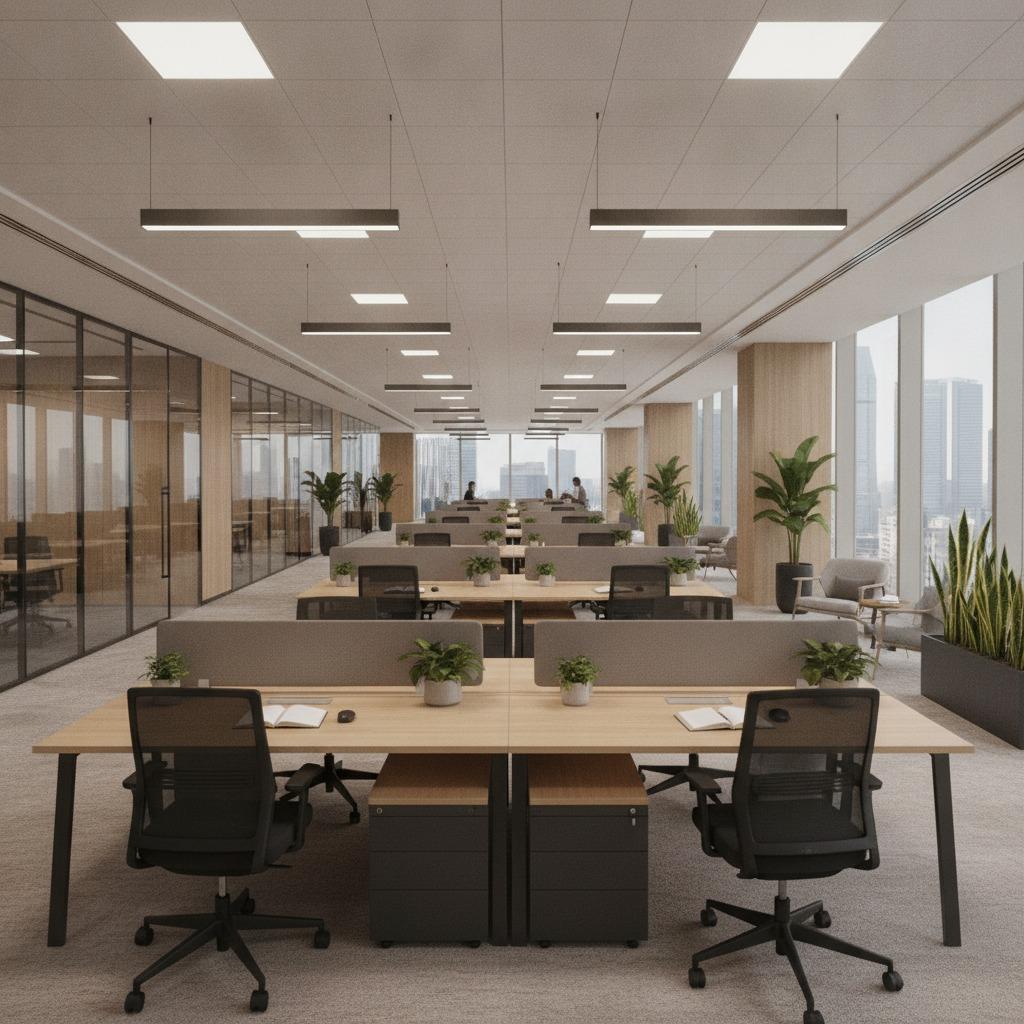
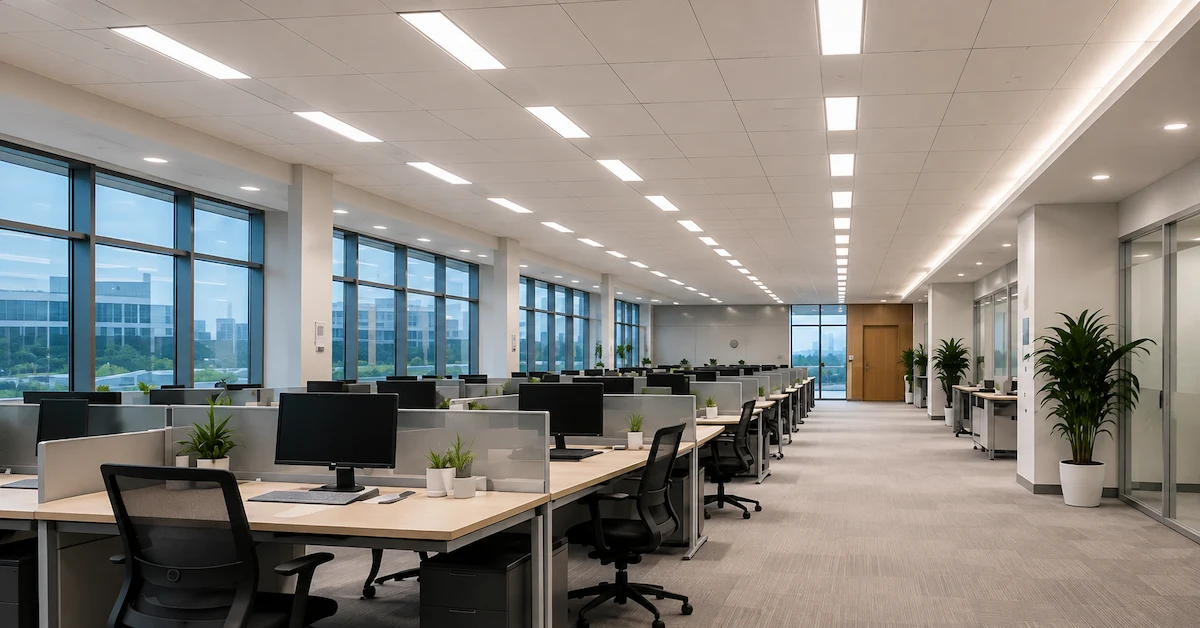
The image behind this topic points to a familiar commercial interior: linear suspended LED fixtures paired with recessed panel lights across an open-plan office. That combination is common for a reason. It balances architectural style with broad, even illumination. But getting that balance right depends heavily on the supplier, because the fixtures are only one part of the job. Schedules, mounting compatibility, control strategy, and finish quality all matter once the project moves from renderings to the ceiling grid.
What buyers are really comparing
When teams compare a LED lighting wholesaler, an industrial LED lighting supplier, and a commercial LED lights manufacturer, they are often comparing more than price. They are comparing how much engineering support, product consistency, and specification flexibility sit behind the catalog.
A LED lighting distributor may be ideal when you need broad availability and mixed product sourcing for a multi-site rollout. A commercial LED lights manufacturer may be better suited to projects that need a specific housing style, finish, or custom dimension. An energy efficient lighting supplier, meanwhile, is often evaluated on lifecycle value: lower operating load, manageable maintenance, and a product line that supports long-term replacement planning. None of these labels guarantees quality on its own, and that is worth remembering. The paperwork can sound impressive while the product family remains awkward to install.
The office lighting system in practical terms
The visible setup here suggests a layered office lighting strategy. Long suspended linear fixtures typically handle the architectural feel and general wash over desks and circulation zones. Recessed square panel lights or downlight-style units help fill gaps and keep the ceiling plane clean. In open-plan workplaces, that mix can reduce harsh contrast and give the room a calmer rhythm.
For buyers, this matters because a ceiling full of mismatched luminaires can undermine an otherwise thoughtful interior. The best commercial LED lighting supplier will usually help you think in zones: task areas, meeting rooms, corridors, reception, and perimeter spaces with daylight. Good lighting is often less about buying the brightest fixture and more about arranging the right fixture in the right place.
Selection criteria that actually help on a project
1. Fixture consistency across batches
In commercial interiors, small differences in finish or diffuser appearance become visible fast. Matte black pendants and white recessed panels may look clean on day one, but procurement teams should still ask how consistent the supplier’s product family is across repeated orders.
2. Ceiling compatibility
Recessed lights must suit the ceiling build-up, while suspended linear units need practical mounting hardware and coordination with services. A supplier that understands office fit-outs will ask these questions early. That is a good sign.
3. Glare control and visual comfort
Office lighting has to support screen work. Even without exact lumen data in hand, a buyer should look for fixture forms that suggest controlled distribution rather than bare, aggressive brightness. Low-glare design is not a luxury in modern offices; it is a baseline expectation.
4. Maintenance and replacement logic
LED systems are often sold as low-maintenance, which is true in principle, but only if the product range is coherent and service parts are available. Ask how replacement will work in five years, not just how the showroom sample performs today.
Common mistakes buyers still make
The first is buying for the render. A lighting scheme that looks elegant in a visual often ignores the practical spacing of the structure above the ceiling. The second is treating all suppliers the same. A LED lighting distributor may offer speed, while a commercial LED lights manufacturer may offer deeper product control; those are different strengths, not interchangeable ones.
The third mistake is assuming uniform lighting means uniform products only. In practice, uniformity comes from the whole system: optic choice, mounting height, room proportion, and the way daylight shifts through the day. A good industrial LED lighting supplier will talk about the space, not just the SKU.
A short buyer checklist before you request quotes
Ask for fixture families that suit the ceiling layout, not just individual samples. Confirm whether the supplier can support both suspended linear lights and recessed panel lights if your office design uses both. Review finish options carefully, especially for visible housings like matte black pendants. Then look beyond unit cost and consider how the supplier handles coordination, substitutions, and repeat orders.
If you are building out a workplace portfolio, the best outcome is usually a supplier who can stay steady as the project scales. That is where a capable commercial LED lighting supplier earns its place: not by overpromising, but by making the lighting legible, buildable, and repeatable.
FAQ: quick answers buyers tend to ask
Is one supplier enough for an entire office project?
Sometimes yes, especially if the supplier covers both decorative linear fixtures and general recessed lighting. For larger programs, teams may split sourcing by category, but that requires tighter specification control.
Should office lighting favor suspended or recessed fixtures?
Often both. Suspended linear lights give the space character and directional definition, while recessed panels help maintain even ambient coverage.
What matters most if specifications are still changing?
Choose a supplier that can adapt without losing consistency. In fit-out work, that flexibility is often worth more than a small upfront saving.
If you are comparing suppliers for an upcoming office project, start with the ceiling plan and the actual work patterns in the space. The right lighting partner will make those details easier, not harder.