
What buyers really need from a commercial LED lighting supplier
Choosing a commercial LED lighting supplier is not just a catalog exercise. For engineers, sourcing managers, and project teams, it is a decision that affects visual comfort, maintenance cycles, energy use, and how a workplace feels at 8 a.m. and again late in the day. In an open-plan office, lighting has to do more than look clean in a rendering. It has to carry the space: desks, corridors, meeting rooms, reception zones, and the small transition areas that often get forgotten until somebody complains about glare or shadows.
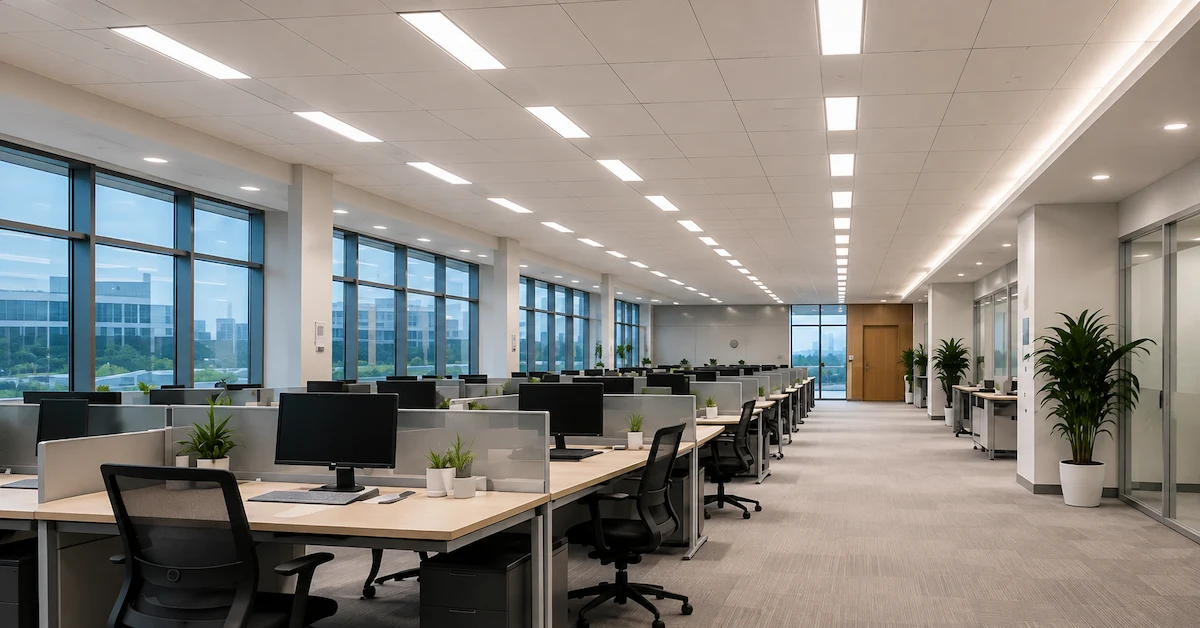
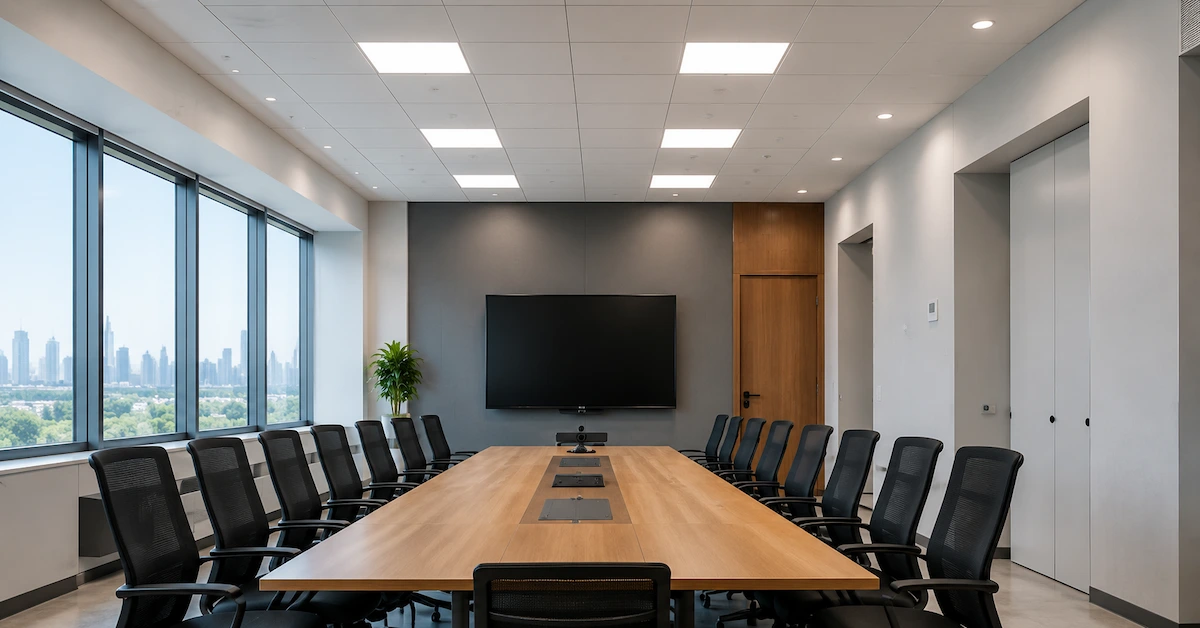
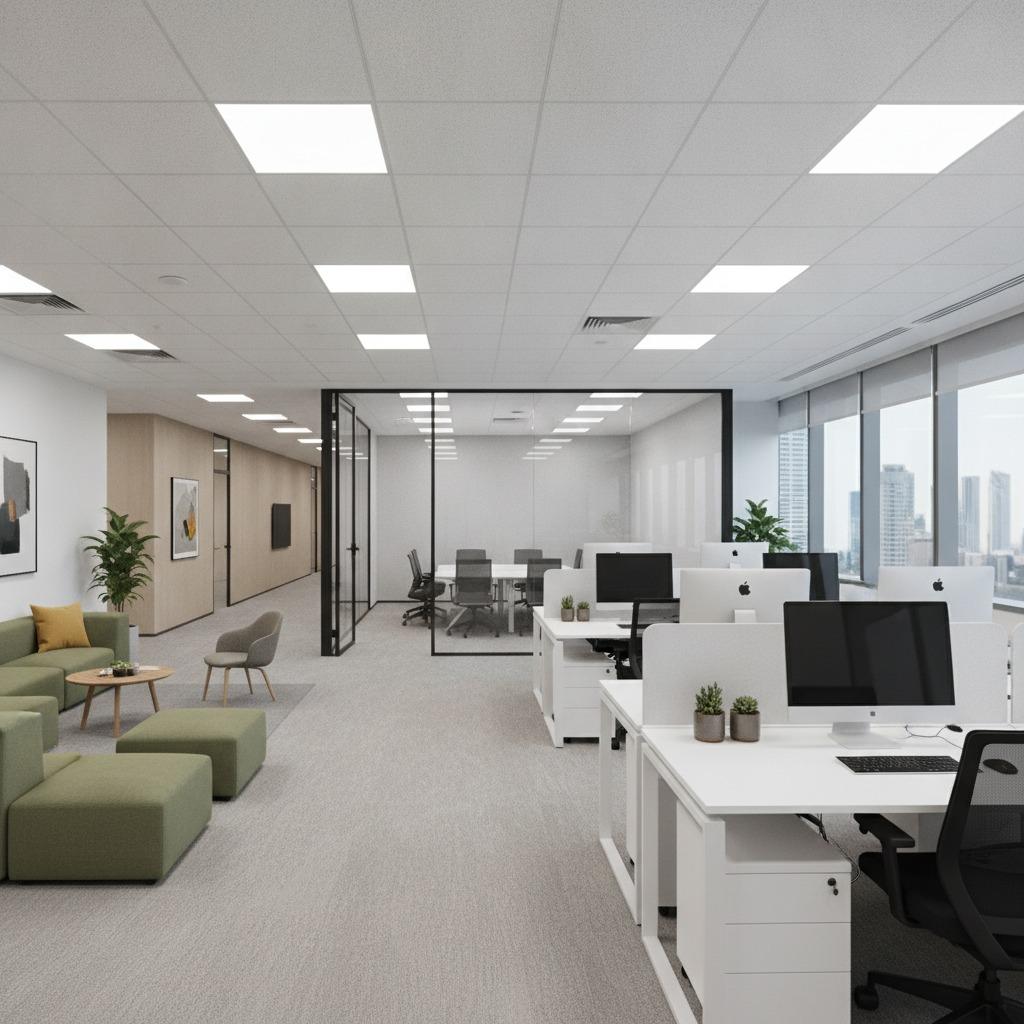
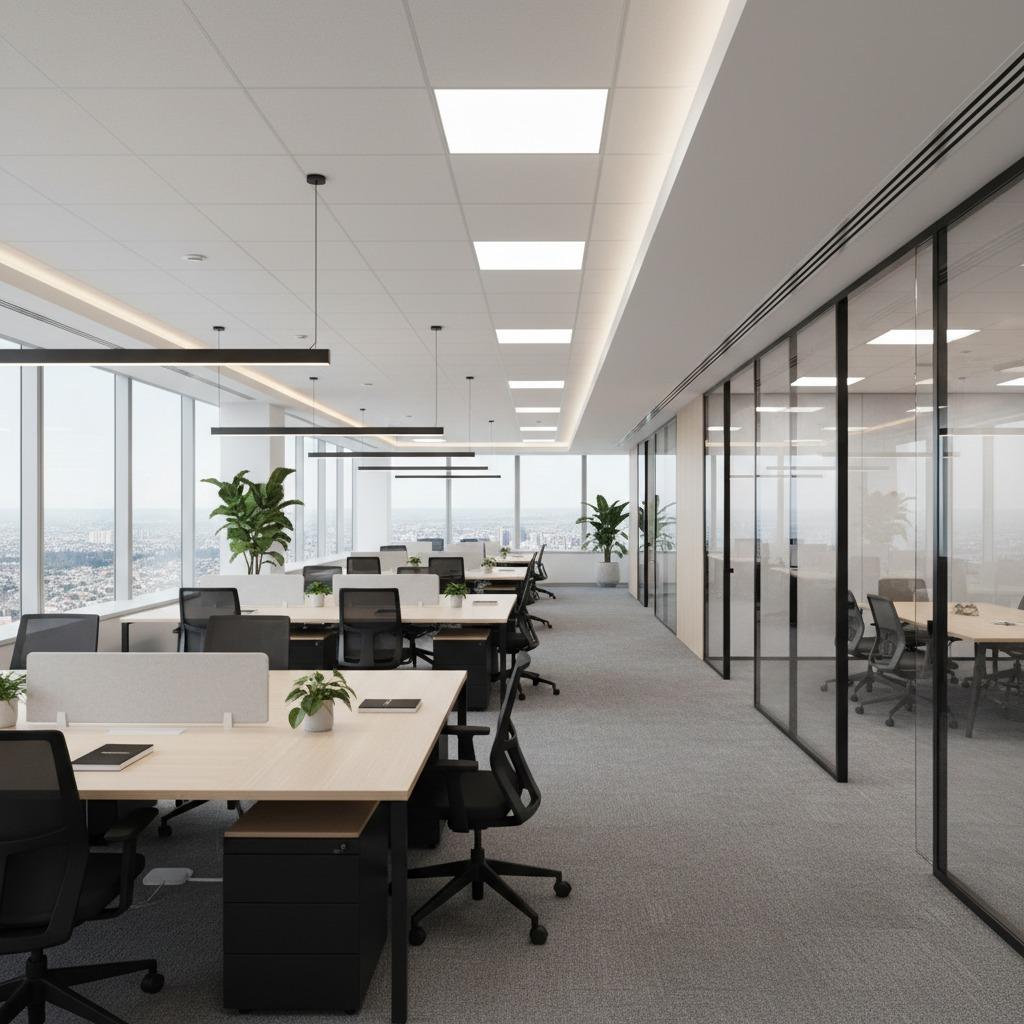
The office setup described here is a good example of what modern commercial interiors are asking for. Long suspended linear fixtures work across the main work areas, while recessed ceiling panels or downlight-style luminaires support the surrounding zones. That mix is common for good reason. It gives the design team flexibility, and it gives the facilities team fewer surprises after installation.
Why the lighting layout matters more than the fixture brochure
In practice, most buyers are not choosing a single product. They are choosing a lighting system. That distinction matters. A commercial LED lights manufacturer may offer attractive fixtures, but if the products do not coordinate well in spacing, finish, beam distribution, and controls, the room can still end up flat or patchy.
In an open office, the goal is usually even overhead illumination with enough distinction between work areas and circulation paths. Linear suspended lights help define the desk zones without visually cluttering the ceiling. Recessed fixtures keep corridors and adjacent spaces bright without adding visual noise. The result is a calmer, more organized interior, which is not a small thing in a workplace where concentration matters.
Quick take: what to compare before you buy
When you are comparing a LED lighting wholesaler, an industrial LED lighting supplier, or a broader LED lighting distributor, the first question is not “Who has the lowest price?” It is “Who can support the project from layout to installation without creating mismatched components?”
Use this as a practical shortlist:
Fixture family compatibility: can suspended linear fixtures and recessed ceiling luminaires be coordinated in one project?
Finish and form factor: do the housings suit the interior, especially in office spaces with glass partitions and wood accents?
Application fit: are the products intended for ambient office lighting, not just decorative effect?
Supply reliability: can the supplier handle repeat orders and future replacement needs?
Documentation: are product datasheets, photometric details, and installation guidance available?
That last item sounds obvious, but it is where many projects get slowed down.
How this kind of office lighting is typically built
The visible fixture language here is restrained and modular. The suspended luminaires appear slim, straight, and dark-finished, likely intended to disappear into the overall ceiling composition while still framing the work zones. The recessed ceiling lights are square, white, and flush with the surface, which helps the ceiling feel orderly and less technical.
That combination is a strong fit for corporate offices, co-working spaces, conference rooms, and reception areas. It also suits retrofits, where the ceiling may already be carrying mechanical services and the lighting needs to work around them. In those situations, a careful supplier is worth more than a flashy product line. A practical supplier will think about spacing, service access, and visual consistency across the whole floor, not just one corridor.
Where buyers often go wrong
The most common mistake is buying by fixture type alone. A buyer sees a nice linear pendant and assumes the rest will sort itself out. It usually does not. Office lighting needs coordination across ambient, task, and circulation areas. Another common issue is underestimating the ceiling plan. A clean installation depends on alignment, mounting method, and the relationship between luminaires and architectural lines. If those details are rushed, the office will still work, but it may never feel quite right.
What a good supplier should help you solve
A dependable commercial LED lighting supplier should be able to support the project beyond product shipment. That may include recommending the right mix of fixture types, helping coordinate a modern minimalist ceiling layout, and ensuring the lighting supports the actual use of the space. A strong partner behaves less like a box mover and more like an energy efficient lighting supplier with enough commercial awareness to flag problems early.
That matters especially in fit-outs. Deadlines are tight, trades overlap, and ceiling access is often limited. If the supplier does not understand the building sequence, you can end up with delays that are painful to unwind.
Buyer advice for new builds and retrofits
If you are planning a new commercial interior, start with the room function, not the fixture family. Decide where people will sit, walk, meet, and wait. Then build the lighting concept around those behaviors. For retrofits, inspect the existing ceiling grid, power points, and any architectural constraints before selecting products. The cleanest-looking solution on paper is not always the easiest to install.
It is also wise to ask how the supplier handles variation across projects. A company acting as a LED lighting wholesaler may be able to provide breadth, while a more specialized commercial LED lights manufacturer may offer better consistency within a defined product family. Neither approach is automatically better. The right choice depends on whether your priority is range, repeatability, or project-specific coordination.
Questions worth asking before release
Can the fixtures be used together in one coherent office scheme?
What installation support is provided for suspended and recessed products?
Are replacement parts or matching fixtures likely to be available later?
Does the supplier understand office fit-outs, not just retail or warehouse lighting?
If the answer to those questions is vague, that is a warning sign.
A practical next step
For teams planning a workspace upgrade, the smartest move is to treat lighting as part of the interior strategy, not the finishing touch. Start with a supplier that can discuss both the product and the room. A commercial LED lighting supplier with real project experience should be able to help you shape a ceiling layout that feels calm, professional, and easy to maintain. That is the sort of result people notice every day, even if they never mention the lights out loud.