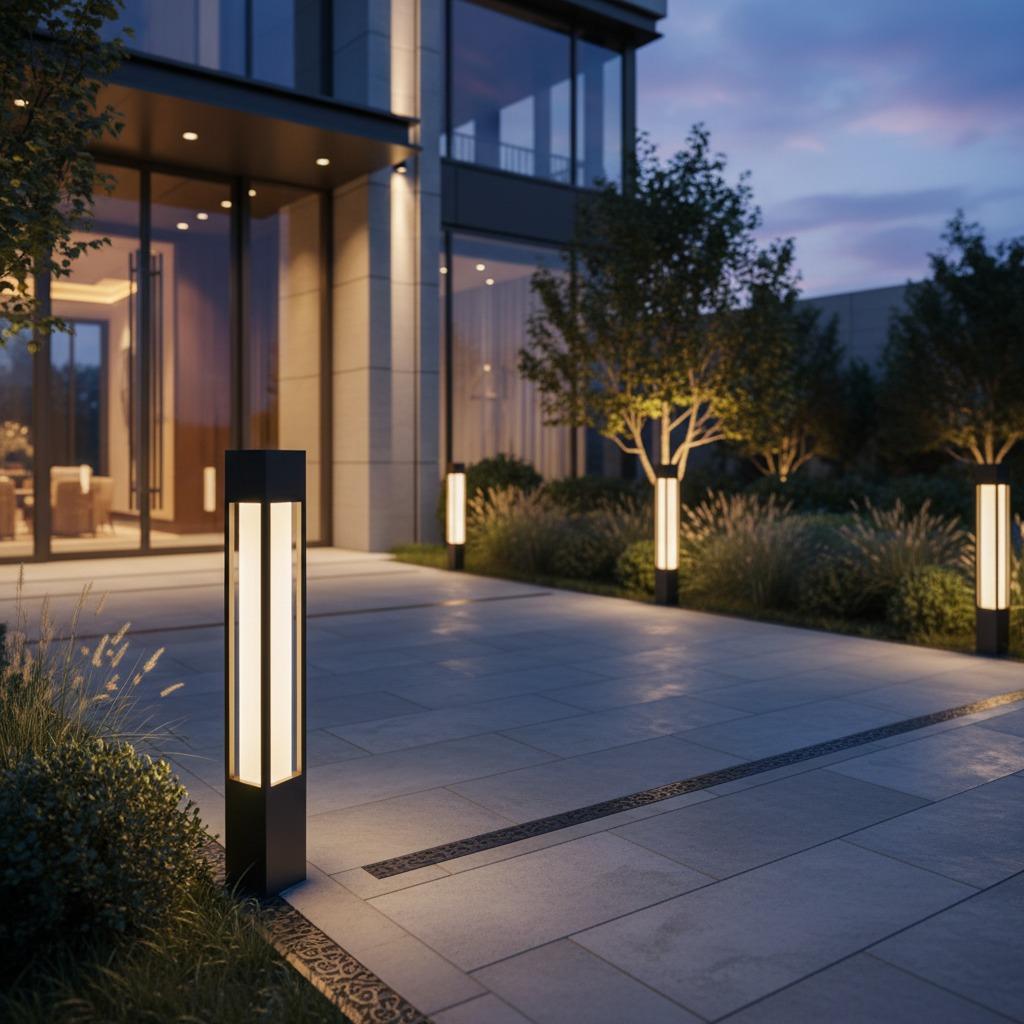

What buyers actually mean when they search for an outdoor LED lighting manufacturer
When buyers look for an outdoor LED lighting manufacturer, they are usually not shopping for a decorative fixture alone. They are trying to solve a practical site problem: how to keep walkways visible, guide movement after dark, and make entrances, driveways, and landscape borders feel intentional rather than improvised. That is especially true for commercial outdoor LED lighting projects, where the lighting choice affects safety, maintenance, and the look of the property long after installation day.
The best suppliers are judged less by marketing language and more by whether their products suit the site conditions. Outdoor fixtures have to handle weather, repeated use, and the visual clutter that appears when a design is too bright, too bare, or too fragile. A good selection process starts with the application, not the catalog page.
A useful reference point: the bollard/pathway light
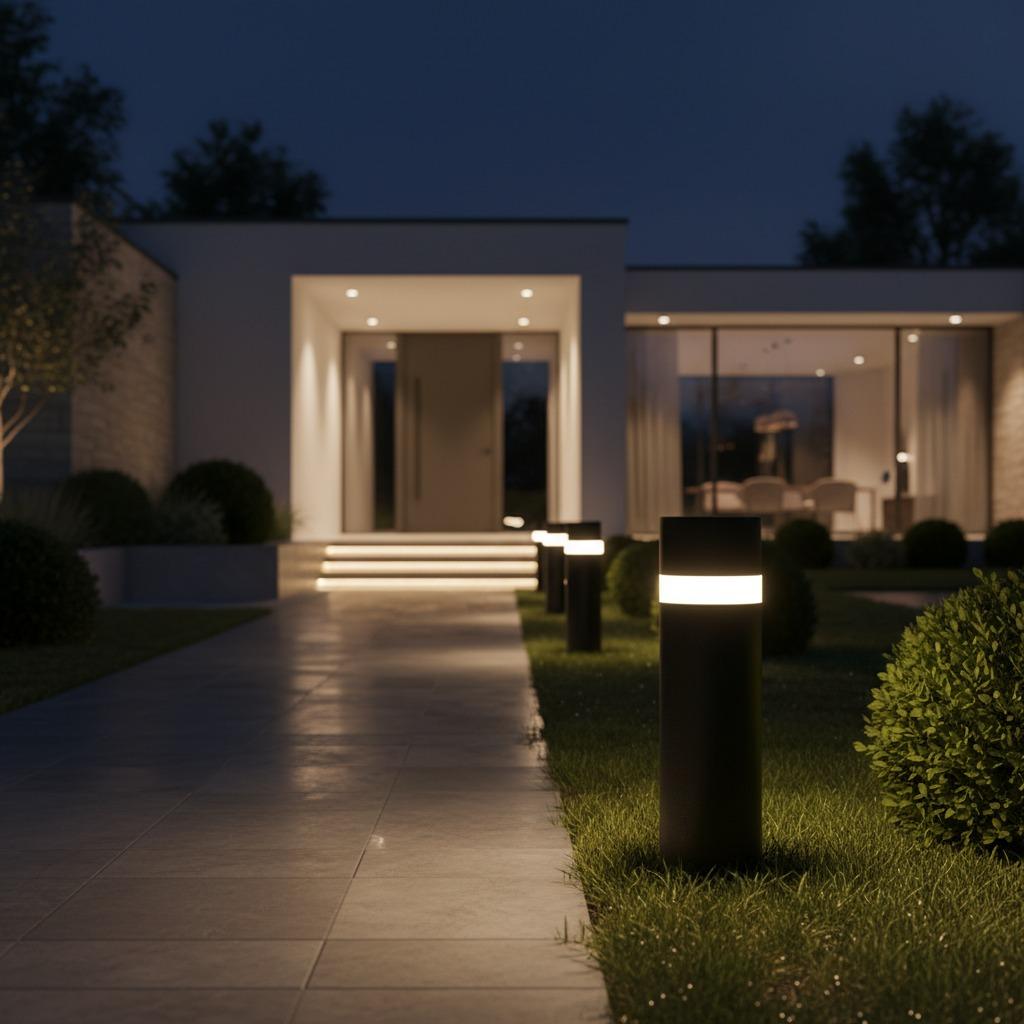
A common example is the outdoor bollard or pathway light. The product profile here is straightforward: a cylindrical vertical post with a matte dark finish, a rounded top cap, and two horizontal translucent bands near the top where the light escapes. The geometry is clean and minimal, with no visible exposed wiring. That matters because this type of fixture is usually placed in rows or repeated at intervals, so the shape must work as part of a sequence rather than as a one-off decorative object.
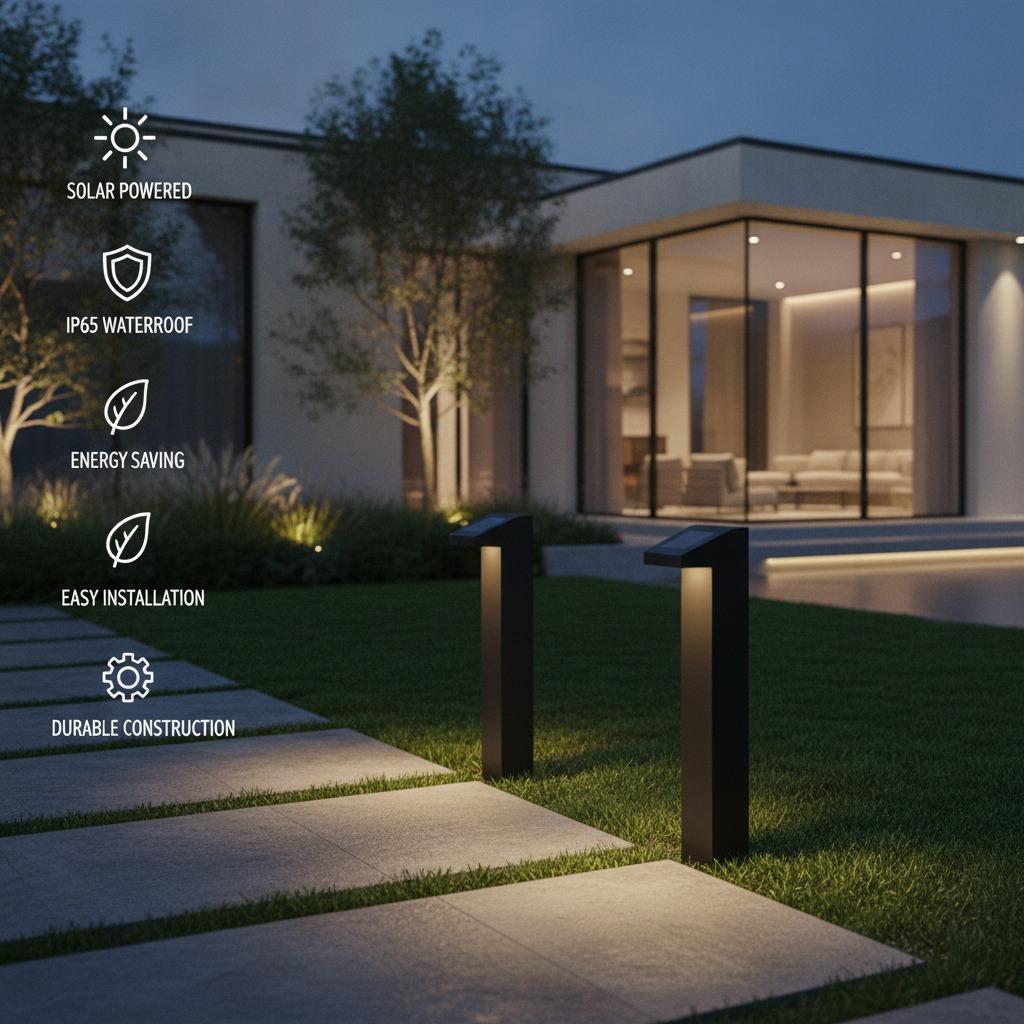
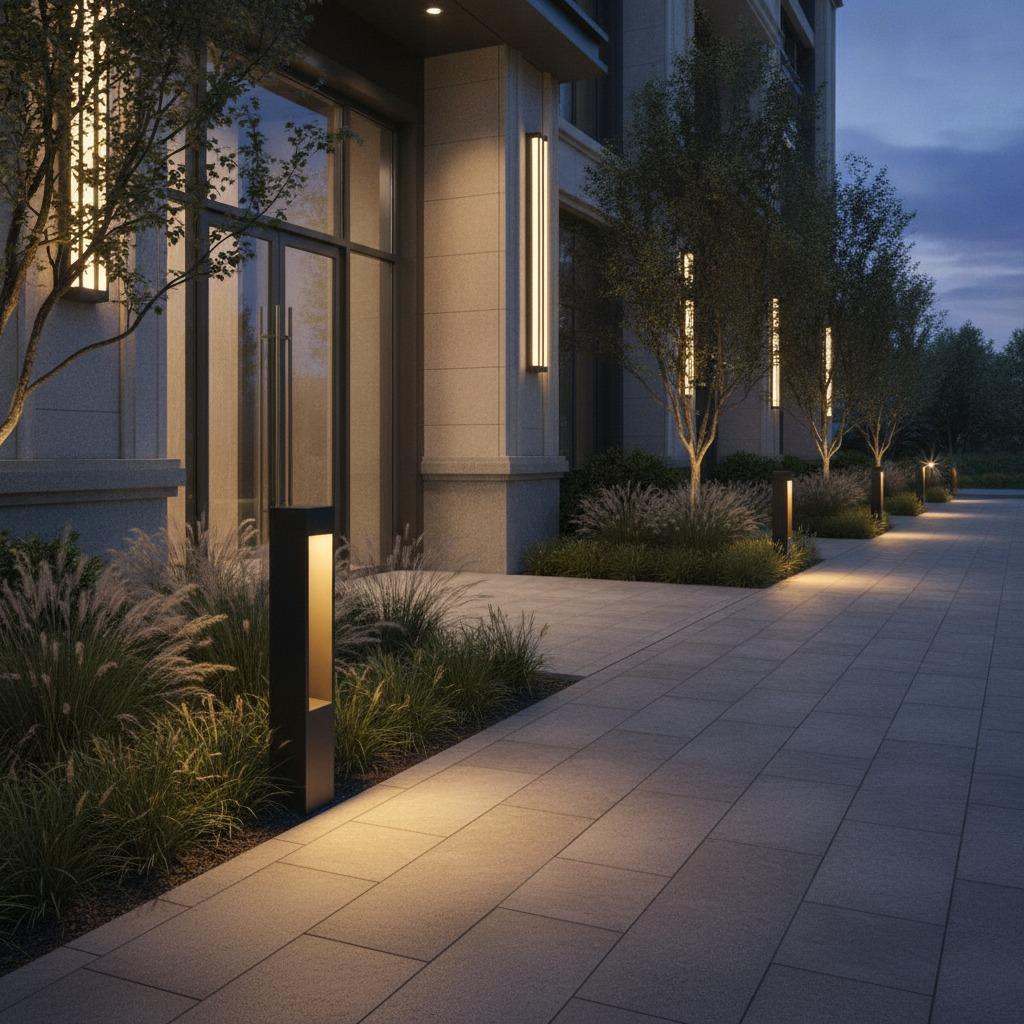
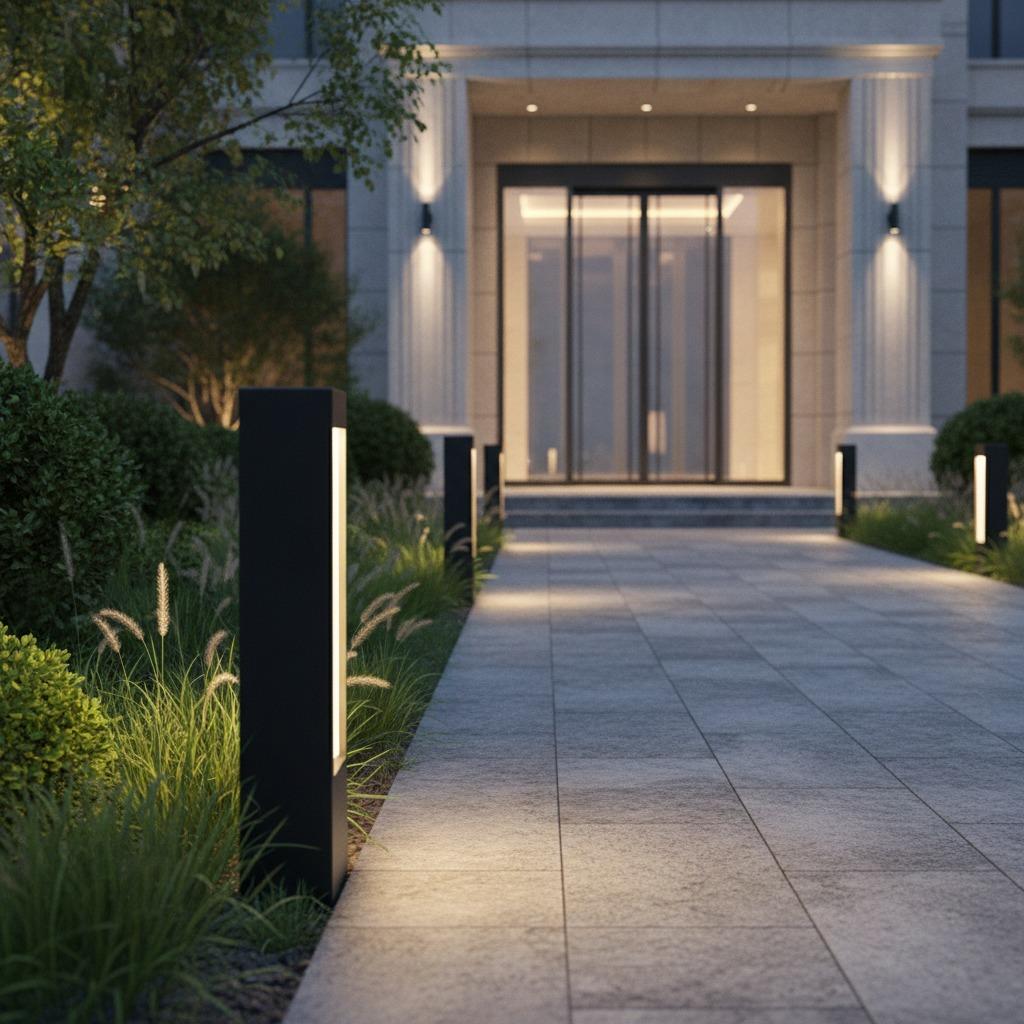
In practice, this style of fixture is used to illuminate a walkway, driveway edge, or landscape border at night. It can guide pedestrians along a route, mark the edge of a path, and provide a calmer kind of visibility than overhead floodlights. For some sites, that understated output is the whole point. It gives enough guidance without turning the landscape into a parking lot.
Why outdoor LED lights are specified so often
Outdoor LED lights are popular because they fit a broad range of site conditions and design goals. They are commonly selected for residential communities, hotel grounds, office campuses, retail exteriors, and municipal pathways. The appeal is not only energy efficiency, though that is part of the business case. LEDs also support compact fixture design, directional control, and a more manageable maintenance schedule than many older lamp types.
For buyers, the real advantage is consistency. If a site needs multiple fixtures along a route, it helps when the light source is stable, repeatable, and easy to standardize across phases of a project. A lighting plan can unravel quickly when replacement units are hard to match or when the beam pattern looks different from one batch to the next.
What to look for before choosing a supplier
1. Fit for the application
Start with the site, not the spec sheet. A pathway light for a garden border is not the same decision as a fixture for a public plaza or a service drive. Buyers should ask how the fixture is meant to perform: ambient guidance, edge marking, accent lighting, or a mix of those functions. The visual job and the functional job should be aligned.
2. Outdoor durability, without guessing
Since the visible product details do not confirm exact material grade, ingress rating, or corrosion resistance, those items should be verified directly with the manufacturer. That is not a fine point. It is the difference between a tidy installation and an early maintenance headache. Ask for the enclosure details, sealing method, and any environmental testing that is actually documented.
3. Light control and glare management
The bollard-style fixture described here has shielded side light, which is useful on pedestrian routes. Shielding matters because uncontrolled light can create glare, spill onto adjacent properties, and wash out the intended mood of the space. In many projects, a softer side glow is preferable to a harsh visible source.
4. Repeatability across the site
Landscape lighting often looks simple on paper and complicated on site. The fixtures need to line up visually, and the spacing has to feel deliberate. Repeated modular placement is a strength of this product type, but only if the manufacturer can keep the product family consistent over time.
Common buyer mistakes
One mistake is choosing outdoor LED lighting only from appearance. The fixture may look refined in a photo yet fail to suit the site’s brightness needs, maintenance access, or mounting constraints. Another common issue is underestimating how much the surrounding surfaces matter. A path bordered by dark planting beds will read differently at night than one lined with light paving or reflective walls.
Buyers also sometimes assume that any outdoor fixture is suitable for commercial use. That is a risky shortcut. Commercial outdoor LED lighting usually needs more attention to robustness, replacement strategy, and long-term appearance than a single residential installation.
Practical questions to ask an outdoor LED lighting manufacturer
Before moving forward, ask for the fixture’s construction details, mounting method, electrical configuration, and documented outdoor performance data. If the product is intended for pathway or bollard use, request photos or drawings showing how the light is distributed through the translucent bands or diffuser area. If the manufacturer cannot clearly explain the beam behavior, that is worth noting.
Also ask how the product is positioned in a broader outdoor lineup. A reliable supplier should be able to tell you whether the fixture is part of a modular family, what companion sizes or finishes exist, and how the design is expected to be used across different site zones.
FAQ: quick buyer concerns
Is this type of fixture only for decorative use?
No. It is often decorative in appearance, but its main role is usually practical: guiding movement and improving visibility along outdoor routes.
Can outdoor bollard lights be used in both residential and commercial projects?
Yes, provided the manufacturer’s construction and performance data fit the project requirements. The same general form can work in both settings, though commercial projects tend to demand more scrutiny.
Should I choose the fixture based on finish alone?
Not really. Finish matters for appearance, but the enclosure, sealing, light distribution, and maintenance implications matter more in the long run.
Where the real buying decision gets made
A strong outdoor LED lighting manufacturer is one that can show how the product behaves in the field, not just how it looks in a render. For pathway and bollard applications, that means a low-profile vertical form, controlled side glow, and a housing meant for outdoor exposure. It also means clear answers when you ask the boring questions: how it is built, how it is installed, and how it will hold up after the first season of weather.
If you are comparing suppliers, treat the fixture as part of a system rather than a standalone object. That is usually where the better choice becomes obvious.
Next step: request the full technical datasheet, construction details, and installation guidance from the manufacturer before you lock in the specification.