
Why buyers start looking for a solar lawn light manufacturer
If you are sourcing pathway or landscape lighting, the first question is usually not about style. It is about reliability. A solar lawn light manufacturer has to do more than assemble a lamp that looks good in daylight. The product needs to survive rain, lawn irrigation, temperature swings, and repeated outdoor exposure while still giving predictable light along walkways, garden edges, and entrance paths. That is the real buying problem.
For engineers and sourcing teams, solar lighting is attractive because it avoids trenching, reduces electrical work, and can be installed in places where wired fixtures are inconvenient. For property developers and landscape contractors, it also helps keep installation simple across multiple sites. But the market is full of products that look similar on paper. The difference is often in housing quality, sealing, assembly discipline, and whether the manufacturer understands outdoor use rather than just consumer-grade decoration.
What this product category is really for
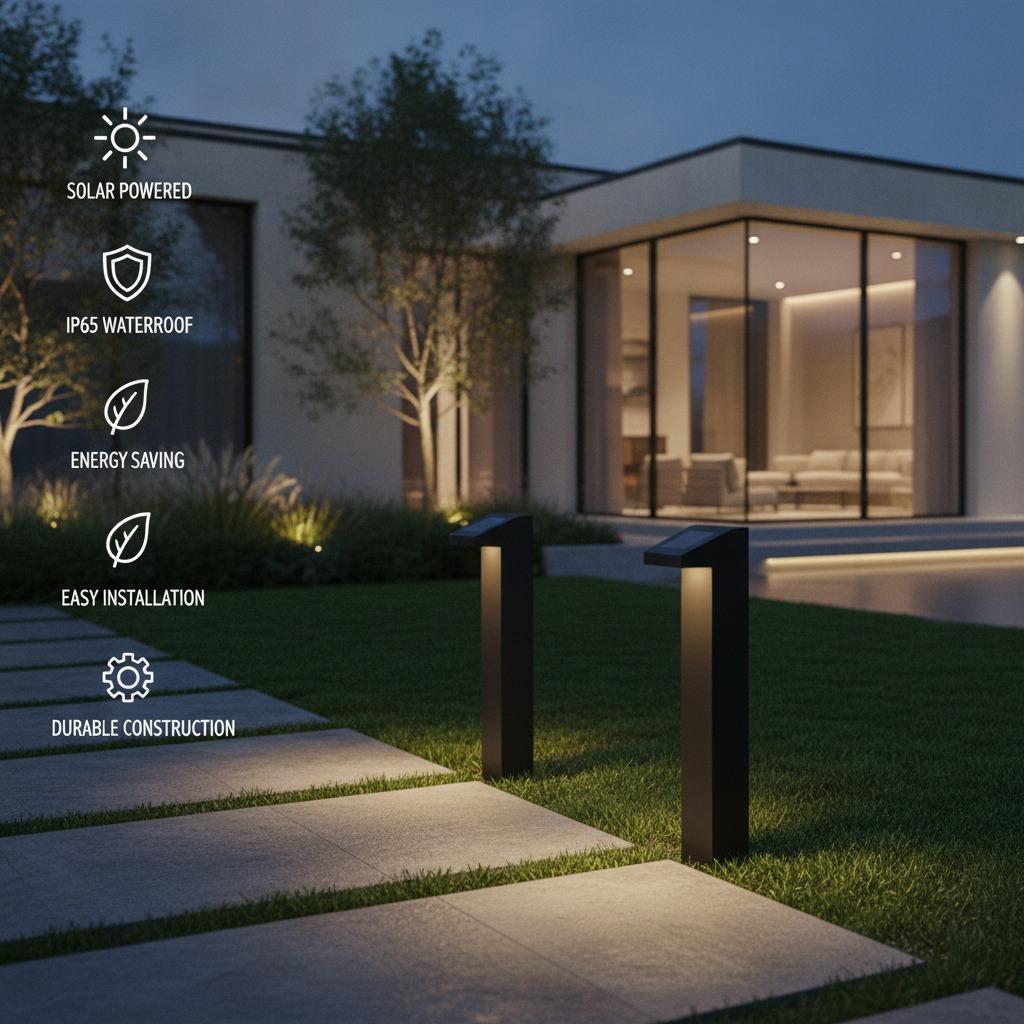
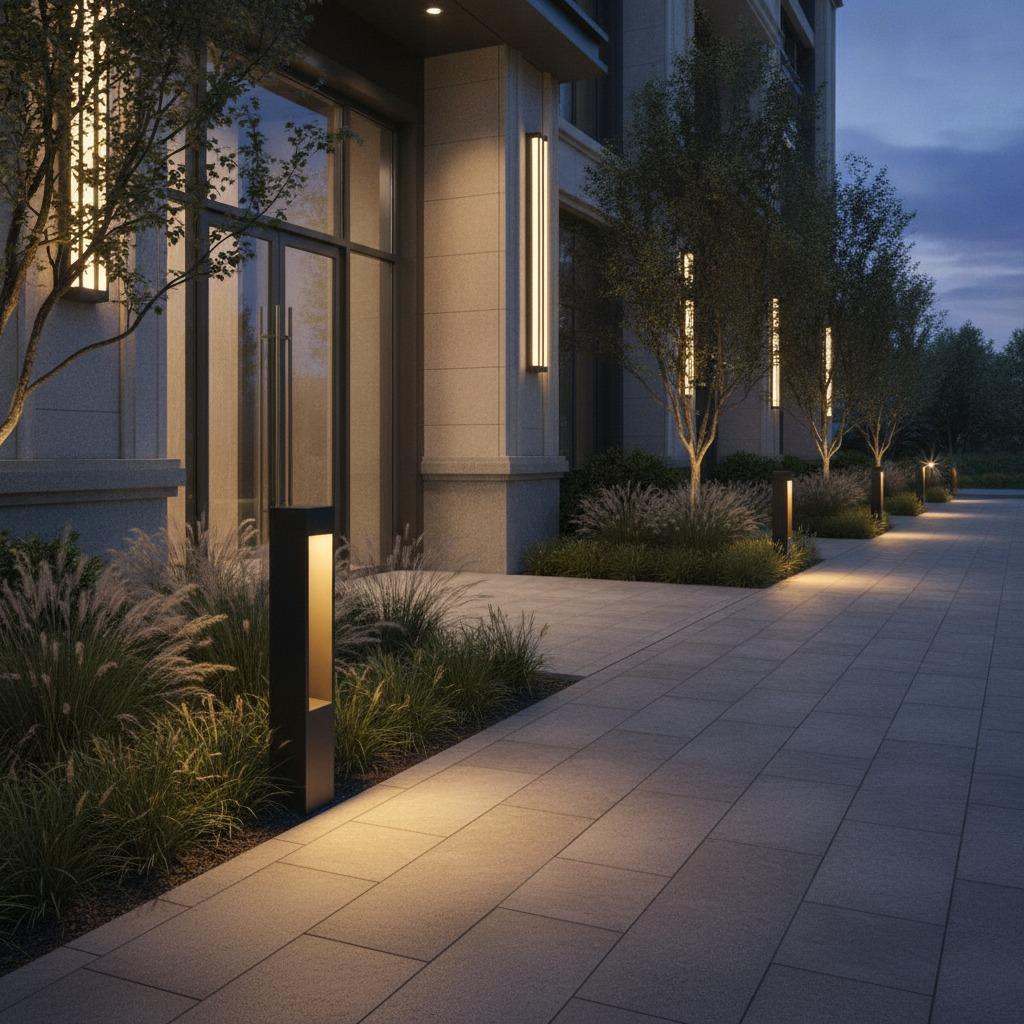
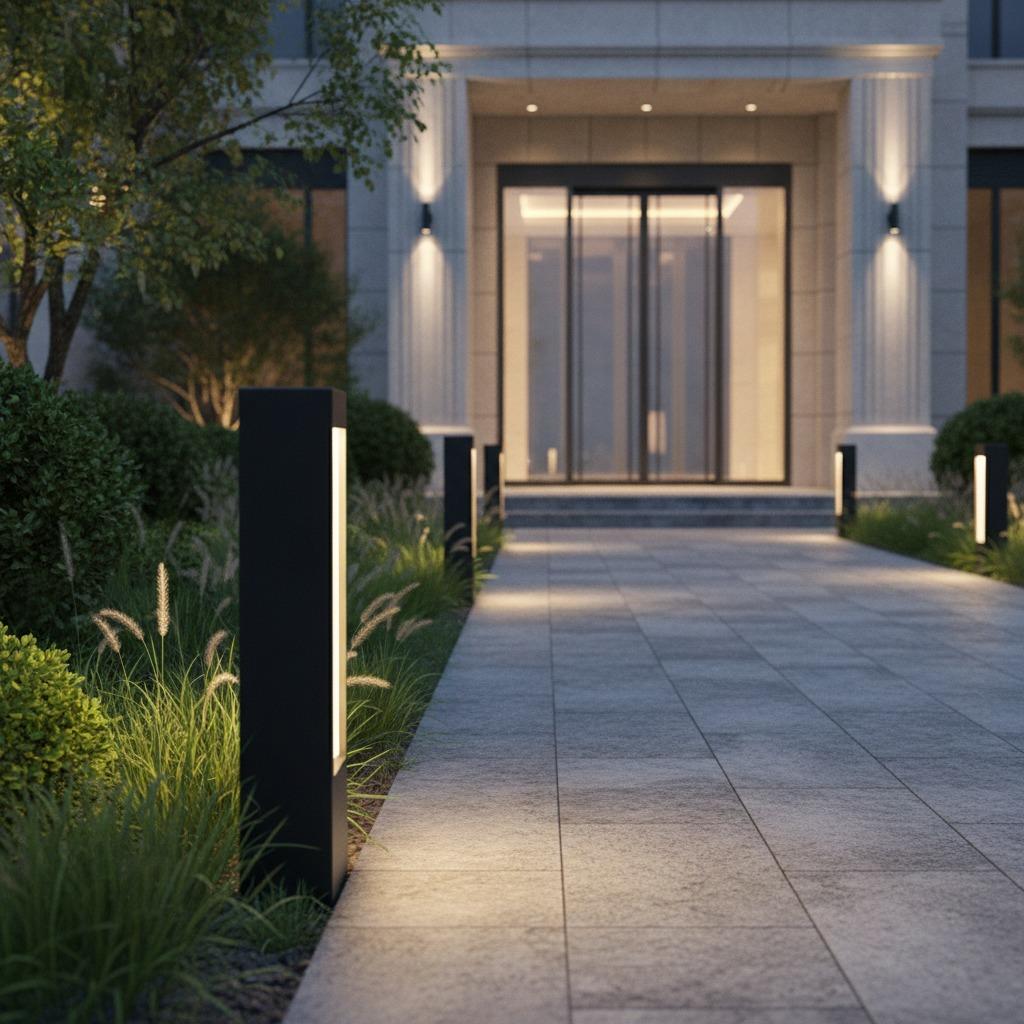
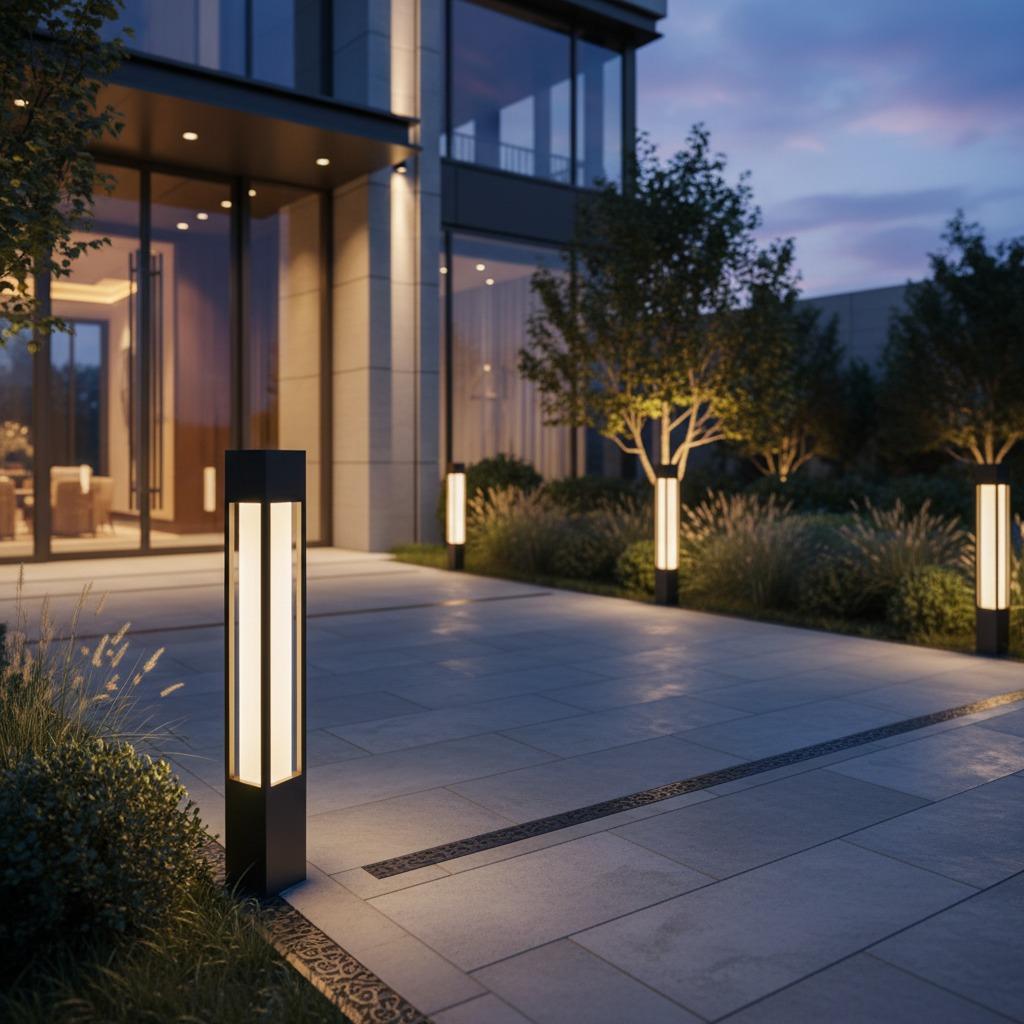
The solar-powered lawn light in this category is usually a bollard-style fixture: slim, upright, and designed to cast low-level illumination downward. In practice, that means walkway guidance more than task lighting. It is useful for lawns, gardens, courtyards, villa entrances, patio borders, and landscaped paths where a neat row of lights can define movement without creating glare.
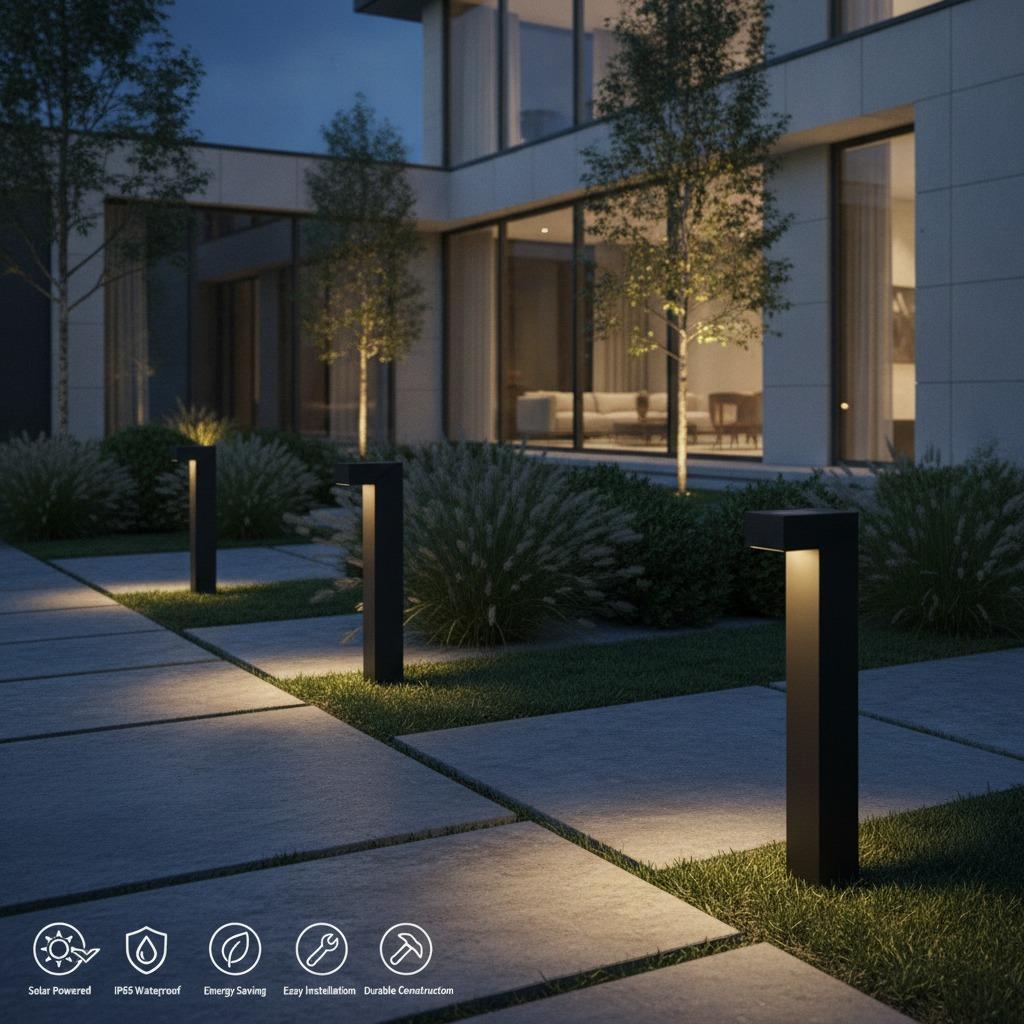
The design cues matter. A tall rectangular body, a flat base, and an angled light head suggest a product meant for orderly spacing and visual rhythm. That is why many projects use several units in a line. The effect is subtle, but in exterior design subtle is often the point.
Quick buyer checklist: what to compare first
When reviewing a solar garden light manufacturer, start with the details that affect outdoor performance, not just appearance:
Solar-powered function and energy-saving operation
IP65 waterproof protection for outdoor exposure
Durable housing and finish suited to long-term use
Easy installation, especially for repeated site deployment
A clean light distribution that supports pathway guidance
That may sound basic, but many projects fail on basics. A fixture can be visually appealing and still be wrong for a real garden, especially if the enclosure is not robust enough for wet seasons or if the lighting pattern is too weak to be useful after dusk.
Manufacturing details that tend to separate serious suppliers
An outdoor solar light factory should be able to explain the construction of the product, even if some component details are not always visible in a catalog image. In this case, the visible cues point to a dark matte housing, likely metal, with a translucent diffuser under the angled head. That is a practical configuration for exterior use because it can balance durability with controlled light output.
What buyers should ask next is less glamorous but more useful: how the housing is sealed, how the finish handles corrosion, whether the solar assembly is integrated cleanly, and how the unit is packaged to avoid damage in transit. Those are the issues that determine whether a shipment is ready for installation or becomes a sorting exercise on site.
Why IP65 is important, but not the whole story
IP65 waterproofing is a strong sign that the fixture is intended for outdoor service, and it is one of the few clear selling points visible here. Still, IP rating alone does not guarantee long life. Assembly quality, gasket consistency, fastener choice, and finish durability can matter just as much. Buyers sometimes over-focus on the rating and under-focus on the workmanship behind it.
How to evaluate a solar lawn lamp wholesale order
For solar lawn lamp wholesale purchases, consistency is usually the commercial issue. A single sample can look fine. A row of fifty units on a real project is where spacing, brightness consistency, and finish quality become visible. That is especially true for landscape lighting, where mismatched units stand out immediately.
Ask whether the manufacturer can support repeat orders with the same body design and finish. If the lighting will be used in residential developments, hotels, or public-facing courtyards, small visual differences can weaken the final presentation. For contractors, the more practical concern is installation speed. A fixture described as easy to install is useful only if that claim holds across an entire batch, not just one specimen.
Common sourcing mistakes
One common mistake is treating a solar light like a decorative accessory instead of an outdoor electrical product. That mindset leads buyers to overlook sealing, material thickness, and durability expectations. Another mistake is assuming every solar garden light manufacturer is equally prepared for project work. Some suppliers are better at retail packaging; others are better at repeatable production and B2B fulfillment.
A third issue is over-specifying the wrong things. Buyers often ask for numbers that are not yet confirmed in the product data, such as lumen output, battery capacity, or charging time, without first checking whether the basic design suits the site. It is wiser to confirm the intended application, mounting method, and environmental exposure first, then drill into electrical detail.
Practical advice for project teams and sourcing managers
If you are comparing suppliers, focus on fit for use. This product type is best when the goal is low-level accent lighting, not high-output security lighting. Use it for guide lighting along a path, around lawns, or near entrances where a neat, continuous visual line matters.
Also consider the maintenance reality. Even easy-to-install lights should be chosen with replacement planning in mind. If the project spans multiple properties, a consistent supply chain matters more than a clever catalog description. An outdoor solar light factory that can maintain design consistency is often more valuable than one offering many similar-looking options.
FAQ: common questions buyers ask
Is this type of light suitable for wet outdoor areas?
Yes, the visible IP65 waterproof claim suggests it is designed for outdoor exposure, including rain and irrigation zones. Still, site conditions matter.
Where does it work best?
Walkways, lawns, gardens, courtyards, patio borders, and residential entrances are the clearest use cases.
What should I ask the manufacturer before ordering?
Ask about material construction, sealing, finish durability, installation method, and whether the design is stable for repeat wholesale supply.
Next step
If you are sourcing this category for a project or distribution program, request a sample set and evaluate it in the actual environment where it will be installed. That is the quickest way to see whether the product is merely attractive in a catalog or genuinely suitable for outdoor use. For solar lighting, the difference is usually obvious after the first evening rain.