
Why Buyers Care About Outdoor LED Path and Bollard Lighting
If you are evaluating an outdoor LED lighting manufacturer, you are usually not shopping for a decorative fixture alone. You are trying to solve a practical site problem: keep walkways visible, define edges, improve first impressions, and do it with hardware that can survive rain, dust, cleaning, and routine maintenance. That is why outdoor LED lights for paths and entry zones are treated as part lighting, part safety system, and part architectural finish.
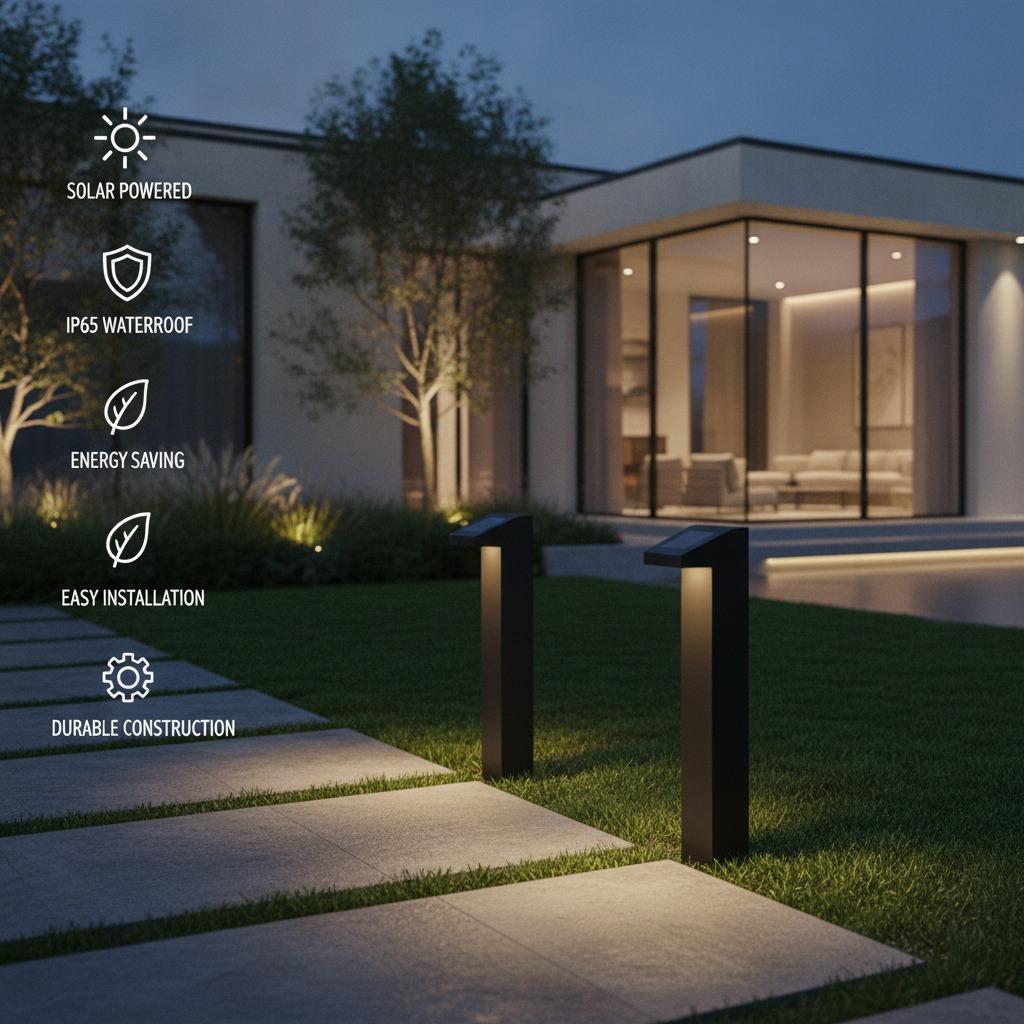
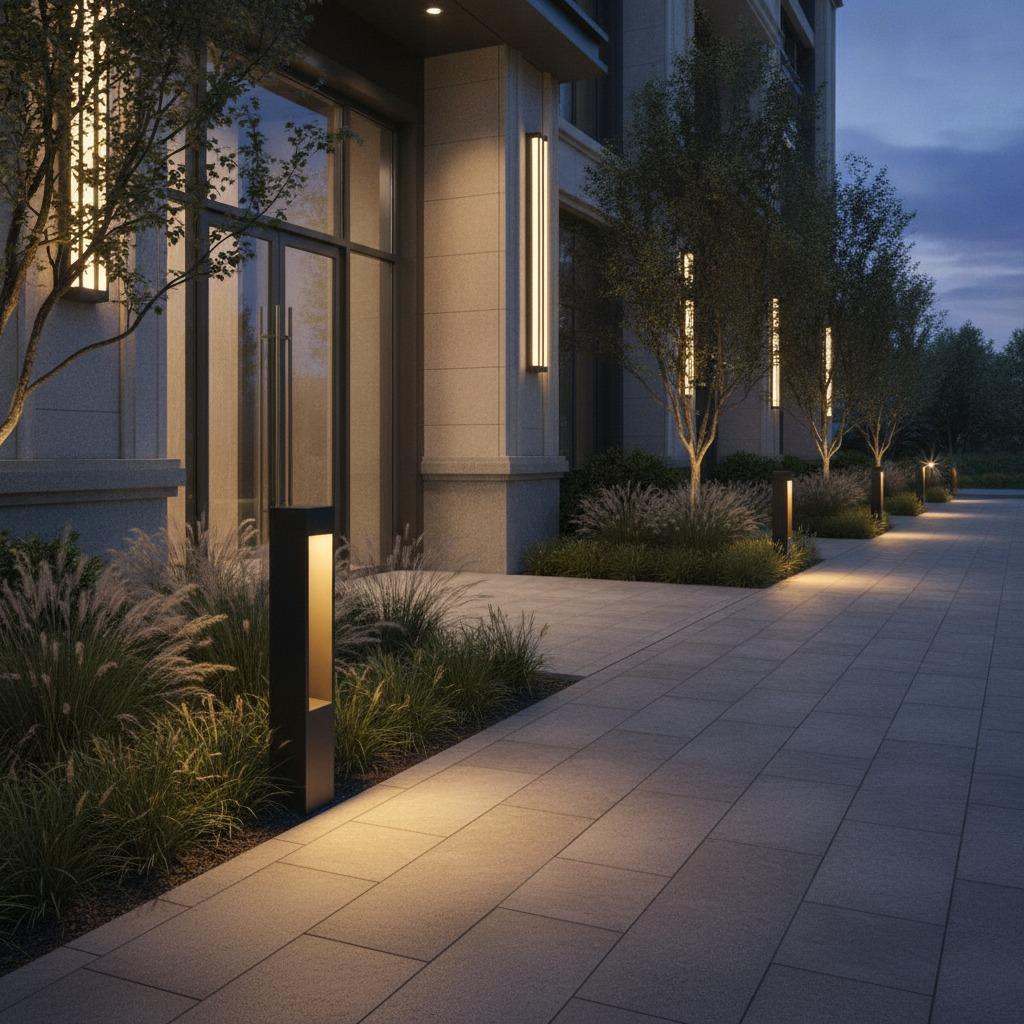
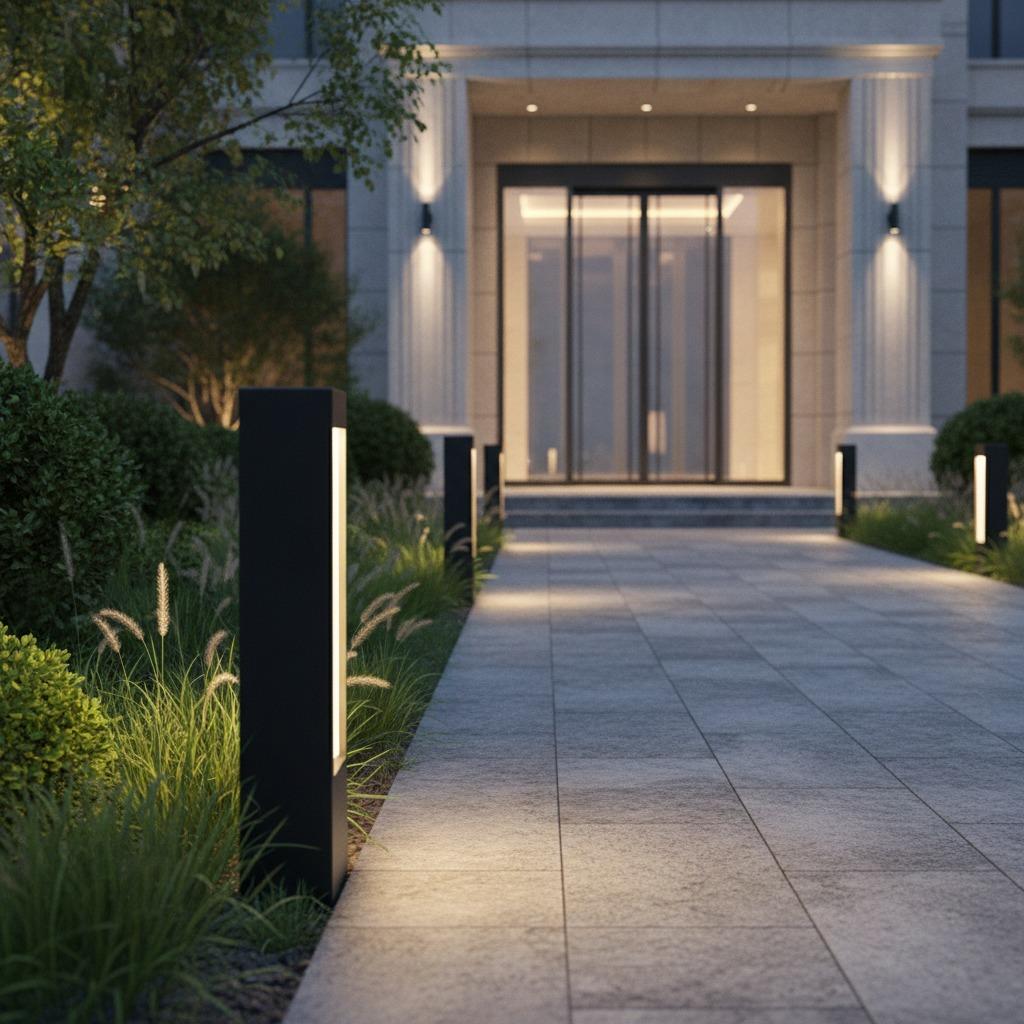
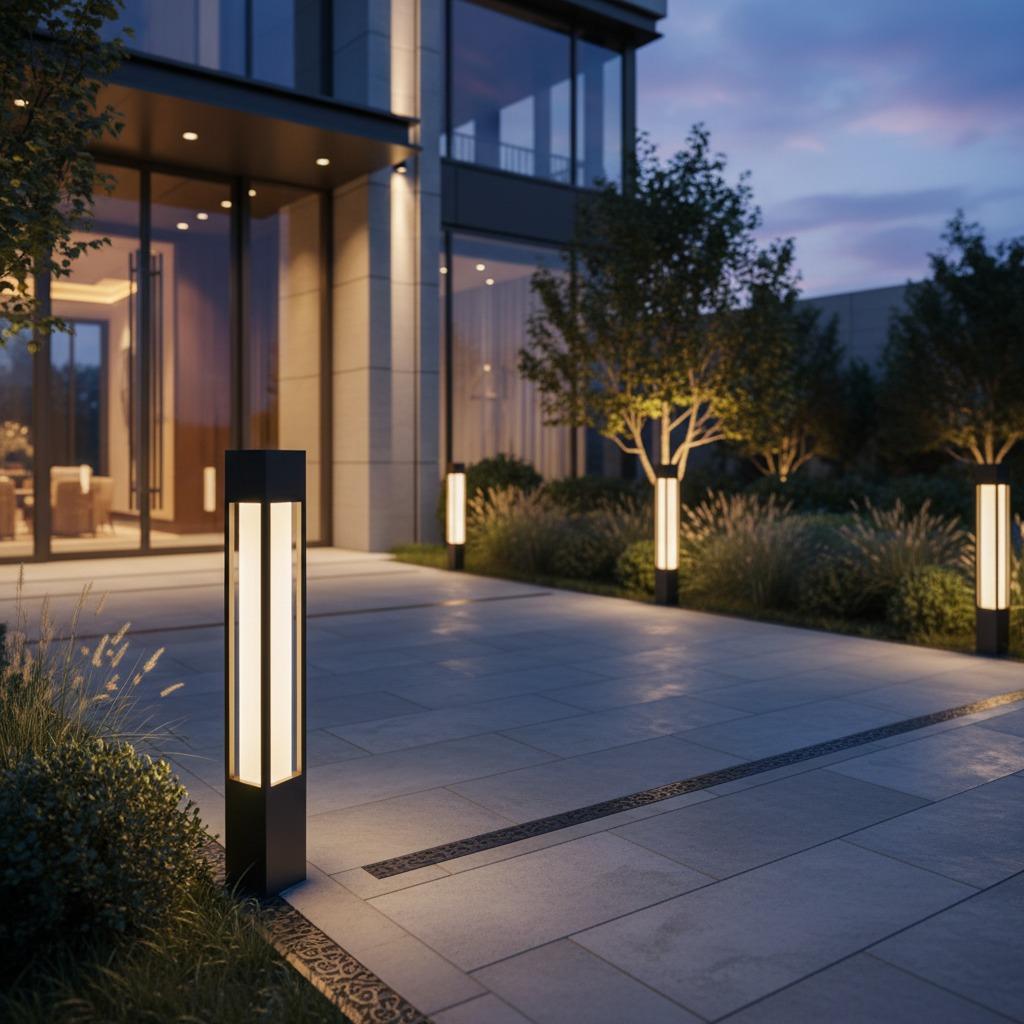
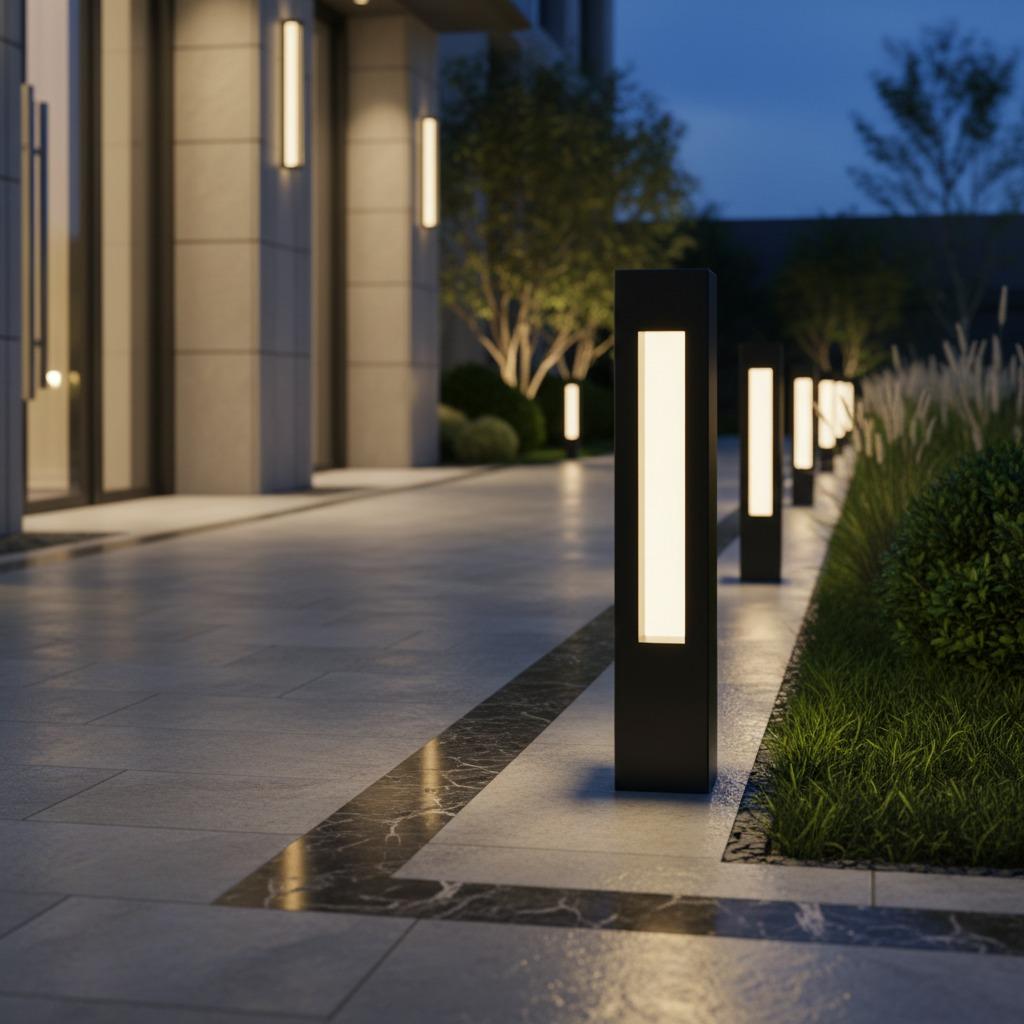
The product shown here fits that buying logic well. It is a tall, rectangular path light or bollard-style fixture with a compact footprint and vertically oriented light-emitting panels near the top. The form is restrained, almost column-like, which is useful in commercial outdoor LED lighting projects where the fixture should guide people without becoming the visual focus. In practice, that kind of lighting is often chosen for hotel approaches, office campuses, garden borders, driveways, and landscaped walkways.
What This Type of Fixture Is Good At
Outdoor LED lighting in a bollard or path-light format tends to do three jobs at once. First, it marks a route. Second, it adds low-glare illumination that feels safer for pedestrians. Third, it helps define the site at night without the hard spill you get from some higher-mounted luminaires. For engineers and sourcing managers, that combination matters because it reduces the need to over-light the area just to make edges visible.
The visible design cues in this fixture suggest a diffused output rather than a bare-point source. That usually matters in public-facing spaces. People notice glare quickly on paths, and a harsh fixture can make a well-designed site look cheap. A softer, shielded output is often the better tradeoff, especially where guests, tenants, or visitors are walking toward entrances in the evening.
Quick Buyer Takeaways Before You Request a Quote
When comparing manufacturers, the fixture geometry tells you some things, but not everything. A minimalist housing can indicate a clean architectural style, yet the important purchasing questions remain technical: construction method, corrosion resistance, service access, thermal design, LED module integration, and how the assembly handles moisture over time. Those details are not visible in a product photo, so a serious buyer should ask for them early.
One practical caution: do not let the appearance of a weather-ready exterior substitute for documented outdoor performance. For LED outdoor lighting, the market is full of fixtures that look similar in a catalog but differ sharply in sealing, wiring quality, and maintenance access. That difference becomes expensive once the lights are installed in a long row across a pathway.
How Manufacturers Typically Build This Class of Outdoor LED Light
Based on the visible structure, this looks like a fabricated outdoor lighting assembly rather than a simple molded decorative lamp. In many cases, that means a metal enclosure is formed, finished, and then paired with LED modules and diffuser panels. The dark matte or satin housing is a common choice because it hides wear better than high-gloss finishes and tends to suit contemporary site design.
The light-emitting panels appear opaque or translucent white, which usually helps distribute illumination more evenly around the post. That does not tell you the lumen output, beam shape, or color temperature, and it should not be guessed. Still, the visual impression is of a fixture meant for controlled, localized lighting rather than broad-area flood lighting. That distinction matters when planning spacing along a walkway.
Materials and finish considerations
For outdoor LED lights, the housing material and coating system often matter more than buyers expect. Metal can be an excellent choice for rigidity and appearance, but the finish has to stand up to UV exposure, moisture, and cleaning chemicals. If the fixture will be used in coastal or high-humidity environments, ask how the finish is protected and whether the manufacturer has a recommended maintenance schedule. Even a good-looking sample can age poorly if the coating strategy is weak.
Selection Criteria for Commercial Outdoor LED Lighting
For sourcing teams, the selection process should start with site function, not fixture style. Is the goal pedestrian guidance, decorative landscape definition, or entrance emphasis? A path light used to illuminate walkway edges has different requirements from a pole-mounted area light. This type of bollard-style unit is usually best when the application is close to the ground and the lighting needs to feel integrated into the landscape.
Then compare serviceability. Can the LED engine be accessed without replacing the entire post? Is the wiring compartment protected but reachable? Are replacement parts available, or is the fixture treated as a sealed unit? These are not glamorous questions, but they shape the total cost of ownership. In commercial projects, the maintenance plan can matter as much as the initial purchase price.
Common Mistakes Buyers Make
The most common mistake is over-specifying brightness and under-specifying control of glare. Another is assuming all outdoor LED lighting is interchangeable because the shape looks similar. In reality, two fixtures with nearly identical exteriors can differ in optical performance, internal thermal design, and weather sealing. That is why technical submittals and installation notes deserve more attention than marketing language.
A second mistake is buying based only on aesthetics for a landscape project that actually needs durable, repeatable performance along multiple units. When the lights are installed in a row, inconsistency shows quickly. A row of path lights should look uniform in height, output, and finish, or the whole site reads as poorly managed.
Questions to Ask an Outdoor LED Lighting Manufacturer
Before you commit, ask for the basics that affect field performance: housing material, finish system, IP rating, voltage, wattage, lumen output, color temperature, control compatibility, and expected maintenance approach. If those details are not yet finalized, that is fine; just do not fill the gaps with assumptions. For procurement, uncertainty should stay visible until it is resolved.
It also helps to ask whether the manufacturer can support matching units across a larger project. For commercial outdoor LED lighting, consistency between batches matters. Landscape projects often get extended in phases, and a later order should not look different from the first installation.
Practical Next Step for Buyers
If you are shortlisting an outdoor LED lighting manufacturer, use the product image as a starting point, not a conclusion. Confirm the construction details, ask for technical data, and compare how the fixture will perform along a real site path rather than in isolation. That approach usually leads to better decisions than choosing by appearance alone.
For sourcing, the best next step is to request a technical datasheet, installation guidance, and a sample finish or prototype if the project is large enough to justify it. A well-matched outdoor LED path light can improve both safety and the look of a site, but only if the underlying build quality is there to support the design.