
Why buyers compare an outdoor LED lighting manufacturer before they compare the fixtures
Choosing an outdoor LED lighting manufacturer is usually less about buying a lamp and more about buying reliability in public view. A pathway light that looks fine in a showroom can behave very differently once it meets rain, dust, temperature swings, foot traffic, and the occasional overenthusiastic landscaper with a shovel. For engineers, sourcing managers, and product teams, the real question is not just “What does it look like?” but “Will it perform where people actually walk, park, and gather at night?”
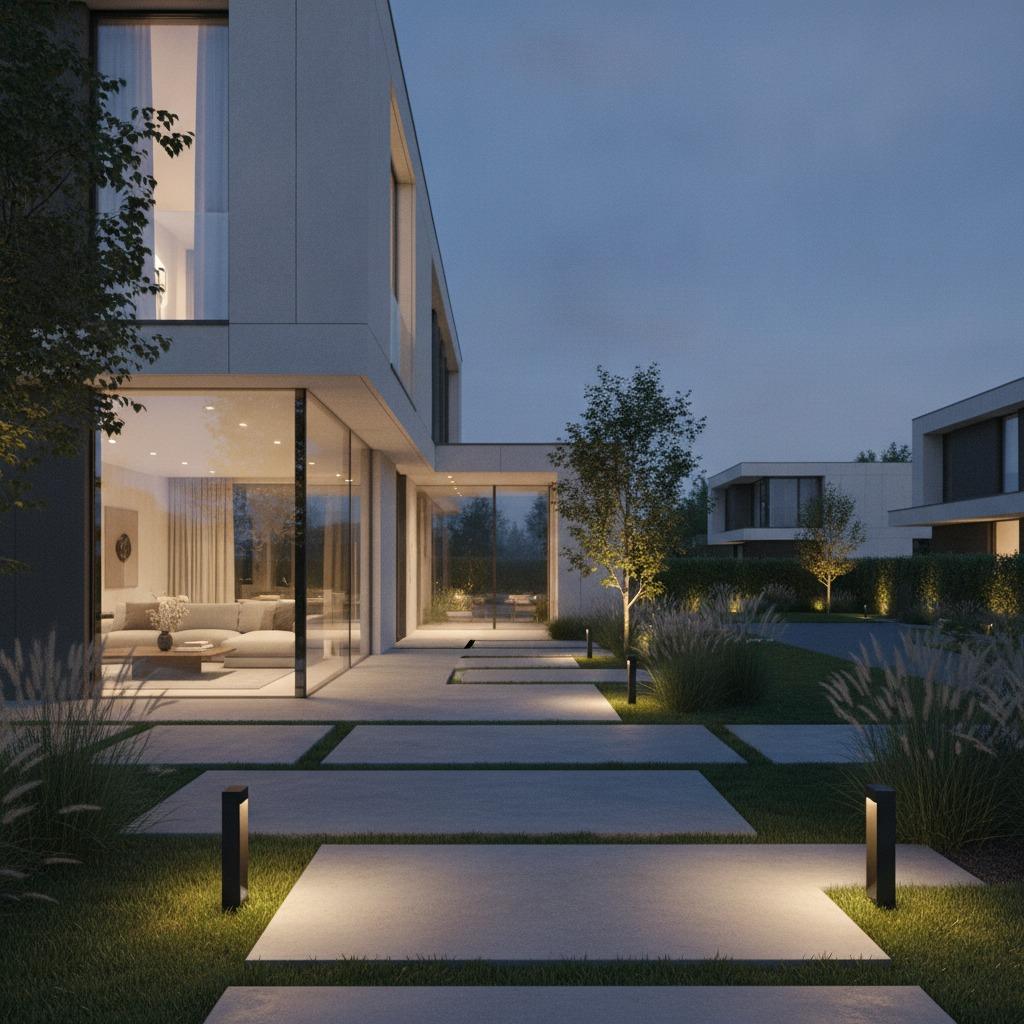
That is especially true for LED outdoor lighting used in walkways, drive approaches, gardens, and hospitality projects. The visual standard is high, but the practical standard is higher. A fixture has to guide movement, support safety, and still fit the architecture instead of looking like it wandered in from a different project altogether.
What the pathway and bollard style is doing well
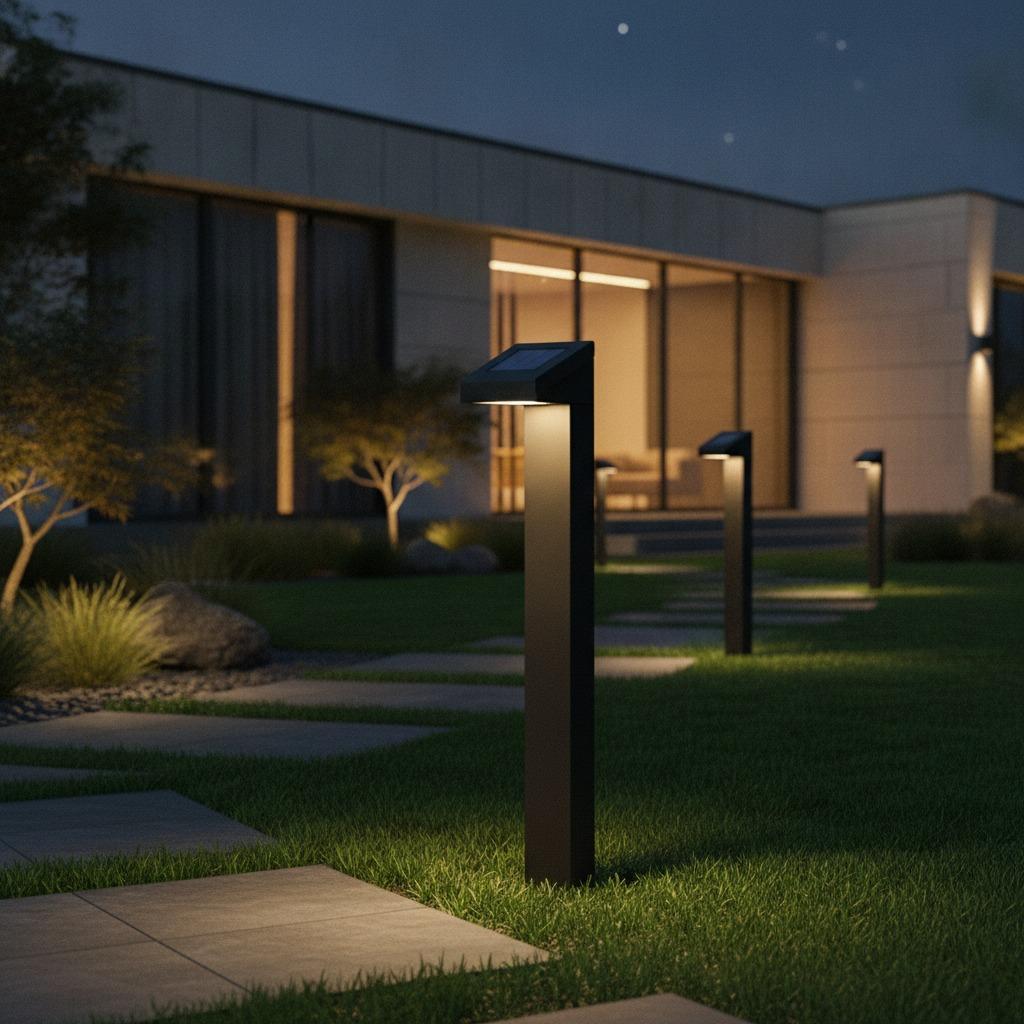
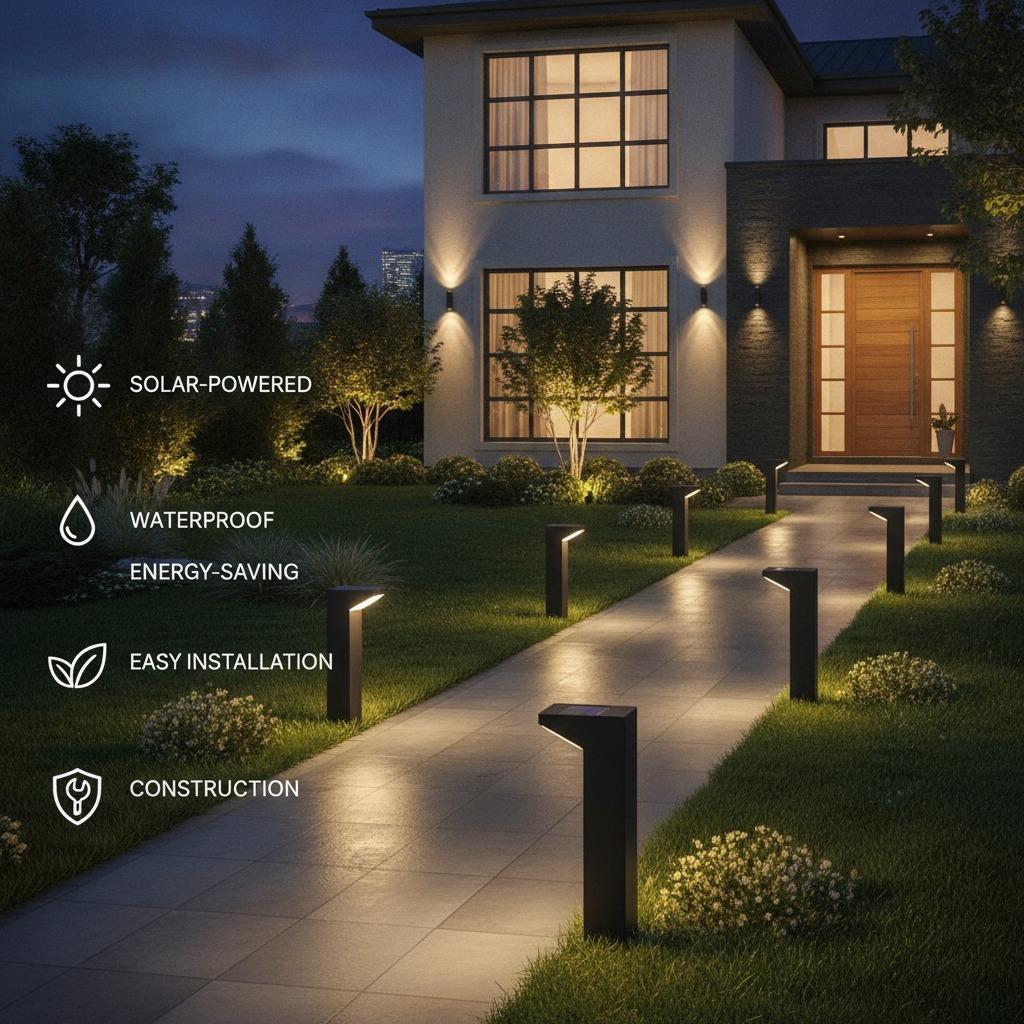
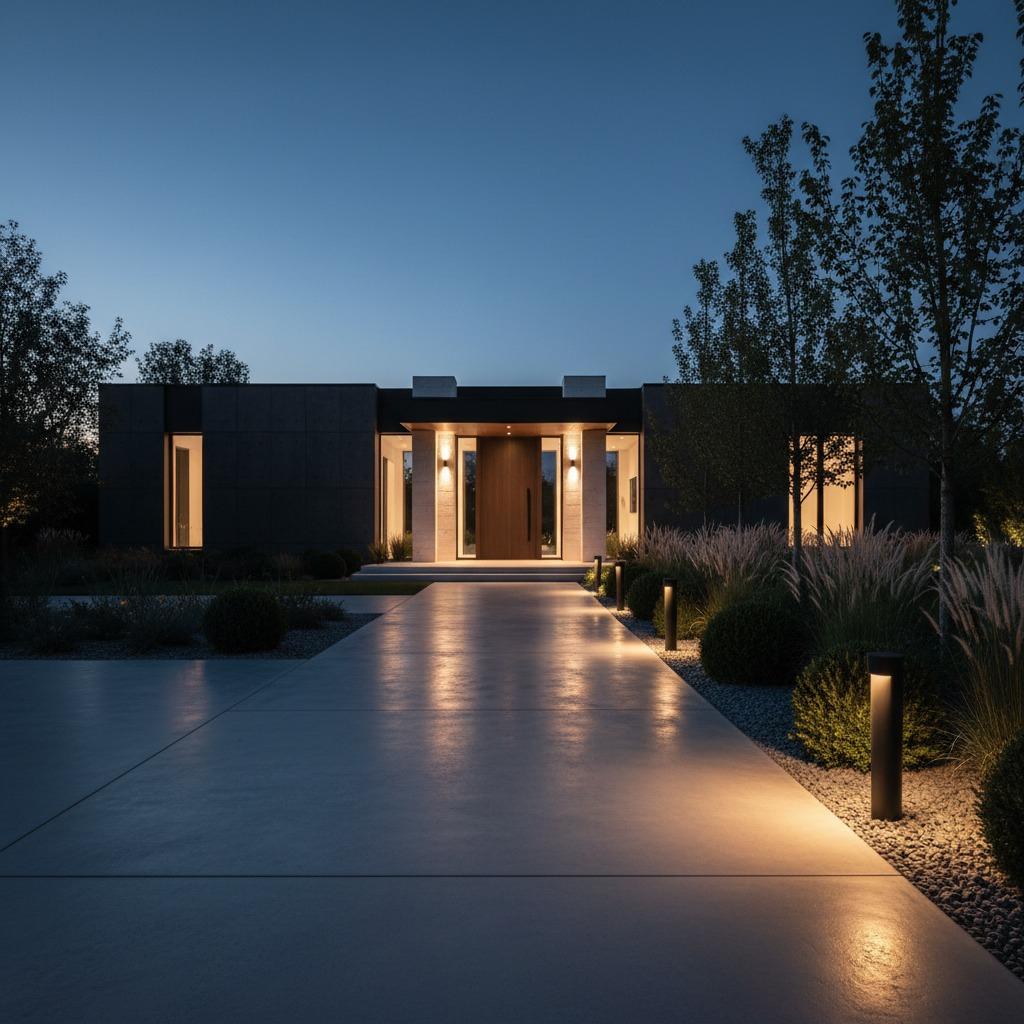
The product category here is outdoor pathway/bollard lights, and the design reads as clean and disciplined: short cylindrical posts, a matte dark exterior, a flat top, and a horizontal illuminated band near the upper section. The light appears warm-white, which is usually the right call for residential entries and landscape settings where harsh glare would feel out of place.
This kind of layout offers a few practical advantages. The low-profile form factor keeps sightlines open. The repeated points of light create a clear rhythm along a straight path. And because the illumination sits near the upper section rather than blasting from an exposed bulb, the fixture can feel more intentional than decorative. That matters in modern landscape work, where nobody wants the garden to look like a runway test track.
For buyers evaluating a LED landscape lighting manufacturer, these visible traits tell you something useful: the design is meant for wayfinding first, accent second. That is a good starting point for exterior projects that need comfort and order without overpowering the surroundings.
Quick buyer takeaway: what this product type is best for
This style of outdoor architectural LED lighting is well suited to:
Residential entry paths
Garden walkways
Hotel and resort exterior paths
Commercial perimeter accents
Driveway edges and similar circulation routes
The main value is guidance. People can see where to step, where the route continues, and how the space is organized. That sounds simple, but in outdoor lighting it is often the difference between a design that feels polished and one that feels like an afterthought.
Selection criteria that matter more than the brochure
When you evaluate an outdoor LED light manufacturer, start with the unglamorous details.
First, ask how the housing is built and finished. The visible product appears to use a metal or coated housing, but the exact material is not provided, so it should be confirmed during sourcing. The point is not academic purity; the point is whether the finish will hold up after weather exposure and routine maintenance.
Second, consider the light distribution. A warm horizontal band can work beautifully for pathway marking, but only if spacing, mounting height, and brightness are matched to the site. Too sparse and the path disappears into mood lighting. Too dense and you end up with a very polite airport taxiway.
Third, check compatibility with the project context. A fixture that suits a hotel courtyard may be too modern for a traditional residence, and a decorative garden piece may not be robust enough for a commercial route with regular traffic.
Common mistakes buyers make with outdoor LED lighting
One common mistake is buying for daytime appearance only. A bollard can look elegant in the catalog and still produce awkward glare or weak task lighting at night. Another is ignoring spacing. These fixtures are shown in a straight line along the path, which suggests a design philosophy based on repetition and controlled intervals. That only works if the layout is planned, not improvised after delivery.
A second mistake is assuming all exterior fixtures are interchangeable. They are not. A pathway light, a perimeter accent light, and a façade fixture may all be LED outdoor lighting, but they serve very different jobs. Mixing them up is how projects end up with overlit shrubs and underlit steps.
What to ask an outdoor architectural LED lighting manufacturer
If you are shortlisting suppliers, ask practical questions rather than brochure questions.
What is the housing material and finish?
How is the LED source integrated?
Is the light output intended for wayfinding, accenting, or both?
What mounting method is used?
How is the fixture maintained after installation?
You may also want site-specific samples or a mockup when the project is sensitive to appearance. For landscape and hospitality work, one site test can prevent a week of regret later.
FAQ for sourcing teams
Is warm-white always the best choice for pathways?
Not always, but it is often the safest choice for residential and hospitality settings because it tends to feel softer and more welcoming.
Should outdoor pathway lights be chosen mainly for style?
No. Style matters, but performance, durability, and spacing matter more. A handsome fixture that fails outdoors is just expensive punctuation.
Can the same supplier handle decorative and functional exterior lighting?
Sometimes, yes. But confirm that the manufacturer understands both architectural appearance and outdoor performance requirements. Those are related, but not identical skills.
Next step for buyers
If you are comparing an outdoor LED lighting manufacturer for a path, garden, or exterior circulation project, use the product’s visible behavior as your starting point and the hidden technical details as your filter. Ask for construction information, installation guidance, and project-relevant recommendations before you commit.
That approach keeps the lighting plan grounded in reality, which is where outdoor projects eventually live anyway—right beside the weather, the maintenance team, and the occasional complaint that one bollard looks slightly too bright on Tuesday nights.