
Why buyers look for a solar landscape lighting manufacturer in the first place
If you are sourcing for gardens, pathways, courtyards, or residential landscapes, the real question is rarely just “what light looks nice?” It is whether the fixture can work night after night without trenching, wiring, or constant maintenance. That is where a solar landscape lighting manufacturer matters. The right partner can supply outdoor fixtures that are simple to install, weather-resistant, and suitable for low-level guidance lighting in places where conventional wired lighting is overkill.
For many buyers, the appeal is straightforward: a solar garden light should reduce installation labor, avoid cable runs, and still hold up outdoors. But the buying decision gets more complicated once you compare housing quality, sealing, battery access, and how the product is built for long-term exposure. A solar landscape lights supplier is not only selling a lamp; they are effectively selling a small outdoor energy system with optics, electronics, sealing, and finish quality all working together.
What this type of product is designed to do
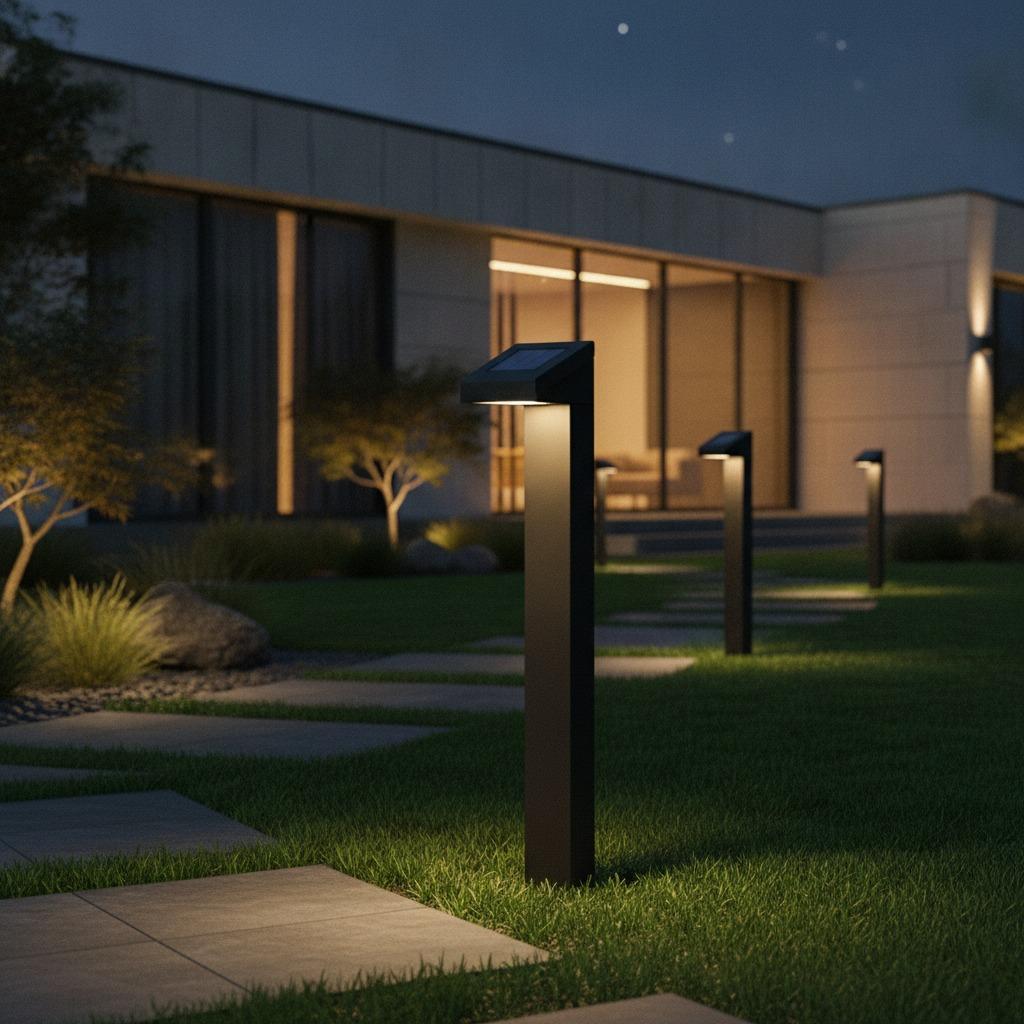
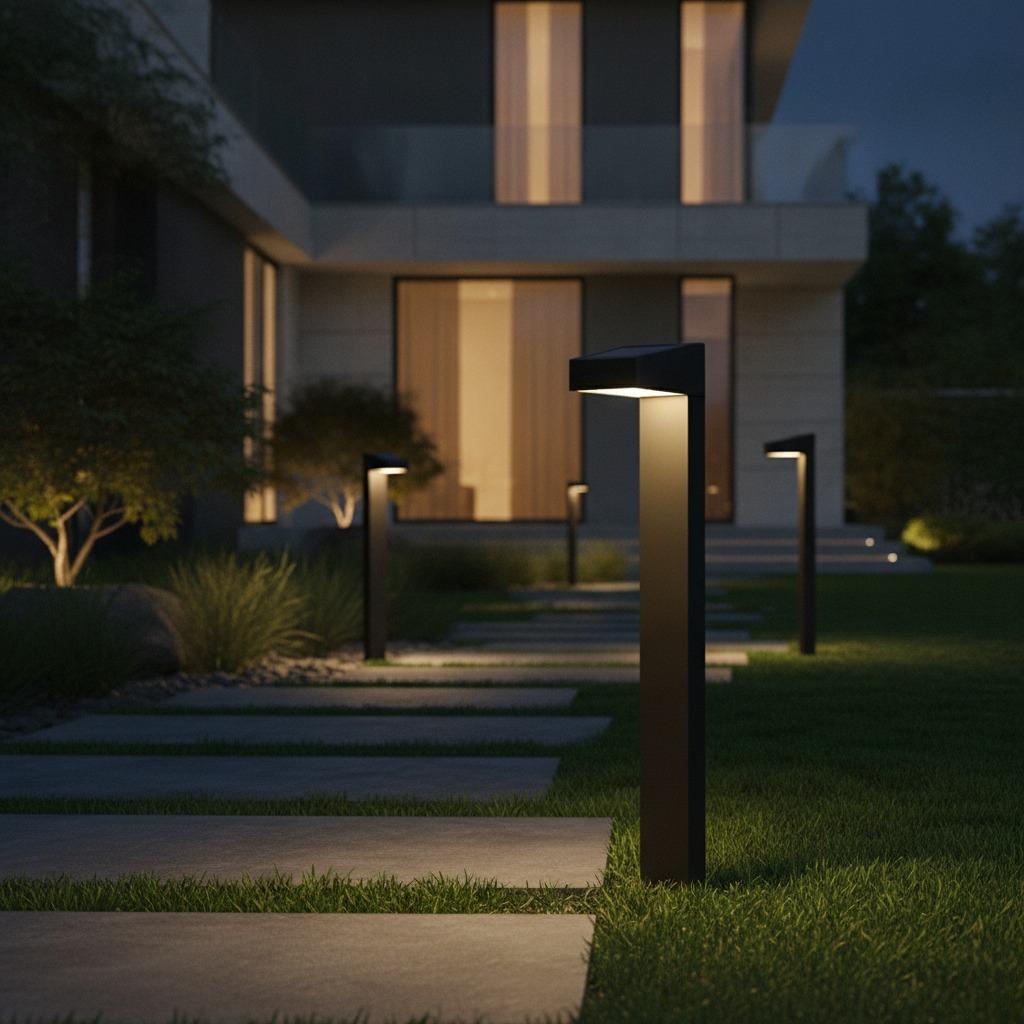
The visible product category here is a solar lawn or pathway light, also commonly used as a solar garden bollard light. The form is familiar: a slim vertical post, a flat base plate, and an angled top head that throws light downward and outward. That shape is practical. It helps guide footsteps along a path, outlines a lawn edge, and gives patios or courtyards a clear boundary without flooding the area with harsh light.
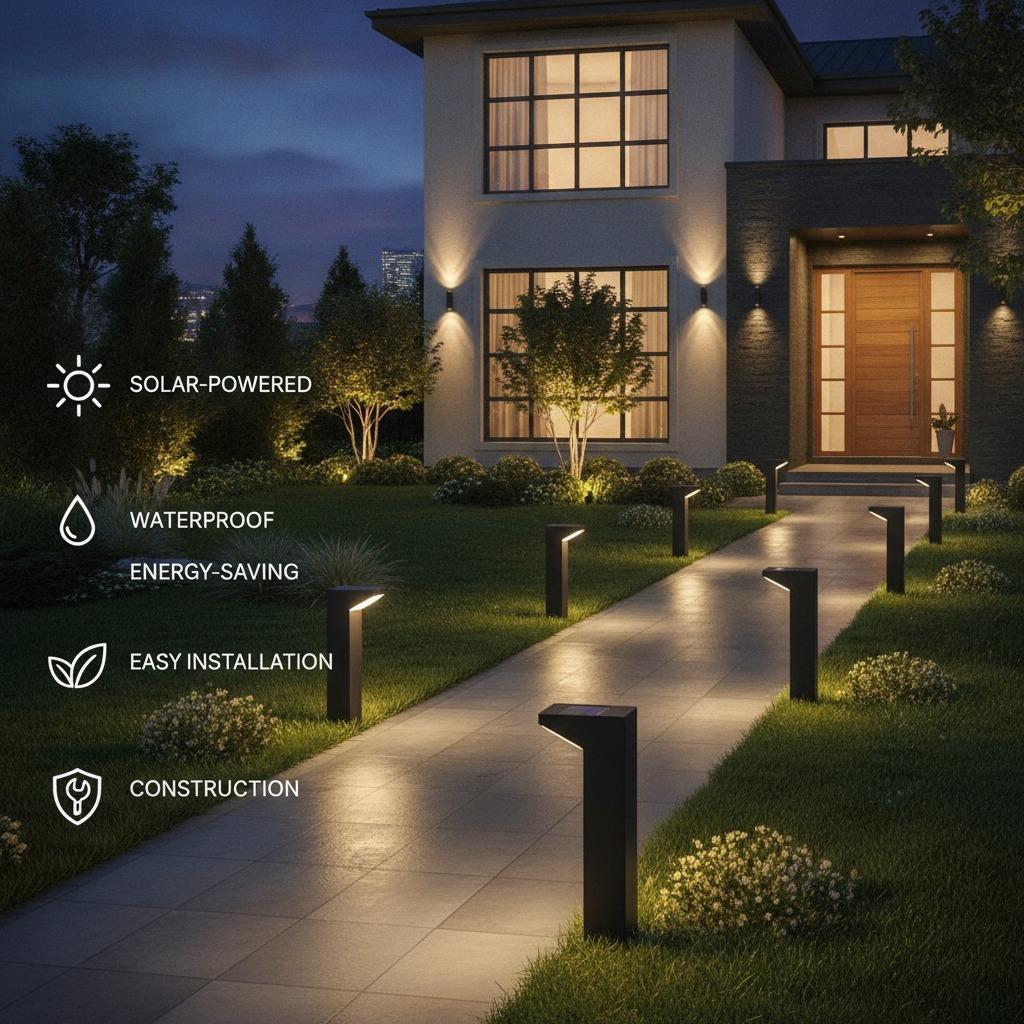
The product image and visible claims point to solar powered operation, IP65 waterproof protection, energy saving performance, easy installation, and durable, reliable outdoor use. Those are the phrases buyers expect to see, but they still need to be checked against the actual build. A clean-looking exterior does not guarantee good weather sealing, and a dark matte finish does not automatically mean the housing is metal. In this case, the construction appears to suggest a metal or metal-look housing with a powder-coated finish, though exact materials are not stated.
Key details buyers should verify before ordering
When reviewing an outdoor solar lighting factory, the important questions are often unglamorous. What is the housing material? How is the top assembly sealed? Is the LED module replaceable or permanently enclosed? Is the solar panel integrated into the top and protected from water ingress? These points affect both field performance and after-sales support.
Because the available information does not include exact dimensions, lumen output, battery capacity, solar wattage, runtime, or charging time, it would be risky to assume performance from appearance alone. That is a common sourcing mistake. A fixture can look sturdy and still be underpowered for a real pathway, or it can work well in a small residential setting but fail buyer expectations if used on a larger site where brighter, longer-lasting light is needed.
Typical decision criteria for B2B buyers
Most purchasing teams compare a few basic things first:
• Outdoor durability and weather resistance
• Ease of installation and maintenance
• Visual style for residential landscape use
• Energy-saving performance through solar charging
• Consistency between samples and mass production
That list sounds simple, but in practice it is where projects get won or lost. A nice sample that is difficult to assemble or seal is not a production-ready product.
What the product format suggests about manufacturing
From the visible geometry, this kind of light likely fits a manufacturing process used for outdoor lighting products: formed housing, surface coating, and sealed electronic assembly. The post is slim and regular in profile, which may point to an aluminum extrusion or formed sheet-metal structure, although that is only an informed inference. The top fixture appears compact, which usually means the internal layout has to balance LED placement, solar collection, and battery space carefully.
For a buyer, that matters because the manufacturing approach affects consistency. Powder-coated surfaces can be attractive and weather-friendly, but only if the coating is applied evenly and the edges are protected. Likewise, a sealed assembly is only as good as the gasket design, fastener quality, and how the cable or electronic interfaces are managed inside the head.
Common buyer mistakes with solar landscape lighting
One frequent mistake is treating every solar garden light as interchangeable. They are not. A pathway fixture for a front yard may be fine for accent lighting, but too weak for a long driveway or a commercial courtyard. Another mistake is overemphasizing appearance and underweighting serviceability. If the battery cannot be accessed or replaced in the field, the product may become disposable sooner than planned.
It is also worth being cautious about IP claims. IP65 is a useful indicator for outdoor use, but it should be understood in context rather than as a blanket guarantee for every climate or every installation. Water resistance, heat exposure, and repeated charging cycles all affect real-world life.
Practical questions to ask a solar landscape lights supplier
Before you place an order, ask for the product specifications that are missing from the image: dimensions, lighting output, color temperature, battery details, solar panel information, and mounting method. If your project has a particular look, request finish samples or close-up photos of the surface texture. If the lights will be installed in coastal, rainy, or high-heat environments, ask how the housing and seals are expected to perform there.
For sourcing teams, sample testing is still the best shortcut. Set up a few units in the actual environment: a shaded path, an open lawn, or a courtyard with afternoon heat. Solar products can behave very differently depending on sun exposure, and that is something a catalog page will not tell you.
FAQ buyers often ask
Are solar landscape lights hard to install?
Usually not, especially compared with wired fixtures. The promise of easy installation is one of the main reasons buyers choose them.
Are they suitable for commercial projects?
Sometimes, but the application matters. Residential-style bollard lights can work for light-duty landscape zones, while larger or brighter sites may need a different product class.
What should be checked first?
Start with durability, battery/service access, and whether the product’s light output matches the intended area.
A sensible next step for sourcing teams
If you are comparing manufacturers, focus on proof of build quality rather than presentation alone. A capable solar landscape lighting manufacturer should be able to explain the housing structure, waterproofing approach, and how the product is intended to perform in outdoor residential settings. The best buying decision is usually the one that matches the fixture to the site, not the one that simply chooses the brightest sample on the table.
If you are narrowing suppliers now, ask for a sample set, installation guidance, and a clear specification sheet before you commit to a larger order. That small pause can save a project from avoidable rework later.