
What buyers really want from an outdoor LED lighting manufacturer
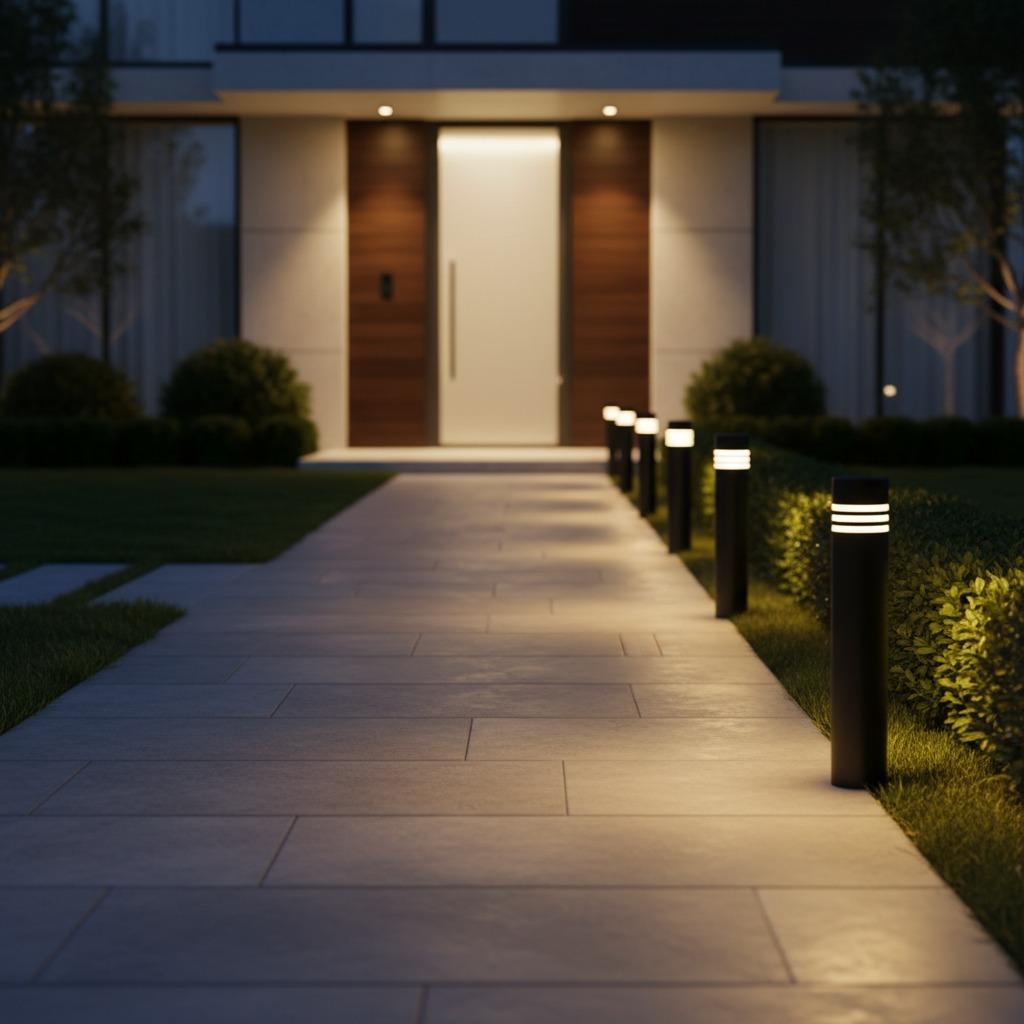
If you are comparing an outdoor LED lighting manufacturer, you are usually not shopping for a single fixture. You are trying to solve a site problem: make people move safely, define a route after dark, and keep the property looking intentional rather than overlit. That is why the best outdoor LED lights are judged less by a brochure photo and more by how they behave in service, on paths, at entrances, and across a landscape that has to look good in daytime too.
For engineers, sourcing managers, and product teams, the key decision is rarely “LED or not.” It is whether the supplier understands commercial outdoor LED lighting as a system: housing, optics, durability, installation method, and the visual effect at ground level. A good fixture can disappear into the architecture until night falls. A poor one can create glare, dark gaps, maintenance headaches, or a look that feels cheap against otherwise careful landscaping.
A practical example: bollard path lights that do the quiet work
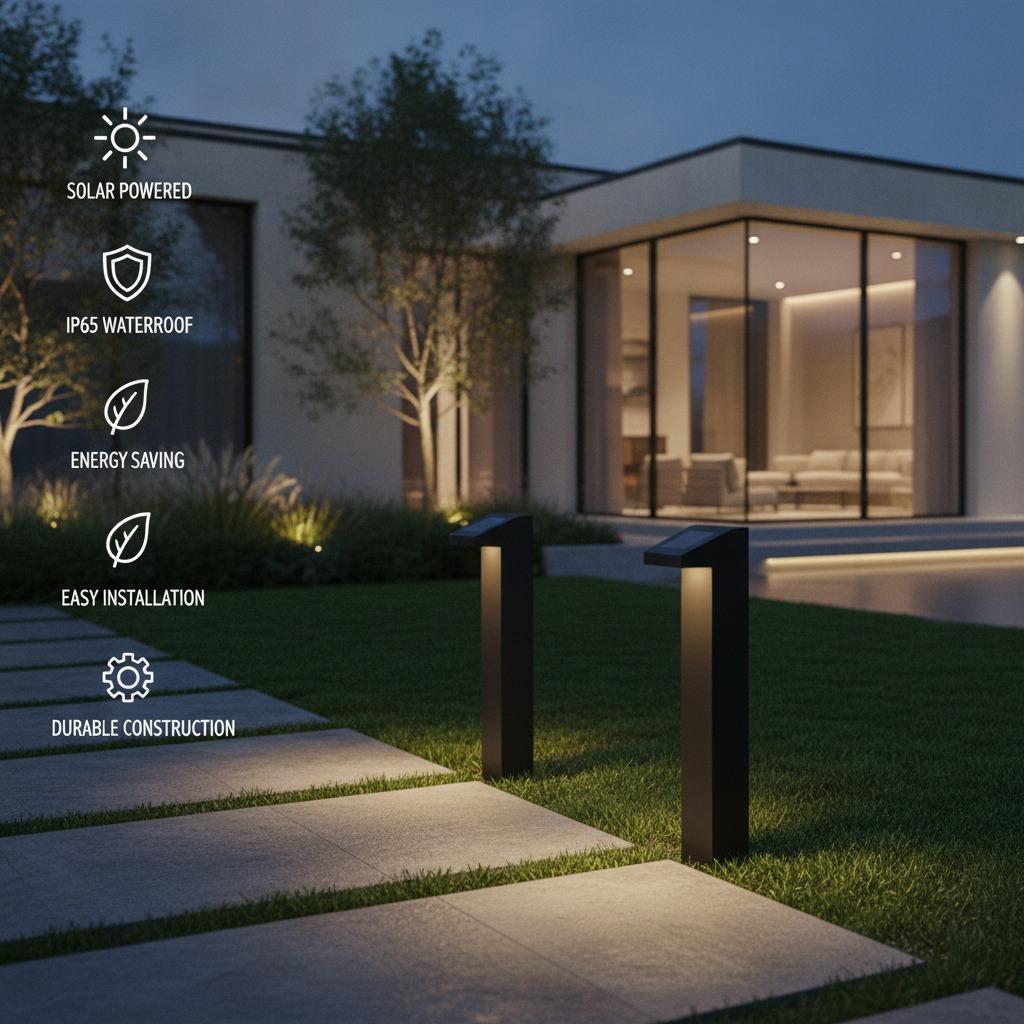
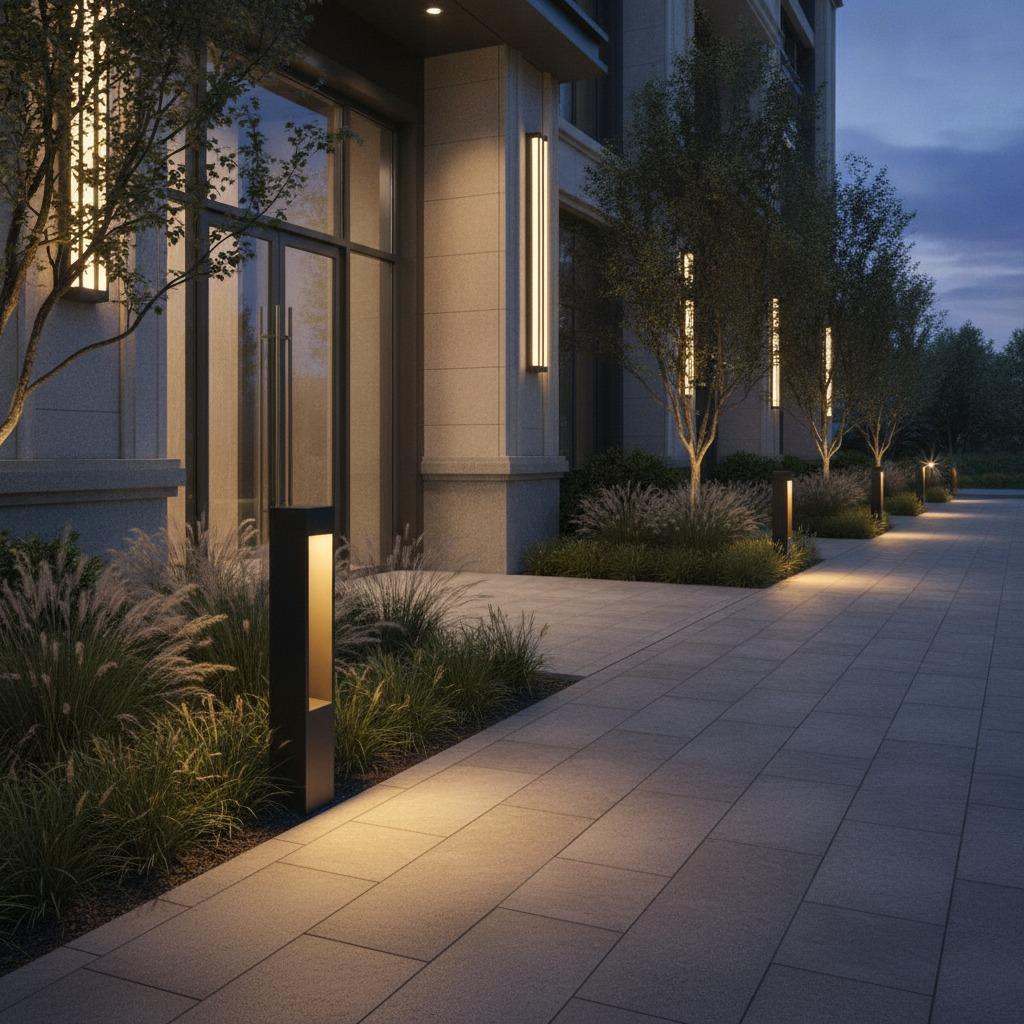
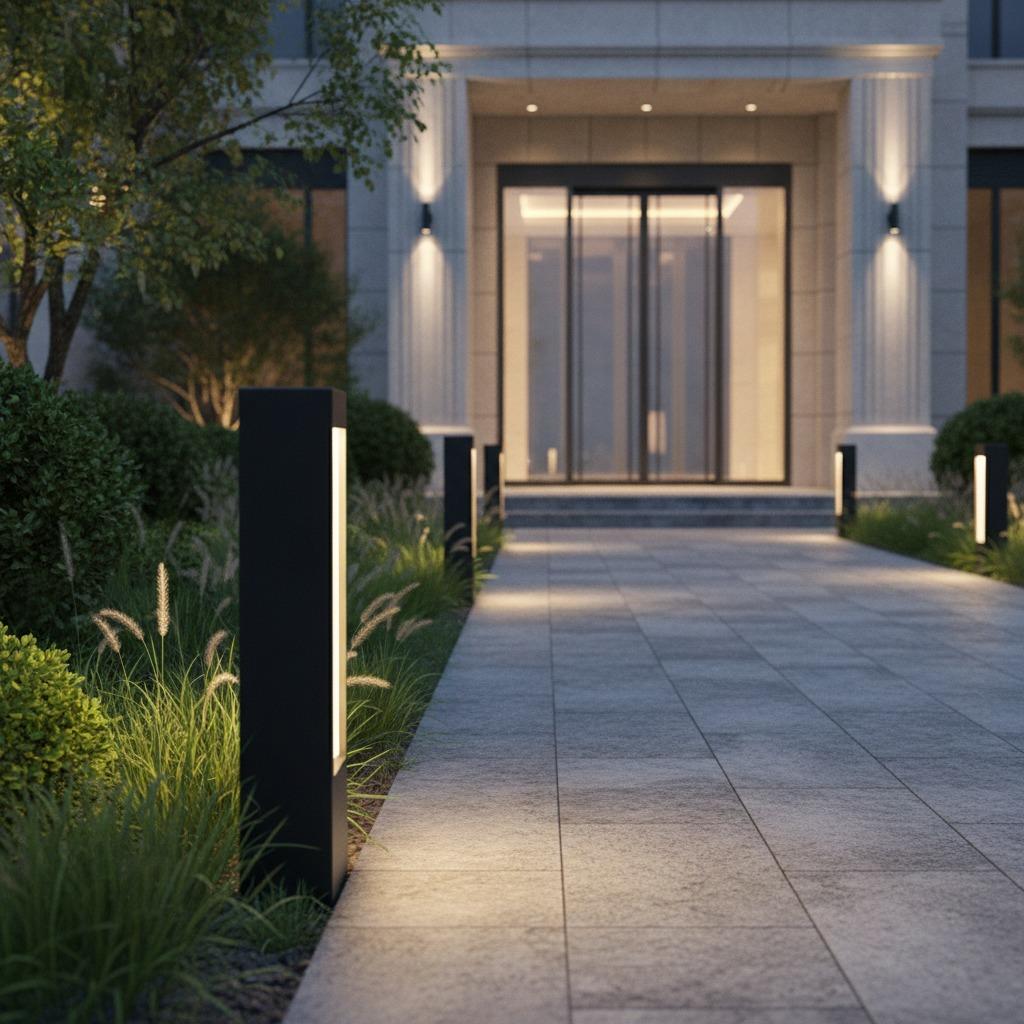
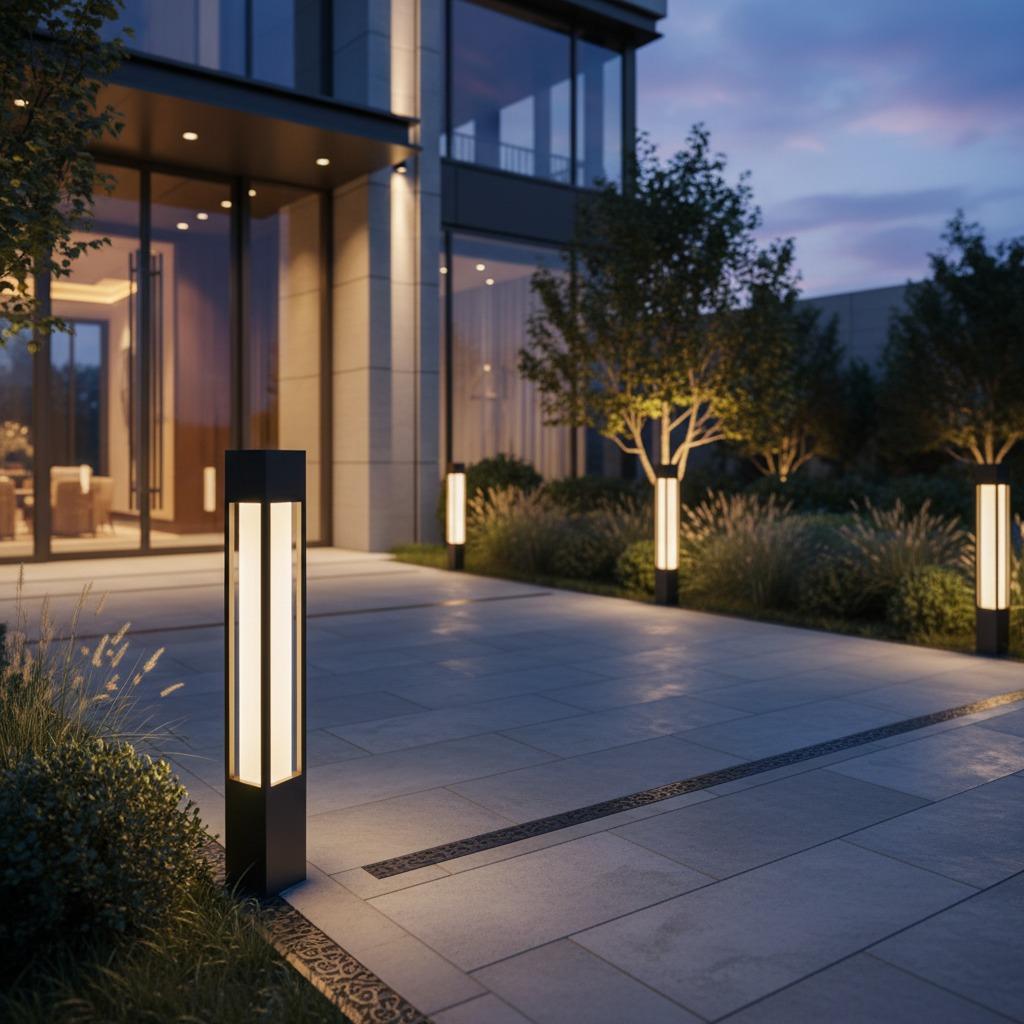
The product described here is a low-profile outdoor bollard path light. Visually, it is a short cylindrical post with a dark matte or black exterior and two horizontal illuminated bands near the top. That shape matters. It gives the light a clear route-defining role without turning the path into a runway. In the right setting, these fixtures can mark driveway edges, garden walkways, hotel approaches, resort paths, and architectural perimeter lines with a calm, warm glow.
The light appears to use an integrated LED source behind diffused lenses or slots. That usually makes sense for pathway work, because diffusion softens the beam and reduces the harsh “point source” effect people often complain about with cheaper outdoor LED lighting. The result is more ambient than theatrical, which is often exactly what landscape designers want. A warm white output can also help a property feel welcoming rather than clinical, though the final impression depends heavily on spacing and surrounding surfaces.
What to look for in a supplier, beyond the catalog shot
A serious outdoor LED lighting manufacturer should be able to talk about more than style. Buyers should ask how the housing is built, how the LED module is assembled, and how the fixture is mounted to the ground. The example here likely uses metal fabrication with a powder-coated aluminum or similar housing, but the exact material cannot be confirmed from the image alone. That caution is worth repeating: looks are not enough, especially for exterior products exposed to weather, irrigation overspray, cleaning chemicals, and occasional impact.
A few questions tend to separate a capable supplier from a decorative one:
1. Is the fixture built for repeated outdoor use, not just short-term visual appeal?
Path lights in landscaped areas need stable finishes, secure mounting, and predictable light distribution. The black exterior on this style may look simple, but finish consistency matters when a site uses many units in a row.
2. Does the light support the site’s actual circulation pattern?
Commercial outdoor LED lighting should help people read the route. In walkway applications, spacing is often more important than brightness alone. Too many fixtures can create visual clutter; too few can leave the path feeling fragmented.
3. Can the manufacturer support a product family, not just one model?
Projects often need coordinated outdoor LED lights across different zones: entry, path, garden, and perimeter. A supplier that can offer related forms or matching finishes reduces the risk of a patchwork look.
Why this type of bollard works for buyers
This style is not trying to flood a space. It is trying to shape it. That is useful for hospitality sites, corporate campuses, and residential developments that care about nighttime atmosphere as much as safety. The low-profile bollard format keeps sightlines open. The warm bands near the top give the light a recognizable identity. And the repeated spacing along a path creates rhythm, which is one of the small details that makes a project look planned instead of improvised.
That said, there is a practical caveat: pathway fixtures can be under-specified by buyers who focus only on appearance. If you are sourcing for a project, confirm the installation method, serviceability, and site conditions before you approve a design. A visually clean fixture can still be a poor fit if the base detail is awkward, if maintenance access is difficult, or if the intended mounting method does not match the paving construction.
Common buying mistakes
The most common mistake is treating every outdoor LED lighting option as interchangeable. A decorative garden light and a commercial outdoor LED lighting product may look similar in a photo, yet perform very differently once installed. Another mistake is choosing brightness without considering glare control or path readability. A third is ignoring how the fixture will look in a group; bollards are rarely sold one at a time in the real world.
Buyers also sometimes forget the daylight view. On landscaped projects, the fixture has to sit quietly in the environment when switched off. The dark matte finish on this bollard style is a sensible choice for that reason.
Quick buyer takeaway
If you are shortlisting an outdoor LED lighting manufacturer, look for three things: solid exterior construction, controlled warm illumination, and a design that works in repetition. For pathway and perimeter work, that combination usually matters more than a long feature list.
For sourcing teams, the next step is simple: ask for construction details, mounting options, and application photos from similar outdoor settings. For engineers and designers, check whether the light distribution matches the route you want people to follow. A well-chosen bollard does not just illuminate a path; it tells people where to go without making a fuss about it.
FAQ
Are bollard path lights suitable for commercial sites?
Yes, especially where the goal is to define walkways, soften hardscape edges, or support landscape design. They are common in hospitality and campus settings.
Do all outdoor LED lights need the same specification?
No. Path lights, facade lights, and area lights solve different problems. The right specification depends on the job, not just the product category.
What should I request before placing an order?
Ask for material details, mounting information, finish options, and any available application guidance. For a project like this, that is more useful than a generic sales sheet.
Next step
If your project calls for walkway definition, landscape lighting, or perimeter guidance, start by reviewing how the fixture will look and function in groups, not as a single sample. A capable outdoor LED lighting manufacturer should be able to support that conversation with clear product details and practical installation guidance.