
Why buyers ask for a LiFePO4 solar street light supplier
When procurement teams start comparing off-grid lighting options, the real question is usually not just who can sell a light, but who can supply a system that will still perform after a few seasons outdoors. That is why searches for a LiFePO4 solar street light supplier tend to come from practical people: engineers planning a roadway, sourcing managers balancing component risk, and product teams trying to avoid a maintenance headache later.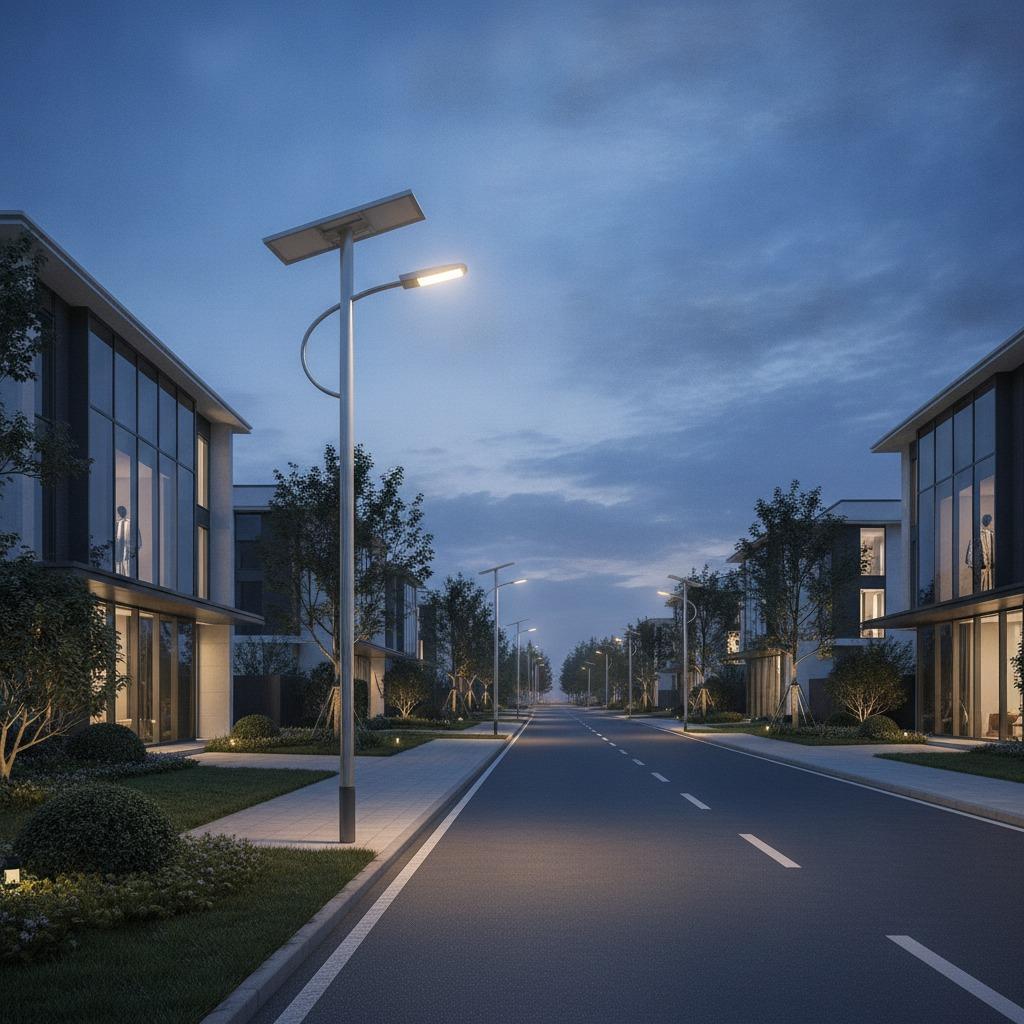
A solar street light looks simple from the curb. In reality, it is a system made up of the pole, bracket, LED luminaire, photovoltaic panel, controller, wiring, and storage. If the battery chemistry is not matched to the application, the project can become expensive in a hurry. LiFePO4 battery solar street light designs are often preferred because buyers want stable cycling behavior, safer chemistry relative to some alternatives, and a better chance of surviving repeated charge and discharge in outdoor conditions. That said, the chemistry alone does not make a good product. Integration matters just as much.
What the product is, and where it fits
The product category here is a solar-powered street light system for outdoor roadway or path lighting. The visible configuration is familiar: a tall cylindrical metal pole, a horizontal arm, a rectangular LED head, and a solar panel mounted above or behind the lamp assembly. It is the sort of modular structure commonly used for municipal streets, residential roads, commercial campuses, industrial parks, business districts, walkways, landscaped avenues, and parking areas.
The appeal is straightforward. These lights can operate without trenching for grid power, which is often the biggest cost and delay in remote or hard-to-wire sites. For some projects, that makes solar lighting not a “green” option in the marketing sense, but the only sensible option from an installation standpoint.
What to ask before you choose a supplier
A LiFePO4 solar street light manufacturer should be able to explain more than the fixture’s appearance. Buyers should ask how the lamp, panel, battery, and controller are matched as a system. If one component is oversized or underspecified, the whole installation suffers.
Battery integration
If the supplier claims LiFePO4 battery solar street light construction, ask where the battery is housed, how it is protected from heat and moisture, and whether the configuration allows service access. Outdoor battery placement is a detail that sounds mundane until the first maintenance call.
Optics and lighting purpose
The visible design suggests a roadway-oriented luminaire, but roadway performance is not just about turning LEDs on. Buyers need to consider beam distribution, mounting height, spacing, and whether the light is intended for traffic lanes, pedestrian zones, or mixed use. A light that looks bright in a product photo may still leave dark gaps between poles.
Solar harvesting and storage balance
The panel size, battery capacity, and operating profile must work together. Exact values are not supplied here, so they should not be guessed. Still, the principle is simple: if the panel is too small for the load, or the battery too modest for local weather patterns, nighttime performance drops quickly in winter or during extended cloudy periods.
Common mistakes in sourcing solar street lights
One common mistake is treating all solar street lights as interchangeable. They are not. A decorative pathway light and a highway-edge unit may look similar from a distance, but their duty cycles and environmental stress are very different.
Another mistake is focusing only on the battery label. LiFePO4 is a useful clue, but it is not a substitute for a complete design review. A buyer still needs to understand controller logic, enclosure protection, panel orientation, and maintenance access. It is also worth checking whether the supplier can support replacement parts over time. A solar light that cannot be serviced becomes landfill faster than anyone wants to admit.
Practical buyer advice for engineering and sourcing teams
For project teams, the best approach is to request a system-level specification rather than shopping by headline features alone. Confirm the intended application, installation height, mounting arrangement, and expected operating profile. Ask for clear documentation on the battery chemistry if LiFePO4 is a requirement, and make sure that claim is backed by the actual build, not just a file name or product title.
Sourcing managers should also compare the supplier’s manufacturing depth. A LiFePO4 solar street light supplier that handles the assembly of the LED module, photovoltaic panel, controller, and battery system is often better positioned to manage compatibility than a reseller stitching together mixed parts.
For product teams, the real decision is whether the light meets the use case with minimal maintenance risk. If the project site is remote, unpowered, or difficult to trench, solar often makes sense. If the site has stable grid access and a high lighting load, the economic case may be less compelling. That is a judgment call, not a slogan.
Quick questions to use in supplier discussions
What parts of the system are factory integrated?
How is the battery protected and serviced?
What is the intended mounting and roadway application?
Can the supplier explain how panel, battery, and lamp are balanced for local conditions?
What a good next step looks like
If you are shortlisting a LiFePO4 solar street light supplier, start by matching the product to the actual site conditions, not the catalog photo. Ask for the system breakdown, verify the battery chemistry claim, and compare the supplier’s ability to support outdoor use over time. That is usually where the real difference shows up."}