
Choosing a commercial LED lighting supplier for office projects
When a fit-out team starts comparing options from a commercial LED lighting supplier, the real question is not simply who can sell luminaires. It is who can help an office look calm, work efficiently, and avoid expensive rework after the ceiling grid is already closed. That matters because lighting affects how people read screens, move through meeting areas, and feel in shared workspaces. In practice, the best supplier is often the one that can support the project from layout to installation, not just ship boxes.
Office lighting is one of those details people notice only when it is wrong. Glare on monitors, dark corners in circulation zones, or a patchwork of mismatched fittings can make a modern workplace feel unfinished. A dependable commercial LED lighting supplier should make it easier to build a consistent lighting scheme across open desks, conference rooms, reception areas, and corridors. The decision you are really making is whether the supplier can support a clean architectural result, not just a product line.
What a good office lighting package usually looks like
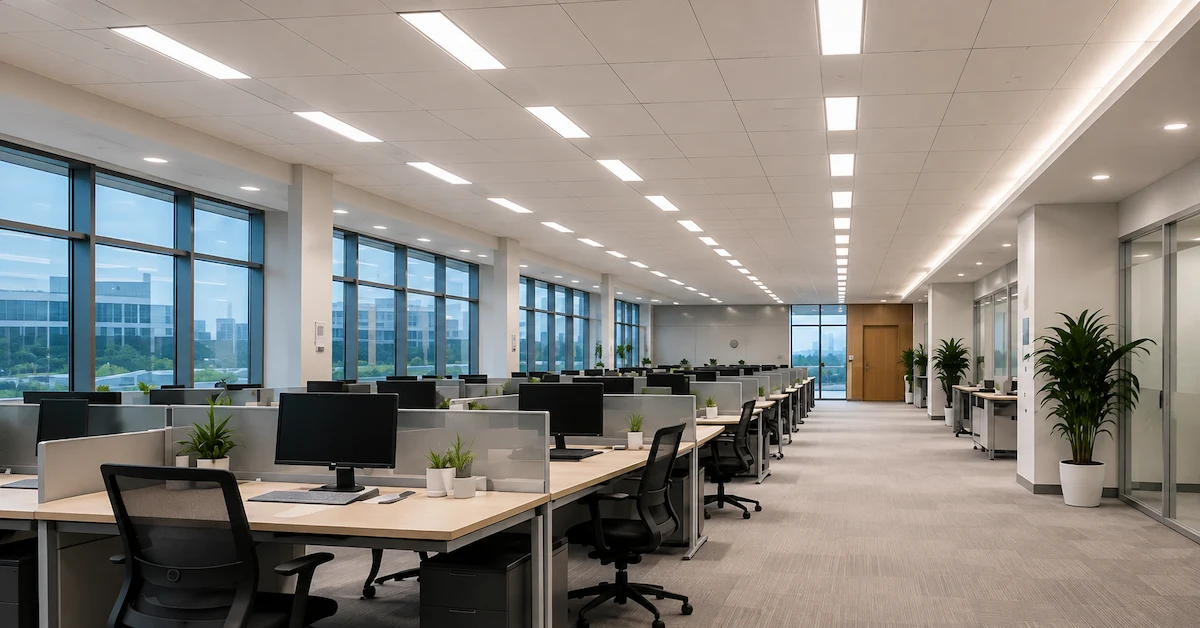
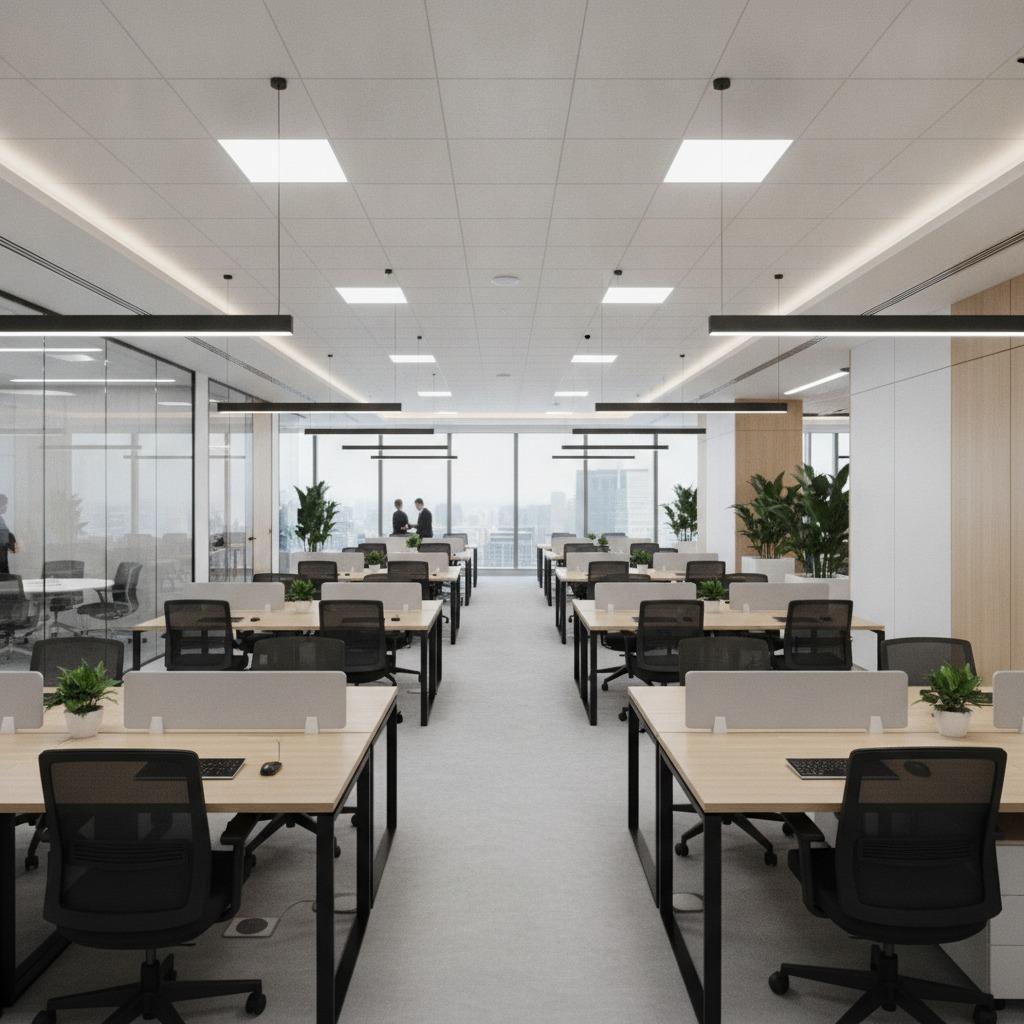
The office interior described here is a useful reference point: suspended linear fixtures run across open-plan areas, while recessed square ceiling lights sit flush in the suspended ceiling. That combination is common in contemporary commercial fit-outs because it balances visual character with practical coverage. The black linear pendants add a strong horizontal line and work well over workstations or collaborative zones. The recessed square luminaires disappear into the ceiling and help keep the overall room bright and orderly.
That mix of fixtures also tells you something about the supplier’s role. A capable industrial LED lighting supplier or office lighting partner should be comfortable coordinating multiple fixture types in one space. On a real project, that usually means paying attention to ceiling layout, sightlines, and the way light is distributed between tasks and walkways. It is not glamorous work, but it is the difference between a polished office and one that feels pieced together.
Quick buyer takeaways
Use the product family, not just the price tag, to compare suppliers
An LED lighting wholesaler may offer a broad catalog, while a commercial LED lights manufacturer may be better positioned to support consistent styling across a project. Meanwhile, a LED lighting distributor can be valuable when availability and logistics matter more than customization. Buyers should be clear about what the project needs: standard stock, coordinated architectural pieces, or a supplier able to support a fuller office lighting system.
Look for uniformity first
For office work, uniform ambient lighting is usually more valuable than a dramatic feature fixture. The recessed squares in the ceiling provide even coverage, while the suspended lines help define the space. That is a practical approach for modern interiors, especially where workstation comfort and a neat visual finish both matter.
Selection criteria that save time later
Start with the ceiling plan. If the space uses a suspended ceiling, recessed fixtures can integrate cleanly and keep the visual field simple. If the design needs stronger identity or a more architectural feel, suspended linear lights can become part of the room’s structure. This is where a seasoned energy efficient lighting supplier can help, even when the exact performance numbers are still being finalized. They should be able to talk through layout logic, not just product names.
Also consider maintenance. Office fit-outs age faster than most people expect. A layout that looks elegant on day one can become awkward if replacement access is poor or if the fixture types are too varied for easy sourcing later. That is a small caution, but an important one. Consistency across the product family often makes future servicing less painful.
Common mistakes buyers still make
One frequent error is choosing fixtures by appearance alone. Clean profiles matter, but so does how light behaves across desks, meeting tables, and circulation paths. Another mistake is over-specifying feature areas and under-specifying general lighting. Offices need a stable base layer of illumination before any decorative accents make sense.
Another practical issue: teams sometimes assume every supplier can support both product supply and site coordination. Sometimes they can; sometimes they cannot. If the project involves a new build or renovation, ask early whether the supplier can support office lighting installation or coordinate with the contractor. It sounds obvious, but it is easy to lose a week here if roles are unclear.
What this means for procurement and design teams
For sourcing managers, the goal is to reduce risk. For product teams and designers, the goal is to keep the office interior coherent. The right commercial LED lighting supplier should help both sides by offering a coordinated set of fixtures, clear product grouping, and enough flexibility to suit different zones within one workplace.
If you are building an open-plan office, upgrading a reception area, or refreshing a corridor network, start with the lighting system as a whole. Linear pendants, recessed squares, and integrated ceiling elements can work together surprisingly well when the supplier understands the project’s architecture. That is usually where a reliable commercial LED lighting supplier earns its place: not by overpromising, but by making the finished space feel intentional.
Next step
If you are evaluating suppliers for an office fit-out or renovation, prepare a simple brief: ceiling type, room functions, desired visual style, and the level of coordination you expect from the supplier. Share that early. It makes it much easier to compare an LED lighting wholesaler, an industrial LED lighting supplier, and a full project partner on equal terms.