
How to Evaluate an Outdoor Lighting OEM or ODM Supplier
Choosing an outdoor lighting OEM is not simply a matter of comparing fixture photographs. The real decision is whether a supplier can turn a lighting concept into a repeatable, compliant, serviceable product for roads, paths, entrances, façades, and landscaped areas. This article explains what buyers should verify before requesting samples or approving a project, with particular attention to suppliers offering coordinated exterior lighting systems.
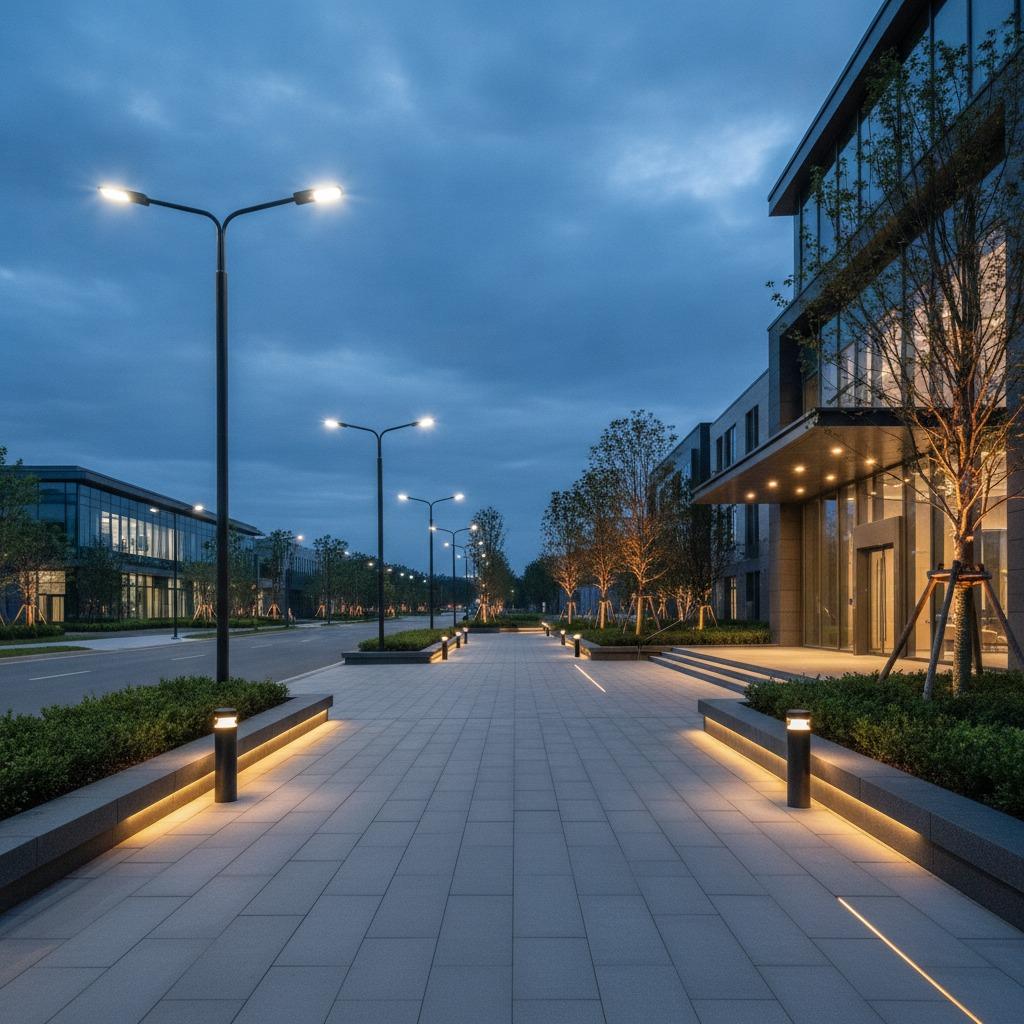
The visible product mix in a typical architectural and municipal project may include tall double-arm roadway lights, short bollards, recessed linear fixtures, tree uplights, canopy downlights, and building-mounted luminaires. These products often need to work together visually while meeting different optical, mechanical, and electrical requirements. That combination is where supplier evaluation becomes more important than a catalogue review.
What decision does the buyer need to make?
Most sourcing teams are deciding between three approaches:
- Buy an existing standard product with limited changes.
- Use an outdoor lighting ODM partner to adapt an existing platform or develop a product around a defined brief.
- Engage an outdoor lighting OEM supplier to manufacture a buyer-owned design, brand, or specification.
The right route depends on how much control is required over housing geometry, optics, mounting, branding, controls, packaging, and future revisions. A standard bollard may need only finish and label changes. A twin-arm roadway luminaire for a campus or municipal project may require custom pole geometry, wind-load review, photometric design, wiring details, and site-specific mounting provisions.
Quick comparison: OEM, ODM, and standard sourcing
| Approach | Best suited to | Buyer should verify |
|---|---|---|
| Standard product sourcing | Fast specification of established fixtures | Available data sheets, photometry, mounting, finish, and supply continuity |
| ODM development | Brands or contractors needing a modified or jointly developed product | Design ownership, tooling responsibility, engineering changes, and sample approval process |
| OEM manufacturing | Buyers with their own design, brand, or detailed technical specification | Production controls, incoming materials, assembly consistency, documentation, and change control |
These labels are not used consistently across the lighting industry. One supplier may call a private-label product OEM, while another reserves OEM for a buyer-owned design. Ask what the term means in the supplier's quotation rather than relying on the label.
Start with the lighting application, not the fixture shape
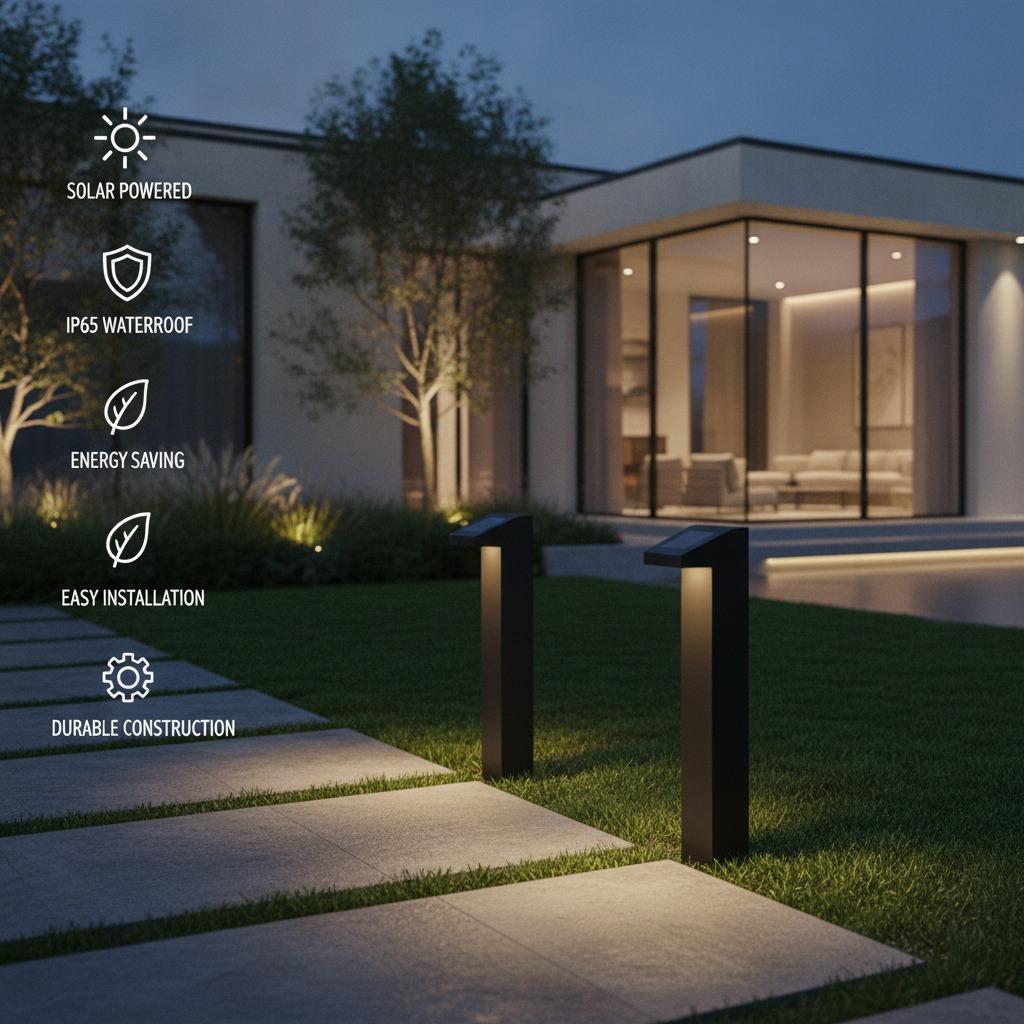
A dark-gray pole with a compact horizontal head may look appropriate for a roadway, campus, or internal development road, but appearance does not establish performance. The starting point should be the lighting task: vehicle movement, pedestrian orientation, entrance recognition, landscape emphasis, step safety, or architectural accent.
Roads, campuses, and internal drives
Tall poles with curved or Y-shaped twin arms can support a coordinated appearance across roads and larger sites. Buyers should define pole height, arm arrangement, mounting interface, maintenance access, cable routing, foundation assumptions, and the required lighting calculation. A supplier should be able to provide suitable photometric files and explain how the luminaire is aimed and serviced. Do not approve a roadway fixture from a daytime rendering alone.
Walkways and pedestrian areas
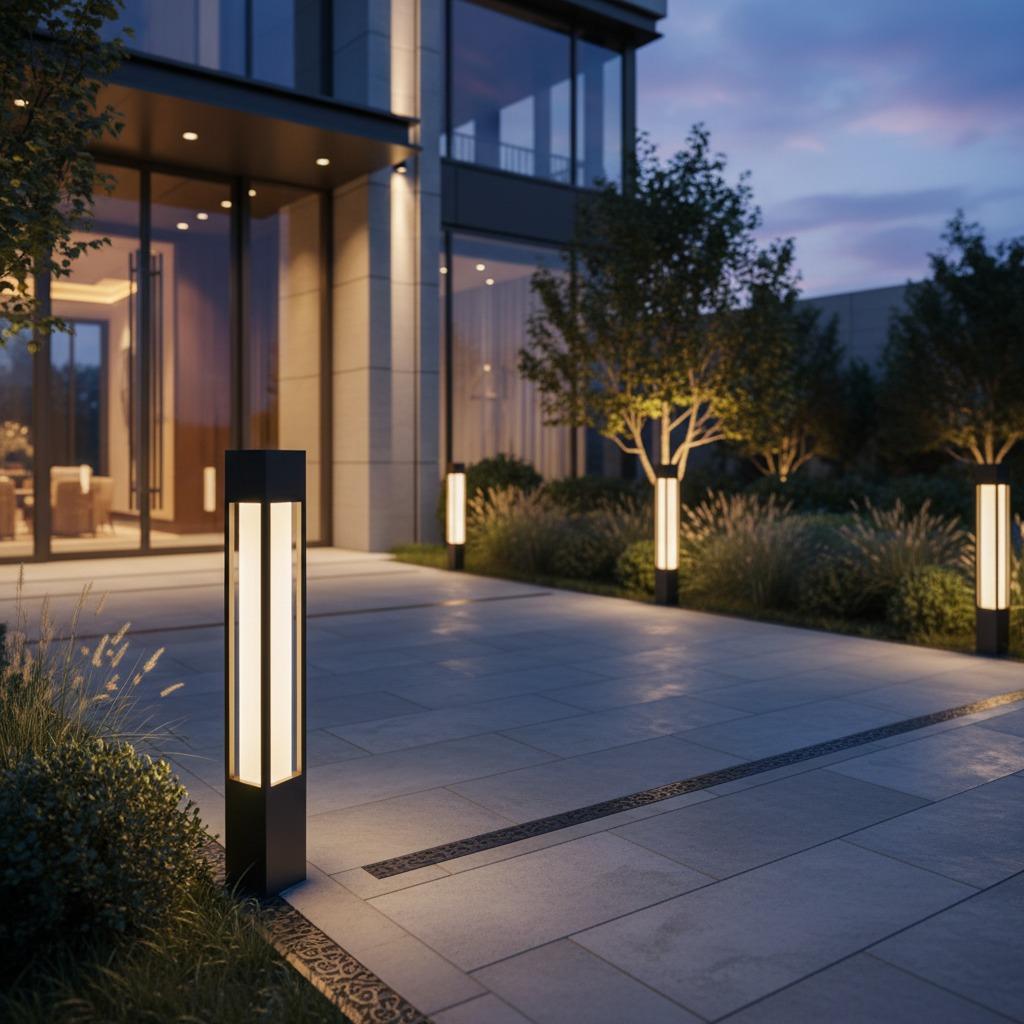
Bollard lights provide low-level guidance and can help establish visual rhythm along paths, plazas, and building approaches. Their location matters as much as their output. Ask about glare control, diffuser behavior, vandal resistance, drainage, cable entry, and the relationship between mounting height and path width. A bright panel is not automatically a comfortable pedestrian light.
Landscape and architectural details
Recessed linear lighting at planter edges and steps, tree uplights, canopy downlights, and façade fixtures are usually judged as a system. Their finishes, light appearance, cable connections, and control behavior should be coordinated. Small differences in color appearance or diffuser brightness can be obvious when fixtures are installed beside one another.
Manufacturing areas worth investigating
An outdoor lighting factory may use several production disciplines rather than one single process. Pole and arm assemblies can involve metal forming, cutting, welding, surface preparation, and coating. Luminaire housings may be made through die casting, extrusion, machining, or fabricated sheet metal, depending on the design. LED boards, drivers, seals, diffusers, and wiring then have to be assembled consistently.
For buyers, the important question is not whether every possible process exists on site. It is whether the supplier controls the critical interfaces. Ask who makes the poles, who supplies the driver and LED module, where coating is performed, and how incoming components are checked. If subcontractors are used, request clear responsibility for dimensional inspection, finish consistency, electrical testing, and replacement parts.
Material claims should also be documented. Product imagery may suggest rigid metal housings and dark powder-coated finishes, but the exact alloy, coating system, and diffuser material cannot be confirmed from appearance. Request material descriptions, coating specifications, sample approval standards, and any available environmental or corrosion-related test documentation before those details enter a purchase order.
Technical information to request before approval
A serious quotation should go beyond wattage and a product photograph. At minimum, request the following information for each fixture family:
- Dimensions, net weight, mounting method, and cable-entry arrangement.
- LED module, driver, input voltage, dimming options, and control compatibility.
- Photometric files, light distribution, glare information, and installation assumptions.
- Color temperature, color rendering information, and consistency between product types.
- Ingress and impact protection ratings, if claimed, with supporting documentation.
- Operating environment, thermal design, maintenance access, and replacement procedure.
- Finish, coating, corrosion considerations, and approved color references.
- Available electrical and product certifications for the target market.
- Packaging method, labeling, spare parts, and field-replacement provisions.
None of these values should be inferred from a project image. The visible installation may show warm-white architectural illumination and brighter roadway or pathway lighting, but it does not establish the actual color temperature, lumen output, beam angle, protection rating, or control protocol.
Common mistakes in supplier selection
Comparing only purchase price
A low initial price can conceal incompatible drivers, weak cable glands, difficult access to the LED assembly, or a finish that does not match the rest of the site. Compare the complete system: fixture, pole, arm, foundation interface, controls, spares, packaging, and documentation.
Accepting an attractive rendering as technical evidence
Images are useful for discussing form and placement, not for confirming performance. Treat renderings and installed photographs as design references until the supplier provides drawings, test information, and a sample that represents production intent.
Leaving ownership and changes undefined
For custom work, the quotation should state who owns drawings, tooling, molds, firmware, branding files, and approved samples. It should also define what happens if a driver, LED module, coating material, or subcontractor changes. A small component change can affect optical output, color consistency, or service life.
Underestimating installation conditions
Outdoor systems face moisture, contamination, temperature changes, impact, vibration, and maintenance constraints. A supplier may provide a suitable luminaire but still leave unresolved questions around pole foundations, drainage, cable routing, access doors, or junction boxes. Bring the installation contractor into the review early.
Practical buyer checklist
Before moving from concept to purchase, prepare a short technical brief covering the application, mounting environment, preferred appearance, target light distribution, control requirements, finish, operating conditions, required market documentation, and expected order structure. For a multi-fixture site, include a schedule showing which products serve roads, paths, planting beds, steps, entrances, and façades.
Then ask the supplier to separate confirmed capability from proposed capability. This distinction matters. A company may be able to coordinate a double-arm streetlight, bollard, recessed linear fixture, and uplight visually, but that does not automatically prove it can manufacture all four product types under one controlled quality system.
FAQ
Should I choose OEM or ODM for a new outdoor lighting range?
Choose based on design control. ODM is often practical when the supplier has an existing platform that can be adapted. OEM is more appropriate when the buyer owns a defined design or requires tighter control over branding, construction, and future revisions. Confirm the commercial definition in writing.
Can one supplier provide roadway, bollard, and landscape lighting?
Possibly, but the supplier's ability should be verified product by product. Request drawings, samples, photometry, production references where legitimately available, and a clear explanation of which operations are internal or subcontracted.
What should be approved first: the appearance or the technical specification?
Both should develop together. Approving the appearance without checking mounting, thermal behavior, wiring, optics, and maintenance can create expensive redesign work later. A visual sample is useful, but it should be tied to an approved technical drawing and component list.
Next step for sourcing teams
Build a supplier comparison sheet that records the exact product scope, confirmed materials, available technical files, customization limits, quality responsibilities, and unresolved questions. Send the same brief to each candidate and compare the completeness of the response, not just the catalogue price. For a project covering roads, pedestrian routes, entrances, planting beds, and architectural surfaces, that disciplined review is the best way to distinguish a capable outdoor lighting OEM partner from a seller with attractive images but limited project control.