
What buyers usually mean when they ask for an LED flood light manufacturer
When sourcing an LED flood light manufacturer, most buyers are not just comparing housings and prices. They are trying to answer a more practical question: which supplier can build an outdoor light that will work reliably in the field, match the mounting conditions on site, and keep operating costs under control? That matters whether the project is a warehouse yard, a loading dock, a parking lot, or a remote construction area where grid power is limited.
I spoke with a few procurement and maintenance managers for this article, and the same theme came up repeatedly. The first sample may look fine on a workbench. The real test is whether it handles rain exposure, vibration, bracket adjustment, panel placement, and long hours outdoors without becoming a maintenance headache. That is where the difference between a true manufacturer and a casual reseller starts to show.
What the product itself tells you
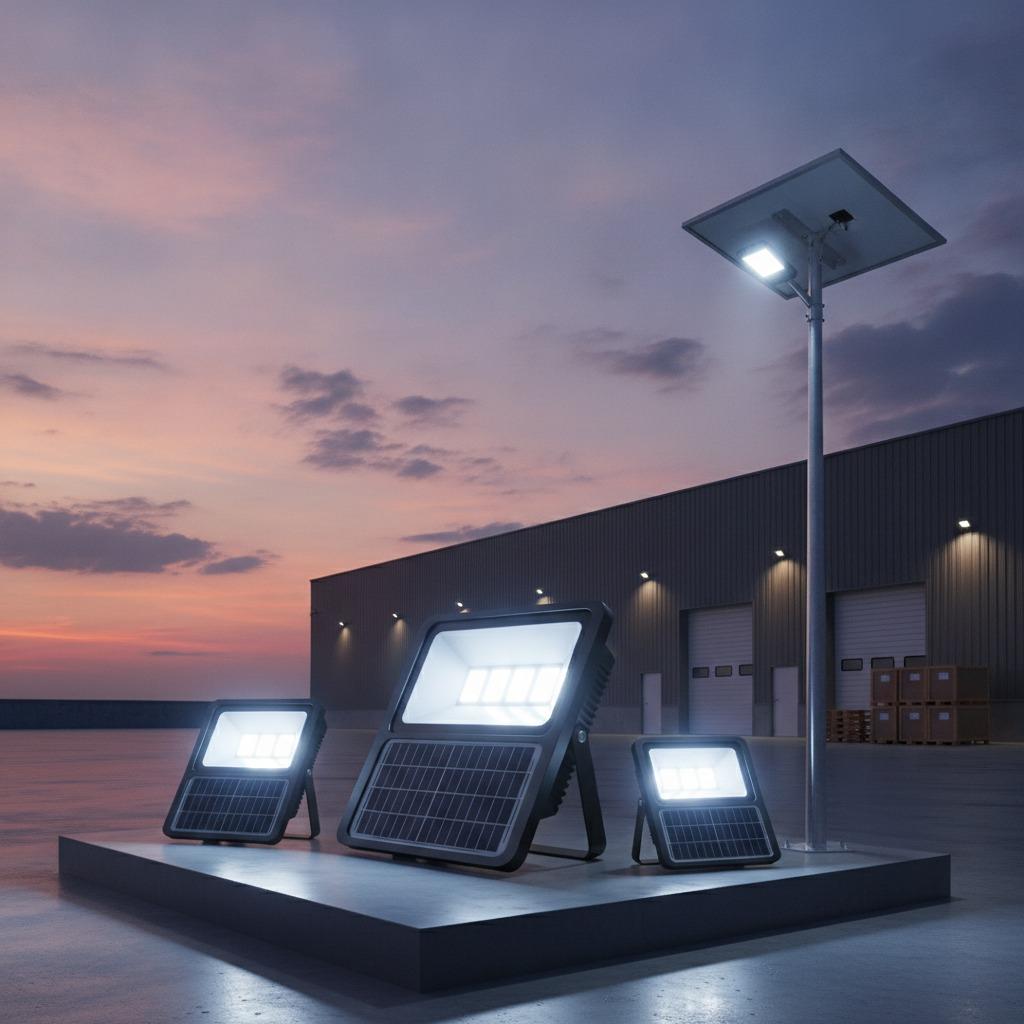
The solar-powered outdoor LED floodlights described here combine several parts that matter to buyers: circular LED lamp heads with wide reflectors, finned heat-sink housings, adjustable brackets, and separate framed photovoltaic panels. In practical terms, that means the product is not just a light source. It is an assembled outdoor system that brings together solar collection, LED illumination, mounting hardware, and likely internal power electronics and storage components.
For sourcing teams, that changes the conversation. A good LED flood light supplier needs more than a catalog. They need control over assembly quality, outdoor mechanical design, and the consistency of integrated components. The panel, bracket, housing, and lens all affect field performance in different ways. If one part is weak, the whole unit feels less dependable even if the lamp head itself is decent.
Interview notes: what experienced buyers check first
One facilities buyer put it bluntly: “We don’t want a light that only looks rugged. We want the whole unit to behave like a rugged product.” That usually means checking three areas first.
1. Mounting flexibility
The visible adjustable brackets and pole-mount option are not minor details. Outdoor projects rarely offer ideal installation conditions. A reliable LED flood light factory should be able to support different angles, pole heights, and ground-stand setups without forcing installers into awkward workarounds.
2. Thermal design
The finned black housings suggest attention to heat dissipation, which matters for LED products used outdoors for extended periods. Buyers do not always ask about thermal design, but they should. A light that runs hot may age faster, and once it is fixed high on a pole, even simple maintenance becomes expensive.
3. Solar integration
The framed photovoltaic panels shown with the lights indicate an off-grid or energy-saving approach. That can be a strong advantage for perimeter lighting, pathways, and remote yards. Still, there is a buyer-facing warning here: solar integration only makes sense if the site has enough sun exposure and the installation layout gives the panel a clear position. Shade from roofs, trees, or stacked materials can undermine the whole idea.
Where this type of flood light fits best
These products are often considered for warehouse yards, loading docks, parking lots, construction sites, and other exterior zones where wiring is expensive or difficult. They are also useful when a company wants to reduce operating cost without redesigning the entire electrical infrastructure.
That said, not every site should default to solar. If the area needs extremely high light levels, continuous full-night operation, or frequent switching cycles, a buyer should compare solar units against wired LED flood lighting on a case-by-case basis. The better decision is usually the one that fits the site, not the one that sounds most efficient in a brochure.
Questions to ask before choosing a supplier
A serious buyer should ask an LED flood light manufacturer for enough technical detail to avoid guesswork. If the supplier cannot clearly explain the mounting methods, panel arrangement, housing construction, and system configuration, that is a warning sign. The same is true if every answer stays vague around battery, runtime, weatherproofing, or controls. Those may be important, but they are not visible in the sample and should not be assumed.
Useful questions include:
What mounting options are available for pole, wall, or ground installation?
How is the solar panel positioned relative to the lamp head?
What parts are metal, and what parts are plastic or composite?
How is heat managed in the housing?
Can the supplier support consistent assembly across multiple sizes or styles?
Common sourcing mistakes
The biggest mistake is treating all outdoor LED lights as interchangeable. They are not. A visually similar product can behave very differently once it is installed. Another common error is buying on appearance alone. A dark matte housing and large panel may look robust, but the real value is in the build consistency and system integration.
Buyers also sometimes under-spec the site. If the target area includes dust, wind, vibration, or irregular mounting surfaces, the supplier needs to know that early. A factory that understands the application can usually guide the selection better than one that simply sells a standard unit.
What a practical first step looks like
If you are evaluating an LED flood light supplier for a project, start with the installation environment, not the product photo. Map the mounting height, sun exposure, and coverage area first. Then ask the manufacturer how their solar flood light system is assembled and how it is intended to be mounted. That sequence saves time and usually prevents the wrong purchase.
For teams comparing an LED flood light factory against trading channels, the decision often comes down to control and clarity. The more your project depends on consistent outdoor performance, the more valuable direct manufacturing detail becomes.
If you are building a shortlist, request a sample spec sheet, installation guidance, and photos of the actual mounting setup. That is often the quickest way to see whether the supplier understands real field conditions or just knows how to quote a product.